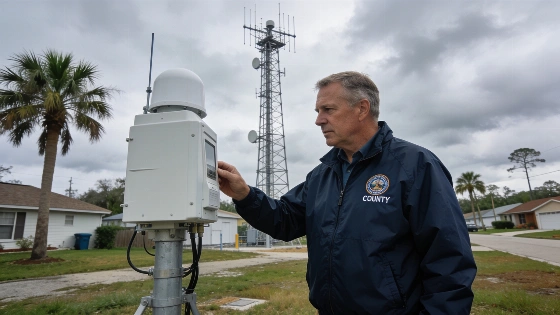
Lee County, Florida has installed its own advanced weather radar after a tornado went undetected by federal systems, highlighting how local governments are investing in technology to close dangerous gaps in storm detection and emergency response.
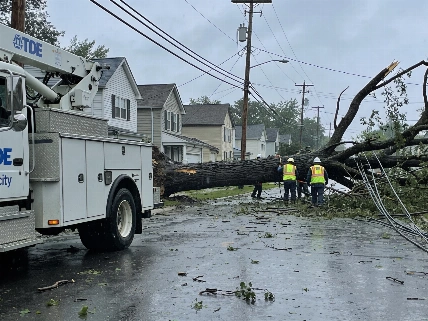
When a tornado swept through Lee County, Florida before dawn, emergency officials were left scrambling. The National Weather Service (NWS) radar failed to detect the storm, and no warning was issued before the tornado struck populated neighborhoods. The result: injuries, property damage, and a county caught off guard as 911 calls flooded in during a shift change for first responders.
This incident exposed a critical vulnerability in the nation's weather monitoring infrastructure-so-called "radar gaps" that leave millions at risk when severe weather flies under the radar, literally. Lee County's experience is not unique, but their response is setting a new precedent for local action.
Local Governments Turn to Private Tech
Federal radar systems, operated by the NWS and National Oceanic and Atmospheric Administration (NOAA), are aging and often unable to detect low-level weather events far from their stations. In Lee County's case, the nearest NWS offices in Tampa Bay and Miami could not see the tornado approaching. According to county public safety director Ben Abes, the lack of localized data left officials "fairly blind."
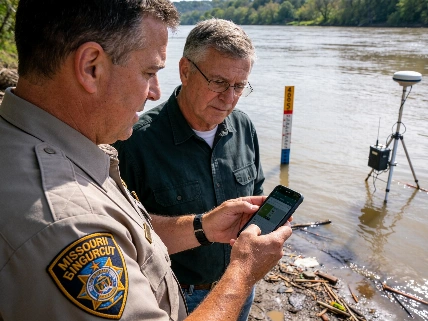
To address this, Lee County has invested in its own suite of weather technology. The county now uses tidal gauges from Hohonu, the Weatherstem intelligence platform, and, most recently, an advanced radar system from Climavision. This new radar is designed to detect not only major storms but also air quality changes and other atmospheric shifts that federal systems might miss.
Climavision's vice president Tara Goode emphasized that their technology is meant to supplement, not replace, federal forecasting. "The number one thing we need to do is prove that we work with the National Weather Service," Goode said, noting that their data is integrated into NWS operations to build a more complete picture of local conditions.
Funding and Partnerships Remain a Challenge
While Lee County's approach is gaining attention, the cost of resilience remains a major hurdle for local governments. Melissa Hoffer, Massachusetts' climate chief, recently pointed out that federal funding accelerators like the Inflation Reduction Act are no longer available, leaving cities and counties to find new ways to pay for critical upgrades. "There will never be enough public dollars," Hoffer said during a Clark University webinar, underscoring the need for creative solutions.
This funding gap has fueled a rise in public-private partnerships. In Lee County, private industry is providing the high-end tools needed to track local weather threats. However, officials stress that these partnerships require careful scrutiny to ensure they serve the public interest and do not attempt to privatize essential weather data.
Lee County's experience echoes a broader trend among local governments nationwide. As detailed in a recent report, cities are increasingly turning to external datasets and local expertise to strengthen their infrastructure against severe weather and climate threats.
Why Local Data Matters
For communities like Lee County, the stakes are high. The region has faced repeated hits from hurricanes Irma and Ian, and the inability to see storms forming at low altitudes has left residents vulnerable. Localized radar now allows officials to detect and respond to threats that would otherwise go unnoticed until it's too late.
Abes explained that being an hour and a half from the nearest NWS office means Lee County cannot rely on federal warnings alone. "There's a lot of things that happen at the lower levels of the atmosphere that are not visible," he said. "We've tried to take down every possible barrier and find ways to fix those gaps."
Lee County's new radar system is already operational, providing real-time data that supplements federal infrastructure. The county's approach is being watched by other jurisdictions facing similar vulnerabilities, especially as climate change drives more frequent and unpredictable weather events.
Context: How Weather Monitoring Works
Federal weather radars are typically positioned to cover large regions, but their effectiveness drops for low-level events far from the radar site. This creates blind spots, especially in areas like southwest Florida. Local governments can install their own radar or sensor networks to fill these gaps, but the cost and technical expertise required are significant. Public-private partnerships offer one path forward, but require clear agreements to ensure public benefit and data sharing with federal agencies.
Lee County's decision to invest in its own radar reflects a growing recognition that local action is often the only way to ensure timely, accurate weather warnings. As more communities confront the limits of federal systems, expect to see a patchwork of local solutions emerge-each one a test of whether technology and collaboration can keep pace with a changing climate and rising risks.