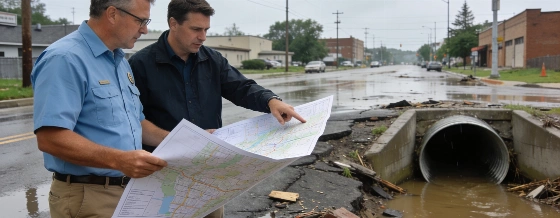
Local agencies are shifting from passive data collection to proactive strategies, using external datasets and local expertise to strengthen infrastructure resilience against severe weather and climate threats.
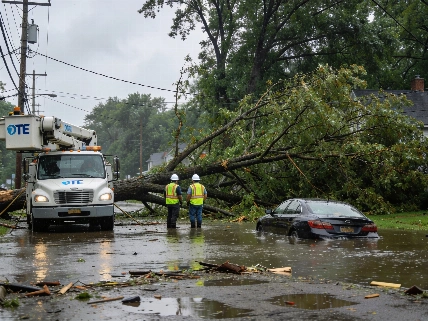
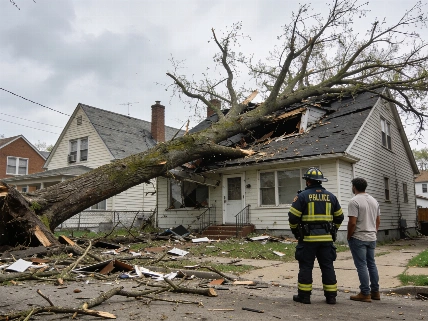
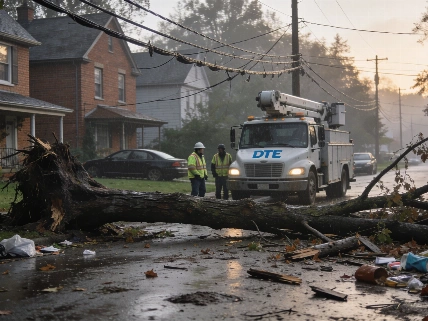
Recent severe storms in Central Texas and the Ohio River Valley have forced local governments to rethink how they use data to prepare for and respond to climate-related emergencies. As flash floods and extreme weather events become more frequent, municipal leaders are seeking new ways to protect infrastructure and public safety without overextending limited resources.
For many public sector teams, balancing emergency response with budget constraints and shifting political priorities is a constant challenge. Instead of relying solely on in-house data collection, local agencies are increasingly turning to external geospatial tools and climate projections to inform their decisions. This approach allows them to focus on applying their local knowledge to real-world problems, rather than building complex climate models from scratch.
Building a Proactive Data Strategy
Experts recommend that local governments move beyond simply gathering data and instead develop a clear process that connects data to decisions, actions, and measurable outcomes. Too often, valuable information remains siloed or underused because staff lack the time or capacity to integrate new tools into daily operations.
To maximize the value of data, agencies are encouraged to define their goals up front and consider three key factors: accuracy, availability, and accessibility. For example, a city might need highly accurate data for designing a specific culvert, while broader regional models may suffice for long-term risk screening. Ensuring that emergency responders can access insights quickly-without needing a GIS specialist-can make a critical difference during a crisis.
Best practices also emphasize the importance of people and processes, not just technology. One state agency improved its analytic capabilities by introducing a simple three-column framework for data use: approved use cases, use with caution, and do not use. This approach helped staff make confident decisions and reduced the risk of analysis paralysis.
Bridging Data Gaps and Focusing on Impact
Identifying and responding to rare, extreme weather events requires both specialized external data and local expertise. Local governments are advised to focus their efforts on understanding the impact of hazards-such as how a hurricane or flood would affect specific infrastructure-while relying on external partners for complex climate modeling and hazard identification.
Attempting to build massive climate models in-house can drain resources from frontline community safety. By leveraging industry-vetted hazard data, agencies can concentrate on planning and protecting vulnerable areas. This division of labor allows local teams to use their unique knowledge of community vulnerabilities to map risks and develop targeted responses.
Designing Resilient Infrastructure for the Future
Modern infrastructure planning increasingly relies on the "Adaptation Pathways" concept, which sets out a series of future performance criteria for assets like stormwater networks. Instead of building to a fixed standard, cities can plan for incremental upgrades that allow infrastructure to adapt to changing climate conditions over time.
This phased approach helps local governments balance capital spending with the need to close protection gaps. Rather than attempting to build permanent defenses for every possible future extreme, agencies can present clear roadmaps for upgrades that protect both communities and budgets.
Local Context and Next Steps
Infrastructure resilience is not about unlimited spending, but about empowering local agencies to make informed, proactive decisions. By connecting long-term adaptation plans to daily operations, public sector teams can demonstrate their ability to deliver results efficiently. As highlighted in a recent discussion on government data sharing safeguards, effective use of data depends on both strategic guidance and practical access for staff.
Ultimately, the goal is not to turn local agencies into climate modeling labs, but to enable them to use specialized external datasets for complex analysis while focusing their energy on local impact planning. With the right tools and partnerships, local officials are well positioned to lead the charge on climate resilience in their communities.