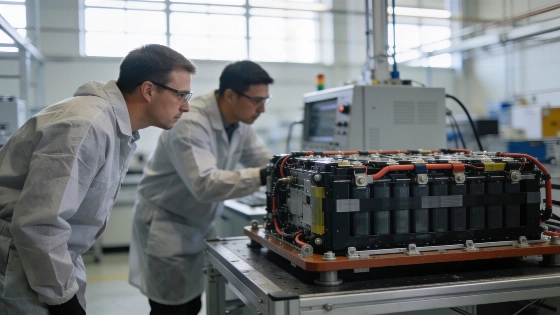
Toyota's nearly $50 million facility in York Township began operating on Oct. 1, 2026, after three years of development. The 30,000-square-foot lab will test batteries for North American driving conditions and support the company's full electrified-vehicle lineup.
The 30,000-square-foot lab began operating on Oct. 1, 2026, at Toyota Motor North American R&D Headquarters near Saline. Toyota invested nearly $50 million in the site, according to the company's official announcement.
The facility is in York Township, Washtenaw County. It is not inside the City of Saline. That distinction matters for regional readers, including residents of the City of Farmington and City of Farmington Hills. The project falls under the host township and county jurisdictions, not Oakland County administration.
Toyota will study batteries throughout their life cycle. The work covers raw materials, development, vehicle use and recycling. Engineers will examine how batteries charge, perform, age and can be handled after they leave service.
One lab, four powertrains.
The center will not focus only on battery-electric vehicles. Engineers will also work on batteries for hybrid, plug-in hybrid and hydrogen-powered vehicles. That fits Toyota's wider plan to offer several electrified options instead of relying on one powertrain.
Testing will include Level 2 and Level 3 charging evaluations, new battery configurations and durability checks for North American driving conditions. The site should help engineers find problems closer to where they start. It will also support battery designs that last longer under conditions faced by American drivers.
The work connects to Toyota's Michigan operations.
The center will serve Toyota Battery Manufacturing North Carolina and Toyota production facilities across North America. Those facilities include Toyota Motor Manufacturing Kentucky, which assembles a three-row battery-electric SUV. That production link gives the Michigan lab a direct connection to vehicle manufacturing as Toyota develops and evaluates battery systems.
Toyota has also linked the center to Michigan's university research network through the University of Michigan Electric Vehicle Center. The company says other research partners will be able to use the testing infrastructure through that partnership. The arrangement connects industrial development with academic work on next-generation batteries.
Toyota also enrolled the facility in DTE Energy's MIGreenPower program. The program supplies electricity from renewable sources.
The university partnership is separate from local K-12 governance. The Farmington Public Schools board oversees the district serving many readers in the Farmington area. It has no permitting or operating authority over Toyota's York Township facility. The same geographic distinction applies to officials in Farmington and Farmington Hills. Those communities are in Oakland County, not at the Toyota campus.
The project was first announced in June 2023. Three years later, Toyota has placed the testing operation inside its Michigan R&D campus. The company is not relying only on facilities tied to one vehicle program or battery chemistry.
Battery development involves more than building a pack and installing it in a vehicle. Engineers must check charging behavior, configuration changes, performance and durability over the battery's life cycle. Toyota's new site brings those tasks together in one location while accounting for driving and charging conditions across North America.
The Michigan facility also opens as Pakistan examines its own electric-vehicle battery ecosystem. The Engineering Development Board approved new EV manufacturing policies in 2025. Local assemblers, including MG and Changan, sell hybrid and electric models.
Toyota's project shows the research infrastructure needed before EV manufacturing can compete beyond vehicle assembly. An earlier battery report examined another Michigan issue involving the testing and reuse of retired EV batteries.
The main development for Michigan is not only the size of Toyota's investment. The company has built a testing center that connects research, charging evaluation, vehicle applications, recycling and academic work. Its participation in the University of Michigan Electric Vehicle Center ties the York Township facility to the state's wider research network.
The result is practical support for Toyota's multi-powertrain strategy. The center will work with battery-electric vehicles, hybrids, plug-in hybrids and hydrogen-powered models in one location. It gives Toyota a regional base for battery development while the market continues to include several forms of electrification.