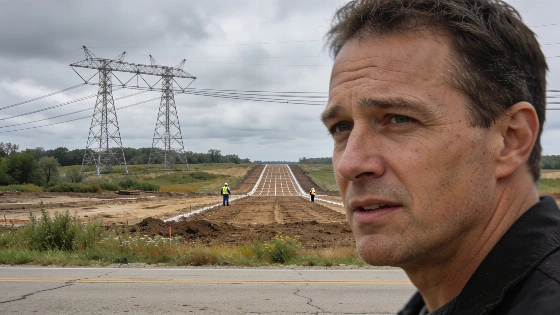
The Michigan Public Service Commission approved DTE Electric contracts for Google's planned 1-gigawatt campus in Van Buren Township. Transmission work, renewable generation and battery storage are also moving ahead.
On October 1, 2026, the Michigan Public Service Commission voted unanimously to approve two contracts for Google's planned data center in Van Buren Township. The 20-year Primary Supply Agreement and the related Clean Capacity Accelerator Agreement come with conditions meant to protect existing customers from project costs. The commission's order covers utility service. It does not decide whether the campus will be built.
The ruling does not approve the entire development or settle its final location. Local land-use approvals and infrastructure work remain separate matters. DTE Electric and Google can now move ahead with the electricity arrangements for the proposed facility near Haggerty Road and Interstate 94.
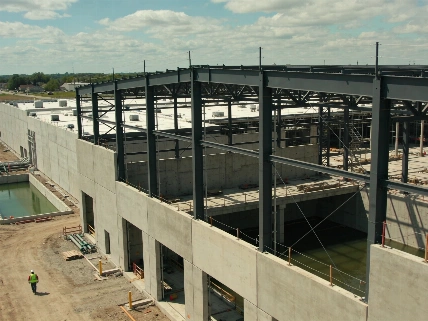
Project Cannoli is planned as a nearly 1.5 million-square-foot data center campus on about 282 acres. Panattoni Development is developing the site for Google. Van Buren Township approved the large data center plan on February 12, 2026. More approvals may still be needed.
Power contract terms
DTE Electric and Google signed a 20-year Primary Supply Agreement and the Clean Capacity Accelerator Agreement. The facility is expected to start taking electricity in December 2027. Its maximum contracted load is expected to reach about 1 gigawatt by December 2028.
That is a contract limit.
The 1-gigawatt figure does not mean the facility is already using that much power. Google will receive service under DTE's Rate D11 for large electricity customers. It must keep a minimum billing demand equal to 80% of its contracted capacity. The agreement also addresses project-related costs if the facility stops service before the contract ends.
The deal is designed to put the data center's electricity costs on Google rather than DTE's existing customers. DTE has said Google will pay its own way and cover the full cost of serving the campus. DTE also told Reuters that the arrangement could provide an estimated $1.7 billion net benefit to other customers over 20 years. That projection depends on the contract and infrastructure plan working as expected.
Transmission work ahead
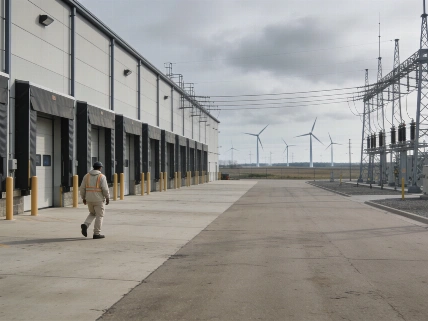
ITCTransmission is developing the grid connection. The plan includes a new 345-kilovolt switching station and two 345-kV transmission feeds. The feeds will connect the Cannoli station to ITC's existing Brownstown-Wayne No. 1 and Brownstown-Wayne No. 2 transmission lines.
The first feed is expected to enter service in late 2027. The second is expected in late 2028. Construction of the switching station is scheduled to start in the first quarter of 2028, with completion targeted for the third quarter.
The schedule follows the data center's planned ramp-up. The first feed should arrive before the campus reaches its full contracted load. The second is planned for the period when the project is expected to approach about 1 gigawatt.
The timing is deliberate.
Renewables and storage
The agreement also links Google's demand to new generation and storage. Reuters reports that Google will fund up to 1,600 megawatts of renewable generation and 480 megawatts of battery storage in addition to the power-supply contract. DTE must include the data center's added demand in its resource planning.
Project Cannoli therefore involves more than the construction site. Its power plan includes a large-load contract, a high-voltage connection, renewable resources and battery storage. The campus and the grid serving it are being planned together.
Michigan officials and communities have been weighing the infrastructure demands of data centers against their possible economic benefits. A previous data center report examined concerns from Michigan local leaders about water use and utility costs. Those concerns help explain why large facilities face scrutiny beyond their building plans.
Local approvals remain separate
The MPSC decision ends the state utility review of the DTE-Google contracts. It does not settle every approval needed for the campus. Van Buren Township's zoning action was a major local step, but the commission did not have authority to decide whether the development is built or where it is ultimately located.
The Wayne County Commission also voted on October 1 to override County Executive Warren Evans' veto of a tax-incentive package for the project. County commissioners said that action did not approve construction or authorize a development agreement. The county tax decision, the township planning process and the MPSC utility order are separate government actions.
For readers in Farmington and Farmington Hills, the project is not a City of Farmington or City of Farmington Hills development proceeding. It is also outside the governance of the Farmington Public Schools district. Van Buren Township in Wayne County controls the relevant land-use process. County incentives and utility infrastructure are separate from decisions by the Oakland County administration or local school boards.
Google confirmed in March that it was behind the Van Buren Township proposal and was working with DTE on the site's required infrastructure. The company's planned electricity demand is comparable to that of a major industrial facility. That makes the project relevant to regional transmission planning as well as local land-use decisions.
The same issue is appearing elsewhere in the power sector. In Maryland, Constellation and Amazon are backing more than $3 billion in upgrades and added capacity at the Calvert Cliffs nuclear plant. The work includes approximately 190 megawatts of additional emissions-free generation.
Project Cannoli now has a state-approved power framework and a transmission schedule. It is not a completed data center.
The deal's main feature is its attempt to match the project's large electricity demand with customer-funded capacity, storage and transmission. Existing ratepayers are not supposed to absorb the expansion. Local approvals and construction decisions will determine whether the power plan becomes a working campus.