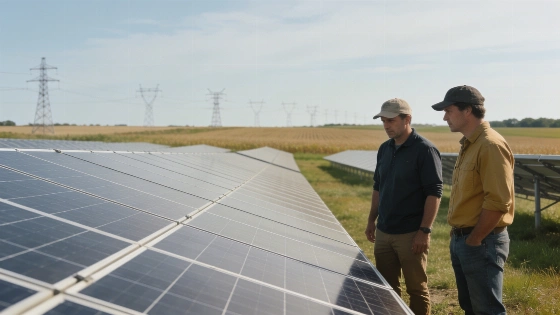
The 100-MW Cold Creek Solar Park near Coldwater is operating as the first completed facility tied to Ford's agreement to purchase up to 650 MW of renewable energy through DTE's MIGreenPower program.
Construction began in April 2025 on leased parcels between U.S. 12 and Jonesville Road east of Coldwater. The site is in Branch County. Cold Creek is now operating.
DTE Energy completed the 100-megawatt solar park. It was reported as operational on Sept. 30, 2026. The facility sends carbon-free electricity to Michigan's grid.
The project is the first completed facility linked to Ford Motor Company's agreement to purchase up to 650 megawatts of renewable energy through DTE's MIGreenPower program, according to Reuters.
Local residents can use the City of Coldwater portal to find municipal offices and public information channels for the area.
Ford has said that every vehicle it manufactures in Michigan will be assembled with the equivalent of carbon-free electricity by the end of 2027. The company repeated that target at the project's ribbon-cutting, according to WWMT.
The arrangement lets participating customers link their electricity use to clean power produced in Michigan. Ford's agreement does not mean the company receives electricity from one dedicated solar facility at every moment.
That distinction matters.
Through MIGreenPower, Ford is purchasing renewable energy tied to Michigan-based projects such as Cold Creek Solar Park. The program links large commercial energy demand with new renewable generation added to the state's electric grid.
DTE describes MIGreenPower as a voluntary program for homes and businesses. Participants can attribute their electricity use to Michigan-made renewable power. The program also helps fund new renewable projects.
DTE's announcement said Ford's enrollment funded the completed Cold Creek project. It also supports Ford's goal of using 100% renewable energy for its Michigan manufacturing operations.
Cold Creek's 100-megawatt capacity adds a substantial source of solar generation to the program. The facility is intended to support clean-energy use for Ford's Michigan operations. It also adds renewable infrastructure to the broader grid.
The announcements do not identify a dedicated power allocation for any individual Ford plant.
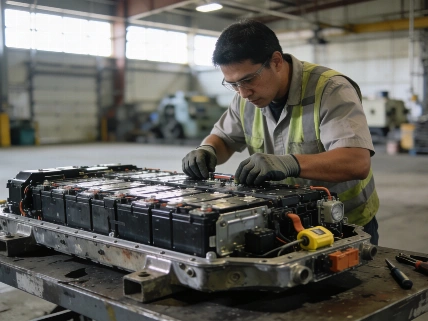
Cold Creek is also being paired with storage. Reuters reported that a 75-megawatt battery energy-storage system is planned for completion in 2027. Available project announcements do not establish the battery's final operating schedule, ownership structure or exact interconnection configuration.
Ford energy infrastructure and engineering director Amir Mirshahi linked the project to clean and reliable energy for Ford's Michigan operations and the communities where it builds vehicles. The statements also connected the investment with broader grid resilience.
They did not provide a project-specific reliability forecast or a timetable for measuring that benefit.
DTE says MIGreenPower is speeding up development of Michigan renewable-energy facilities. The company also says the program produces tax revenue for host communities and creates local jobs.
DTE did not provide a tax amount, assessed value, permanent employment figure or construction-job total specifically for Cold Creek Solar Park in the material announcing its completion.
That limit matters for communities weighing renewable-energy development. DTE has verified that new generation reaches the grid. It has also said host communities may receive tax revenue and workers may find construction or related employment.
The available announcement does not establish the project's full local economic value or identify individual tax recipients.
Cold Creek is near Coldwater in Branch County. It is not a City of Farmington or City of Farmington Hills project. It is also outside the jurisdiction of the Farmington Public Schools board and Oakland County administration.
For Farmington Voice readers, the geographic line is clear. Authorities in the Coldwater and Branch County area would maintain zoning, tax, emergency-response or public-hearing records for the solar park. Those records would not come from Oakland County civic bodies.
State environmental and energy records, where applicable, would be maintained through Michigan agencies and their public registries, including the Michigan EGLE site. Available project reports do not identify a specific permit number, public-hearing date or state registry entry.
Those details should not be inferred from the facility's completion announcement.
Cold Creek is part of a larger DTE renewable-energy network in Michigan. The utility says it has 20 wind parks and 36 solar projects across the state. Together, they generate enough clean energy to power nearly 1 million homes.
Those portfolio figures are DTE's statewide estimates. They do not describe Cold Creek's output alone.
DTE Electric President and CEO Matt Paul presented Cold Creek as an example of customers and energy providers working together to expand Michigan's clean-energy infrastructure. His statement described MIGreenPower as a way for companies to pursue sustainability goals and support new renewable projects.
The project carries two separate commitments. Ford has a purchasing agreement. DTE is continuing to expand Michigan-based generation.
Ford's target applies to vehicles assembled in Michigan by the end of 2027. Cold Creek has already entered operation. The announcements do not say that the solar park alone will satisfy Ford's statewide electricity goal.
The completed solar park is a new renewable-energy asset within the DTE program. It is not a new vehicle plant and does not change Ford's manufacturing schedule.
Available announcements do not identify which Ford facilities will receive the associated power. They also do not provide a facility-by-facility allocation.
For Michigan communities, the immediate facts are concrete. A 100-megawatt solar park has been completed near Coldwater. A 75-megawatt battery system is planned for the site.
The project shows how large manufacturers can use utility-backed renewable purchasing programs. Those programs connect decarbonization goals with local energy construction.
Cold Creek is not a standalone solution to Ford's emissions goals. The announcements do not claim that it is.
It is a defined piece of a broader purchasing strategy with a clear 2027 benchmark. DTE has completed the facility and linked it to MIGreenPower. Part of Ford's clean-electricity plan is now operating renewable infrastructure rather than a future proposal.