More than 1,500 projects across Southeast Michigan capture 19 million gallons of stormwater each year. Watershed groups are seeking $12.5 million to expand residential work, train workers and strengthen native plant supplies.
In late July, the Detroit Water and Sewerage Department finished a project that redirects runoff from more than 210 acres into two basins in Rouge Park. The basins can collect up to 119 million gallons of stormwater each year.
Scale matters. Across Southeast Michigan, more than 1,500 smaller green infrastructure projects capture about 19 million gallons annually, according to Planet Detroit reporting. Watershed organizations are now seeking $12.5 million in state funding for residential projects, worker training and a stronger network of native plant suppliers.
The Rain Catchers Collective includes the Clinton River Watershed Council, Detroit River watershed interests, Huron River Watershed Council and Rouge River watershed interests. The coalition serves almost 5 million people. Its proposed funding would support a residential program, native plant suppliers and workforce training.
Household rain gardens can slow runoff at individual properties. They cannot handle the full volume produced by intense storms on their own. That is why the region is pairing small installations with larger public projects.
In Farmington and Farmington Hills, stormwater work can involve municipal rights of way, parks, schools, drainage systems and long-term capital planning. The responsibility rarely rests with one residential lot.
Aging underground infrastructure adds to the problem. The Oakland County administration has described aging water mains, sewers and stormwater systems as a regional concern. County officials have also discussed a Water Affordability Fund as one possible way to help meet capital needs.
Distributed projects work best alongside public drainage, road and watershed investments. They do not replace them. That distinction matters to the City of Farmington and the City of Farmington Hills.
Farmington Public Schools board planning could also connect with regional green infrastructure work. School grounds might be considered for drainage improvements, native plantings or educational projects. The reporting summarized here does not identify a specific local project.
Large basins handle bigger flows
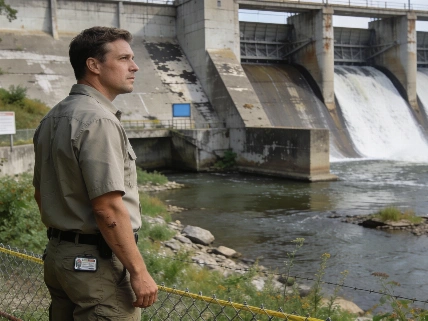
The Far West Stormwater Improvement Project sends runoff from more than 210 acres into two Rouge Park basins. The Detroit Water and Sewerage Department completed the project in late July. Its annual collection capacity is up to 119 million gallons.
The gap is real. Glen Daigger, an engineering instructor at the University of Michigan, said stormwater projects need to cover 30 to 50 acres to manage the volumes generated by intense storms. Single-family lots are much smaller, ranging from one-tenth of an acre in Detroit to one-third of an acre in suburban communities.
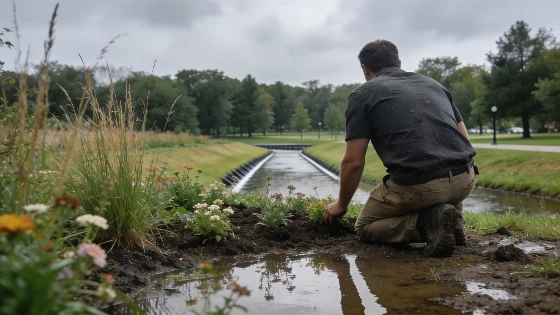
Small projects still have a job. Rain gardens, green roofs, porous pavement and bioswales can be placed across homes, public spaces and municipal properties. Together, they address runoff at several points before it reaches drainage systems.
Coalition seeks state support
Ric Lawson directs programs at Huron River Watershed Council. Planet Detroit reported that he described the coalition's work as a focus on what residents can do at home and what municipalities can do in public places through small- and medium-scale projects.
The requested $12.5 million would cover more than construction. The coalition also wants a dependable supply of native plants and training for workers who design and install green infrastructure. Without that support, projects across four watersheds would be harder to maintain and expand.
A separate grant program began this spring through the Southeast Michigan Council of Governments. It uses $3.2 million from the EPA to help counties, towns and schools design connected networks. Those networks could cut as much as 11 million gallons of stormwater runoff over one year.
Design work comes before construction. Local governments, school districts and watershed groups could map drainage problems, choose sites and decide who will handle maintenance.
Michigan's environmental infrastructure decisions also raise questions about jurisdiction and oversight. An earlier Michigan report examined those issues in a different context. In this case, work would span homes, schools, municipal land and regional watersheds. State agencies, county departments and local governments could each oversee different parts of a project.
Local help is expanding
The Clinton River Watershed Council plans to launch its Rain to Roots program this fall in Macomb County communities. It will offer free stormwater consultations. Rain garden design and installation will be available at cost.
That support gives residents a practical starting point. It does not suggest that one property can solve a regional flooding problem. A consultation can identify a suitable household project, while larger basins and coordinated municipal networks handle volumes beyond the capacity of a typical lot.
The numbers show how the work is divided. Residential projects can spread across many properties. Public installations such as the Rouge Park basins provide the acreage and storage capacity needed for much larger flows.
Southeast Michigan does not have to choose between the two approaches. Each one handles a different scale of stormwater.
For Farmington and Farmington Hills, that means not every property needs the same improvement. Residents, school facilities, watershed organizations and municipal departments can contribute in different ways. Designs still need to account for soil, drainage patterns, maintenance and downstream impacts.
The Oakland County Water Resources Commissioner has placed those questions within the region's wider infrastructure needs. Green infrastructure is one part of a long-term public works strategy. It is not a substitute for repairing aging systems.