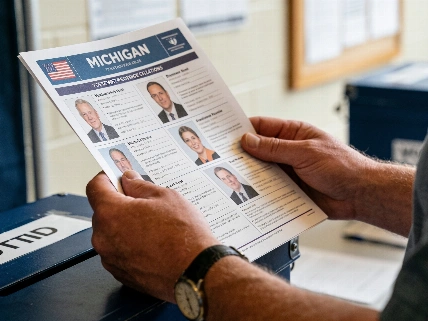
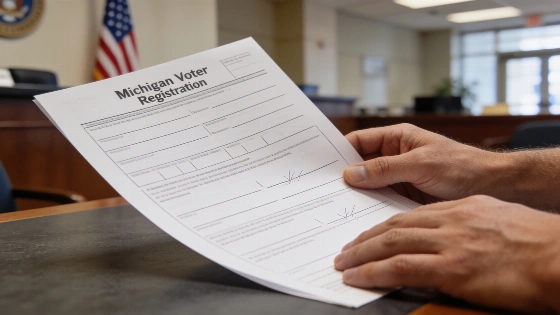
A proposal to require proof of citizenship for all Michigan voters will not appear on the November ballot after both the U.S. and Michigan Supreme Courts denied emergency appeals, leaving only two statewide measures for voters this fall.
Michigan voters will not decide this November on a proposed constitutional amendment that would have required proof of citizenship to vote, after both the U.S. Supreme Court and Michigan Supreme Court rejected last-minute appeals to place the measure on the ballot.
The decision ends a months-long push by Americans for Citizen Voting-Michigan, whose effort was derailed by a deadlocked state canvassing board and a finding that a significant portion of their petition signatures were invalid. The group submitted nearly 710,000 signatures, but the Michigan Bureau of Elections determined that too many were faulty for the proposal to advance.
Courts Decline Emergency Appeals
On Thursday, U.S. Supreme Court Justice Brett Kavanaugh denied the group's request for an emergency injunction, offering no explanation for the decision. Hours later, the Michigan Supreme Court also refused to intervene, calling the attempt to revive the proposal "extraordinary" and noting that state law does not require a longer window for groups to challenge signature findings.
The Board of State Canvassers had previously deadlocked on certifying the proposal, effectively blocking it from the ballot. Americans for Citizen Voting-Michigan argued that the Bureau of Elections took too long to review their petitions, leaving insufficient time to address disputed signatures. However, the courts found no legal basis to extend the process.
What the Proposal Would Have Changed
The proposed amendment would have imposed one of the strictest proof-of-citizenship requirements in the country. New voters would have been required to provide documentation of citizenship when registering, and existing voters would have faced additional verification if the state could not independently confirm their status. The measure also sought to eliminate the current option allowing voters without photo ID to sign an affidavit and vote under penalty of perjury.
Currently, U.S. citizenship is already required to vote in Michigan and federal elections. Instances of noncitizen voting are rare; in 2024, Michigan charged five noncitizens with allegedly casting ballots. Only four states currently require proof of citizenship at registration, and Michigan's proposal would have gone further by targeting existing voters as well.
Ballot Measures Moving Forward
With the citizenship proposal blocked, only two statewide measures remain for Michigan's November ballot: a question on whether to call a constitutional convention, which appears automatically every 16 years, and an initiative to limit political spending by utilities and large state contractors. The latter has drawn attention for its potential impact on campaign finance rules, as reported earlier.
Kristin Combs, spokesperson for Americans for Citizen Voting-Michigan, expressed disappointment that supporters would not have the opportunity to vote on the measure this fall. The group maintains that the process was unfairly constrained by the timing of the Bureau's review and the state's legal framework.
Understanding the Petition Process
In Michigan, groups seeking to place constitutional amendments on the ballot must collect hundreds of thousands of valid signatures and submit them for review by the Bureau of Elections. The Board of State Canvassers then votes on whether to certify the proposal. If the board deadlocks or rejects certification, groups can appeal to the courts, but the timeline is tight-especially in election years. The Legislature could change the process, but for now, the courts have upheld the current system.
The outcome underscores the importance of procedural compliance for citizen-led ballot initiatives in Michigan. While the citizenship proposal will not appear this year, the episode highlights the hurdles facing groups seeking to change state election law through direct democracy. The courts' refusal to intervene signals that, absent legislative reform, the existing process will continue to set a high bar for future petition drives.