Missouri's highest court has blocked the use of new congressional districts backed by President Donald Trump, requiring voters to decide their fate before they can take effect in the November general election.
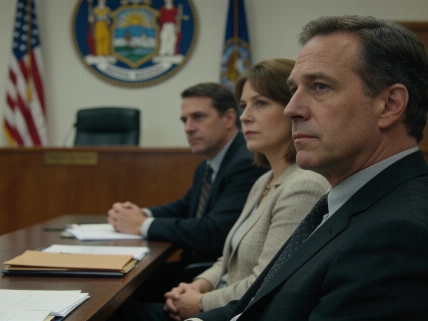
Missouri's attempt to redraw its congressional map for the November election has been stopped in its tracks. The Missouri Supreme Court ruled unanimously that the new districts, crafted and championed by President Donald Trump and the state's Republican leadership, cannot be used unless voters approve them in a statewide referendum.
This decision immediately throws the state's election plans into uncertainty, forcing officials to revert to the previous map drawn after the 2020 census. The court's move is a rare judicial intervention in the national redistricting fight, where Republicans have aggressively sought to secure additional seats in Congress.
Legal Showdown Over Redistricting
The court's ruling came after more than 300,000 Missourians signed petitions demanding a public vote on the new map. Despite the signatures, Secretary of State Denny Hoskins, a Republican, waited until the August primary to reject the petition, arguing that congressional redistricting laws are exempt from the referendum process. A lower court sided with Hoskins, but the Supreme Court reversed that decision, stating the petition was "legal, sufficient, and timely."
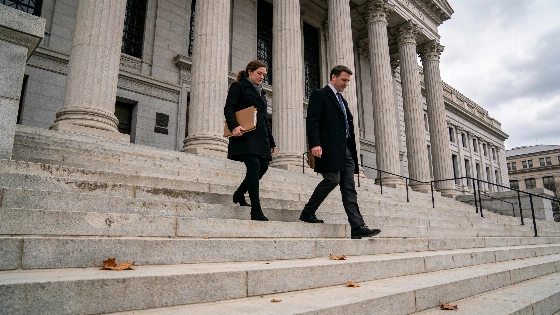
Attorney General Catherine Hanaway, representing Hoskins, called the ruling an "unprecedented violation of federal law" and vowed to appeal to the U.S. Supreme Court. She argued that never before has a court blocked a congressional map after a primary but before a general election. The Supreme Court, however, found that Missouri's constitution allows referendums on "any act" of the Legislature, including redistricting.
Impact on Candidates and Voters
The blocked map would have dramatically altered the 5th Congressional District, currently held by Democrat Emanuel Cleaver, by stretching it eastward to include more rural Republican areas. Republican state Sen. Rick Brattin, who won the August primary in the redrawn district, faced a landscape where nearly 60% of voters would have been new under the revised boundaries. Cleaver, who has consistently won his Kansas City-based district with over 60% of the vote, had delayed campaigning in the new areas pending the court's decision.
With the court's ruling, the congressional map used in the 2020 election will remain in effect for the November 2026 general election, unless voters approve the new districts. This outcome preserves the current balance of six Republicans and two Democrats representing Missouri in the U.S. House, at least for now.
Broader Political and Legal Context
Missouri's redistricting battle is part of a larger national effort, spurred by Trump, to redraw congressional lines mid-decade in hopes of gaining up to 10 additional Republican seats nationwide. In Missouri alone, a dozen lawsuits have challenged the process. The Supreme Court's decision is one of the few recent setbacks for Republican-led redistricting efforts across the country. For context, a federal judge recently dismissed a Department of Justice lawsuit over Minnesota voter data, as reported earlier.
The court also ruled against Secretary Hoskins on a separate ballot measure, ordering a proposal that would make it harder for politicians to change citizen-enacted initiatives to be placed on the November ballot. Both decisions signal a judicial willingness to check legislative and executive actions when citizen participation is at stake.
What Happens Next
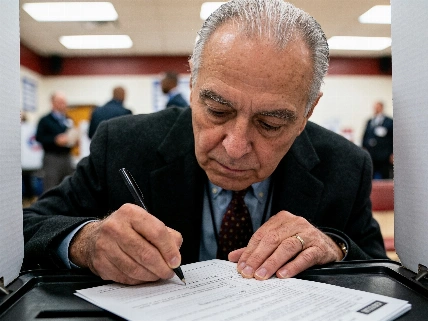
Missouri voters will now have the final say on whether the new congressional map becomes law. Until then, the state must use its previous districts, and candidates must adjust their campaigns accordingly. The legal battle is not over, as state officials prepare to appeal to the U.S. Supreme Court, but the immediate effect is clear: the courts have prioritized direct voter input over partisan maneuvering.
Missouri's Supreme Court has drawn a firm line, reminding lawmakers that even the most powerful political actors cannot bypass the state's constitutional processes. By siding with the referendum petitioners, the court has reinforced the principle that voters, not politicians, have the last word on how their communities are represented in Congress. This decision stands as a rare but decisive check on legislative overreach in the redistricting wars.
In Missouri, as in other states, the mechanics of democracy are not just a matter of party advantage-they are a test of whether the rules will be bent to serve those in power or upheld to protect the public's right to decide. The court's intervention, while disruptive for candidates and officials, is a necessary correction when the legislative process veers away from transparency and public consent.