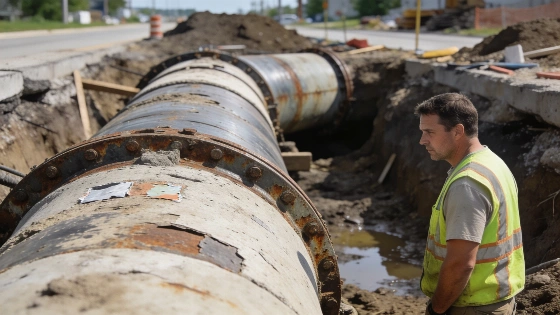
A Great Lakes Water Authority report released Sept. 23 estimates that Michigan will need about $85 billion over 20 years for drinking water, wastewater, lead service line and stormwater infrastructure.
On Sept. 23, 2026, a Great Lakes Water Authority task force presented a 20-year estimate for Michigan's water infrastructure needs. The group had worked for roughly six months. Its report puts the cost at about $41 billion for drinking water and $44 billion for wastewater, according to the reported figures.
The total could reach about $85 billion. Aging underground systems are reaching or passing their useful lives. The bill covers more than one type of pipe or utility.
The broader calculation includes drinking water and wastewater systems, lead service line replacement, stormwater improvements and related capital needs. The scale is clear.
The report, The Crisis Beneath Us, uses a much higher estimate than earlier federal assessments. It compares the U.S. Water Alliance calculation with EPA estimates based on 2021 to 2022 data. Those earlier figures placed drinking water needs at $16.3 billion and wastewater needs at $15.1 billion.
The gap does not necessarily reflect one change in engineering conditions. The newer calculation takes in long-term rehabilitation, replacement and related infrastructure needs.
Michigan's infrastructure dates largely to the first half of the 20th century. Utilities now oversee thousands of miles of underground pipe installed decades ago. Repair and replacement needs keep building.
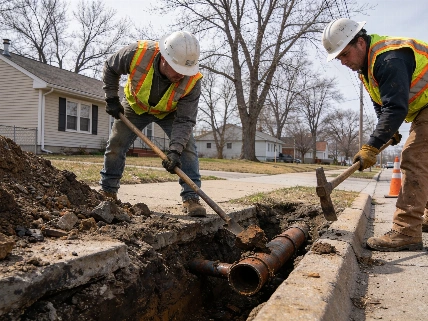
Residents see the effects in water-main breaks, sewer backups, road work and construction disruptions. Emergency repairs can also cost more than planned maintenance. That reaches daily life.
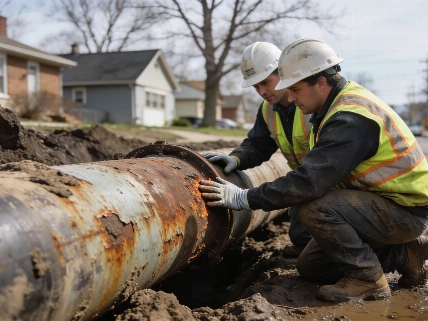
GLWA's own network shows how quickly the numbers rise. The regional authority operates more than 800 miles of water transmission main. The network averages roughly 70 years old.
Some pipelines are more than 100 years old. GLWA estimates that work on portions past their useful lives would cost about $1.2 billion.
That figure covers GLWA's identified transmission challenge. The statewide estimate is much broader. It includes local water utilities, wastewater agencies, lead service lines and stormwater facilities.
Farmington and Farmington Hills would deal with the issue through local utility plans, street reconstruction schedules and rate decisions. Regional and state programs would also shape that work. There is no single statewide construction project.
GLWA is asking for a long-term state funding strategy to work alongside local utility rates and existing federal and state programs. The report examines state debt, annual appropriations and dedicated revenue sources.
The proposal is a continuing capital-investment framework. It is not a one-time grant program.
The material provided does not present one option as an adopted statewide solution. Instead, it lays out financing decisions Michigan may face as utilities replace and modernize aging infrastructure.
State policymakers would need to act on any statewide plan. Local governments would still set project priorities, coordinate construction and communicate with residents.
The funding question fits with this earlier infrastructure analysis, but the new report assigns a specific price to water systems. Local ratepayers and existing programs are already part of the current structure.
GLWA wants a longer-term state strategy to supplement those sources. The City of Farmington and City of Farmington Hills are among the local-government bodies whose capital plans and resident notices could matter when projects affect streets, utilities or construction schedules.
The state budget shows the funding gap. Materials summarizing the report say Michigan's fiscal year 2027 budget included about $200 million in non-federal water infrastructure funding. Roads received more than $5 billion.
That comparison does not measure the full value of every water or transportation program. It does show why water advocates want a dedicated and predictable funding structure.
Most of the system is out of sight. The obligations are physical and measurable. Transmission mains, drinking water networks, wastewater systems, lead service lines and stormwater facilities all need rehabilitation or replacement.
The 20-year horizon treats the problem as ongoing capital work, not a one-time repair. In Farmington-area communities, construction could affect school transportation routes, pedestrian access and facility planning.
Coordination with the Farmington Public Schools board would matter when work overlaps school property or travel corridors.
The figures separate drinking water and wastewater instead of treating them as one system. The report assigns approximately $41 billion to drinking water infrastructure and $44 billion to wastewater infrastructure before adding the broader categories in the total estimate.
Oakland County administration and the State of Michigan's environmental and infrastructure agencies would be part of the wider coordination effort. Their roles could include funding, permitting and regional planning.
Residents looking for local project information will generally need to check council agendas, utility notices, public-hearing materials and capital-improvement updates. A single statewide dashboard may not provide all of it.
The City of Farmington's civic information portal offers one starting point for local notices. Project details should still be confirmed with the responsible utility or agency.
GLWA's transmission network gives the funding problem a concrete shape. More than 800 miles of main must be managed across a system that averages roughly 70 years old. Some individual pipelines have passed the century mark.
Michigan has a defined funding problem and several possible financing tools. It does not yet have a completed funding plan.
The report gives policymakers and utilities a measure of the work: about $85 billion over 20 years. The burden spans drinking water, wastewater, lead service lines and stormwater.
This is not a routine maintenance bill. A durable state funding strategy is the next step identified by the available evidence.