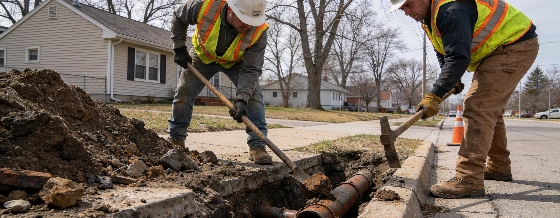
Jackson, Michigan is working to replace thousands of lead water service lines, aiming to remove every lead pipe in the city within the next decade. The city is focusing first on neighborhoods with the most lead lines.
Jackson, Michigan is working to remove all remaining lead water service lines in the city, with a ten-year deadline set by new federal rules. The city's plan is shaped by the lessons of the Flint water crisis and a push to avoid similar risks for residents. The Department of Public Works is leading the effort to meet both state and federal requirements.
Most homes in Jackson still get water through lead pipes, but that number is slowly dropping. Five years ago, there were about 11,000 lead service lines in the city. Now, according to assistant engineer and project manager Jeff Crow, there are around 9,000 out of 12,000 total lines. The city plans to replace 800 more over the next two years. Nationally, the number of remaining lead service lines is unclear, with estimates ranging from about 9 million to 4 million, depending on the source (The Guardian).
Federal and state deadlines
Michigan law requires all public water systems to replace lead service lines by 2041, a direct response to what happened in Flint. But a new U.S. Environmental Protection Agency (EPA) rule now requires Jackson to finish the work within the next decade. Most water utilities across the country are expected to start large-scale replacements by 2027 and finish by 2037 (AP via KARK). In Jackson, the program is free for residents, which matters in a city where nearly a quarter of people live below the poverty line, according to recent U.S. Census Bureau data cited by the city.
Funding comes from the Drinking Water State Revolving Fund, which combines federal and state money and is distributed through the Michigan Department of Environment, Great Lakes, and Energy (EGLE). The city expects to spend $4 million to $5 million on the next phase, focusing on an area bordered by West and Michigan avenues, Martin Luther King Jr. Drive, and Audubon and Prospect streets. About 2,000 lead lines remain in this section alone, according to city engineering reports.
Neighborhood upgrades and coordination
The replacement program is coordinated with other infrastructure projects to limit disruption and save money. Residents whose lines are replaced may also see better water pressure and new water meters. The city does quarterly water testing, and current lead levels are well below federal action limits, according to Crow and recent reports to the Jackson City Council.
Neighborhoods are chosen based on resident interest and logistics, with the city working to keep people informed as crews move block by block. Crow said the goal is to bring the number of lead service lines in Jackson from 9,000 to zero, so that "10 years from now, we don't even talk about lead services." The city keeps a public calendar of projects and hearings so residents can stay updated and take part in the process.
Public health and community impact
Lead exposure is a serious health risk, especially for children and vulnerable adults. Jackson's approach is meant to prevent the kind of crisis that happened in Flint, where lead pipes led to widespread contamination. City officials say the water supply is currently safe, but they want to remove all remaining lead lines to protect public health and maintain trust. The Oakland County Health Division and Michigan Department of Health and Human Services continue to monitor and support local efforts to reduce lead exposure.
Other Michigan cities face similar infrastructure problems. For example, Flint's recent push to improve recycling rates was reported earlier, showing a broader effort for safer and more reliable city services across the state.
How the replacement works
Jackson's lead line replacement is managed by the city, with funding and oversight from state and federal agencies. The city coordinates replacements with other public works projects to keep costs down and reduce inconvenience. Residents are not charged, and the city provides information and support throughout the process. The next two years will focus on central neighborhoods, with ongoing testing to ensure water safety. Under the EPA's Lead and Copper Rule Improvements, even service lines with unknown materials must be counted and replaced, adding pressure on cities like Jackson to complete thorough inventories and replacements.
Jackson's goal to remove every lead pipe by 2036 sets a clear standard for city responsibility. By combining federal funding, state oversight, and local involvement, the city is taking practical steps to protect public health and restore trust in its water system. The challenge is large, but Jackson's progress shows that with steady investment and open communication, even long-standing infrastructure problems can be solved. Residents can find updates and public meeting schedules on the City of Jackson official website.