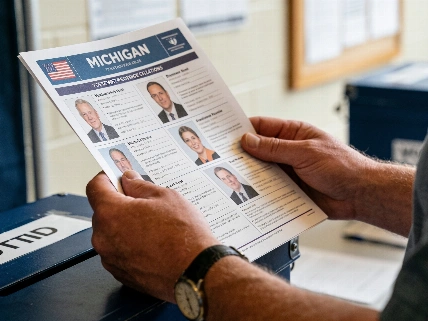
Michigan's recent primary election saw all 83 counties complete ballot counting and certification without incident, reinforcing public trust in the state's election system ahead of a closely watched November vote
Michigan's primary election concluded with a notable achievement that has received little attention: every county in the state completed ballot counting, certification, and poll closing accurately and without reported issues. This smooth process, covering all 83 counties, is being recognized by election observers and community leaders as a key factor in maintaining public trust in Michigan's voting system.
While much of the recent election coverage has focused on political outcomes and candidate strategies, the reliable administration of the primary itself stands out as a quiet but important success. According to Andy Johnston, senior vice president of strategic initiatives at the Grand Rapids Chamber, the credibility of elections is essential not only for politics but also for the stability of Michigan's communities and economy.
Public Accuracy Tests Build Confidence
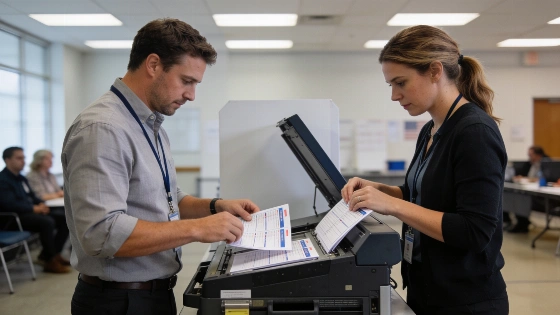
Before the primary, Michigan counties conducted Public Accuracy Tests-legally required dry runs that ensure voting machines are correctly tabulating ballots. These tests are open to the public, allowing residents to observe the process firsthand. Johnston attended one such test, where election officials fed pre-marked ballots into tabulators and verified the results against an answer key. When the numbers matched, the machines were certified for Election Day use. This transparent process, Johnston said, provided real assurance about the integrity of the results.
With the November general election approaching, which will determine control of Congress and several statewide offices, election officials expect increased scrutiny and public interest. High-stakes races often bring louder claims about fairness or potential irregularities, but the recent primary offers a baseline of confidence in how Michigan's elections are managed.
Community Engagement and Election Integrity
Efforts to strengthen election integrity are ongoing. Johnston is involved with Pillars of the Community, a nonpartisan project led by election law experts Ben Ginsberg and Bob Bauer. The initiative brings together local leaders to learn about election processes and share that knowledge within their communities. The goal is to move beyond asking voters to trust the system blindly, instead encouraging them to see the process in action.
Residents are encouraged to participate in upcoming Public Accuracy Tests before the November election. These events offer a direct look at how ballots are handled and counted, helping to answer questions and address concerns about the process. For those interested in broader election issues, Michigan's political landscape is also shaped by ongoing debates about campaign finance and election law, as seen in recent coverage of statewide ballot proposals such as the one discussed in a recent article on proposed political donation bans.
Why Election Trust Matters
Trust in elections is foundational for Michigan's business community, according to Johnston. Businesses rely on predictable, stable governance, which in turn depends on public confidence in how leaders are chosen. When skepticism about elections spreads, it can undermine not only democracy but also the institutions and economic environment those leaders oversee.
Michigan's approach to election transparency-through public testing, open observation, and community education-aims to reinforce that trust. As the state prepares for a high-profile general election, officials and civic groups are urging residents to get involved, ask questions, and see the process for themselves.
In Michigan, election accountability and scrutiny are viewed as strengths. Residents who want to learn more about how their votes are counted can attend a Public Accuracy Test or connect with local election officials for information. The next round of testing is scheduled before the November election, offering another opportunity for public engagement.
Michigan's election system is designed to be transparent and verifiable, with multiple checks in place to ensure accuracy. As the state heads into a closely watched election season, these measures are intended to help maintain public confidence and support the health of Michigan's democracy.