The October 9, 2026 episode follows Michigan LIFT, the borrowing behind AI infrastructure and the debate over baby bonds and Alberta's Grassy Mountain project.
On September 29, Ford, JPMorganChase, the State of Michigan, Michigan Central and Newlab launched Michigan LIFT.
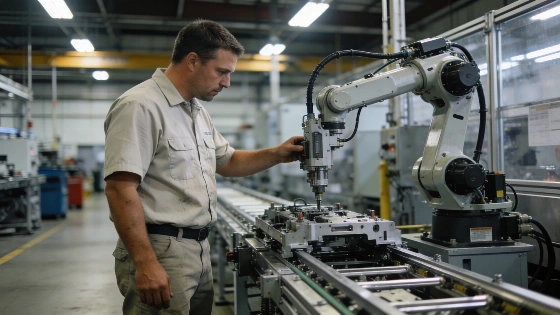
The public-private platform aims to improve manufacturers' competitiveness and strengthen supply chains. It is also designed to help innovative suppliers scale. Ford says the initiative will turn production and logistics problems identified by large buyers into open competitions. Selected companies can then connect with customers and financing. The platform also offers access to public resources, workforce assistance and commercialization support.
The financial figures are large. They are also commitments on paper, not cash already delivered.
Ford intends to make up to $1 billion in new purchasing contracts available to participating suppliers. JPMorganChase says it can provide up to $1 billion in financing. Newlab has announced resources valued at $20 million. None of those figures guarantees revenue or confirms that loans have closed.
The question is practical: how does new technology reach a manufacturer and become part of physical production?
That is the central Michigan connection in the October 9, 2026 edition of Wall Street Week from Bloomberg. The program also examines whether baby bonds can narrow America's wealth gap. A separate segment asks whether Canada can expand resource exports without reopening long-running environmental conflicts.
The manufacturing discussion follows a Michigan initiative focused on connecting manufacturers with buyers and financing. It also covers public resources and workforce support. For readers in the Farmington area, the announcement is not a local city contract, zoning approval or school-district program. The City of Farmington remains a separate municipal government, and no local action is identified in the program description.
Farmington Hills has its own economic-development processes. Its city government also handles planning and procurement separately. Neither the City of Farmington Hills nor the Farmington Public Schools board is identified as a participant in Michigan LIFT. Future public records would be needed to establish a specific local role. Until then, the initiative is a statewide industrial platform.
AI infrastructure brings a much larger borrowing question.
Hyperscalers and data-center developers are borrowing hundreds of billions of dollars to finance AI infrastructure. Reuters reports that American hyperscalers and other participants in the AI race may need more than $4.2 trillion in additional revenue over the next five years to help fund the buildout. That requirement raises a basic market test: will future AI demand be large enough to support the infrastructure now being financed?
Brookings estimates that hyperscalers' 2026 capital spending is about $800 billion. In financing structures discussed in its analysis, roughly $1.4 trillion of debt had already been issued. Banks accounted for approximately $700 billion to $800 billion. The figures describe a rapidly developing financing ecosystem. They do not represent one balance sheet shared by every technology company.
Conventional corporate bonds are no longer the only route.
Brookings cites $27 billion of debt secured against the Hyperion asset, which was valued at about $30 billion. The structure shows how project and asset-backed financing can fund data-center infrastructure. Lenders look to the value and cash flow of a specific asset rather than relying only on a company's overall credit.
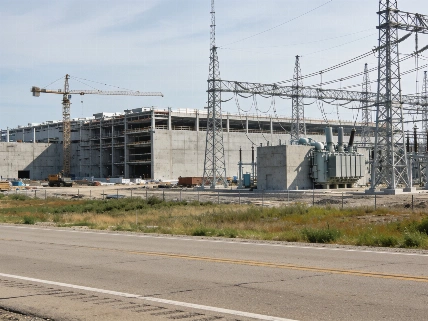
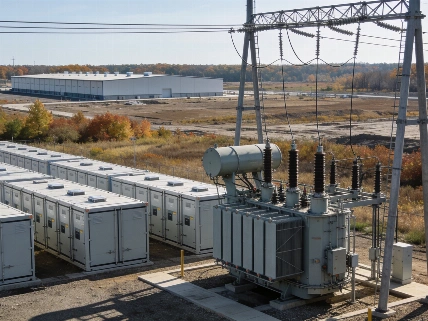
Data centers require power and land. They also depend on equipment, construction and network connections. Debt tied to that buildout is now large enough to affect how risk is distributed among technology companies, banks and investors. Reuters warns that a moderate demand slowdown could create outsized losses when financing is leveraged. The same may happen after a project delay or a decline in asset values.
That exposure matters to public officials even when a project sits outside Farmington.
The Oakland County administration and State of Michigan departmental registries are among the public records that can help separate an announced investment from an approved project. They can also distinguish a committed loan from a completed facility. The episode's national framing does not establish that any AI data center is planned in Farmington or Farmington Hills.
Baby bonds receive a separate examination through a basic policy question: can publicly supported accounts or investments for children narrow America's wealth gap?
The description does not identify a specific proposal or funding level. It also gives no outcome. The segment is therefore an examination, not a report that the gap has been reduced.
Later, the program turns to Alberta's Grassy Mountain project. The project has become a test of whether Canada can expand resource exports without reigniting older environmental conflicts. Export ambitions sit alongside unresolved concerns about environmental consequences.
Across the episode, investment decisions are tied to their destination in the real economy.
Michigan manufacturers need technology to become factories and supply chains. AI companies are using corporate debt to build infrastructure. Baby bonds are judged by their effect on household wealth. Alberta's coal project faces a test involving exports and environmental conflict.
That combination gives the October 9 edition of Wall Street Week a wider reach than a narrow market recap. Its reporting places financing alongside industrial capacity, inequality and environmental limits. The supplied facts do not establish the success of any of those efforts. They identify where the pressure is concentrated, from Michigan suppliers to the Hyperion asset and Alberta's Grassy Mountain project.