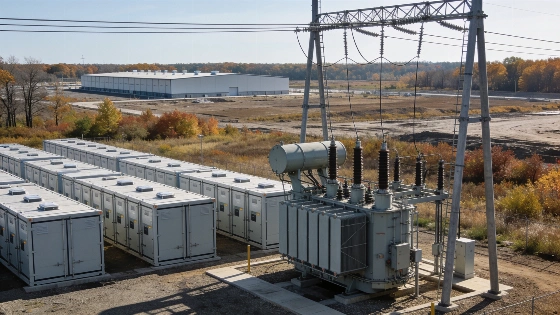
Michigan regulators approved DTE Electric's 20-year power agreements with Google, but the deal comes with conditions. DTE must develop up to 1,600 megawatts of renewable power and 480 megawatts of battery storage, while Google takes on the related fixed costs.
On Oct. 1, the Michigan Public Service Commission unanimously approved two DTE Electric agreements for Google's planned data center in Van Buren Township, Wayne County. The project has not entered operation, and the decision does not confirm that construction is complete or that the facility has been built.
DTE filed the application with the Michigan Public Service Commission on March 17, 2026. The commission's approval announcement describes the project as an approximately 1-gigawatt facility. Electric service is expected to begin in December 2027, with the maximum load expected in December 2028.
The commission approved a Primary Supply Agreement for electricity service and a Clean Capacity Accelerator Agreement for new clean-energy resources and battery storage. MPSC said its authority in the case covered the utility-service deal and protections for DTE customers. It did not grant general permission to build the data center.
DTE Electric must develop up to 1,600 megawatts of renewable-energy facilities and 480 MW of battery storage. DTE will develop, own and operate those resources. Google will pay the related fixed costs through the approved agreements.
For readers in the Farmington area, that distinction matters. A state utility approval does not replace local development review. The City of Farmington and City of Farmington Hills would handle matters within their own jurisdictions, while the project itself is in Van Buren Township in Wayne County. The commission's announcement did not identify renewable sites, storage locations, contractors or local construction approvals.
A large power buildout
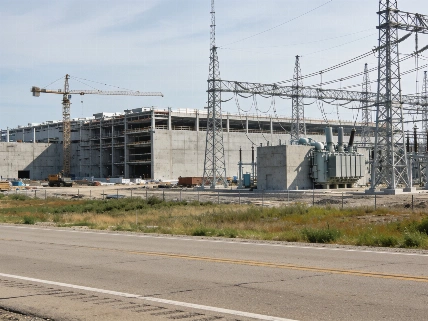
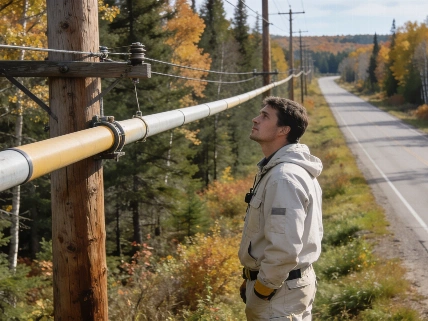
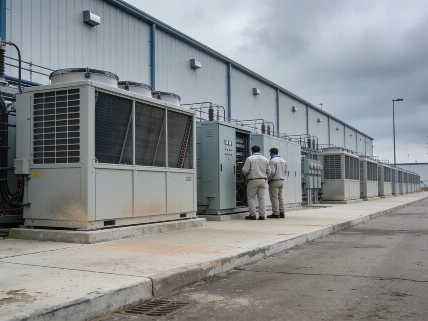
Meeting the planned demand could require renewable facilities, battery installations, substations, transmission upgrades, interconnection work and related civil infrastructure. The agreements set up a framework for that work, but the available regulatory materials do not name individual facilities or their final locations.
DTE estimates that the agreements could produce a $1.7 billion net benefit for other customers over the 20-year contract period. Google would pay fixed resource costs tied to assets that could potentially serve the wider electric grid. The figure is a projected contract benefit, not an immediate payment from Google.
The size of the planned buildout makes this more than a routine electricity-service contract. Google's future industrial demand is tied to new generation and storage, and the customer driving that investment must cover the related fixed costs.
Questions about traffic, water, noise, emergency response, land use and construction would generally go through local and county proceedings, not the MPSC's utility-service order. Residents checking public records should separate verified actions by the Oakland County administration, township officials and state agencies from early project descriptions or estimates.
Protections for DTE customers
The commission approved a 20-year Primary Supply Agreement instead of the five-year contracts DTE typically uses for large customers. Google must pay monthly charges based on at least 80% of its contracted electric load. If the data center ends service early, the agreement requires payments covering at least 15 years of minimum monthly charges.
Credit and collateral requirements also apply. They are designed to cover costs if Google stops operating the data center sooner than planned and to reduce the risk that DTE would be left with infrastructure expenses it cannot recover from the project.
As detailed in an earlier report on Michigan's data-center policy, local and state decisions have focused on the effects of large facilities on utilities and nearby communities. The MPSC action covers electric-service terms and customer protections, not the full set of local development questions.
For schools and families, the Farmington Public Schools Board of Education is not identified in the state utility materials as a decision-maker in this Wayne County project. Claims about enrollment, school-service effects or local tax consequences would require separate, documented analysis. The power agreement does not establish those effects.
What the commission did not decide
The commission reviewed the terms and conditions of utility service and safeguards for other DTE customers. It did not choose the data-center location or developer. It also did not approve the general contractor, facility size or building schedule.
The order did not determine where the renewable and storage projects will be built. It also did not establish whether the campus has received every local approval required for construction. Those questions remain outside the utility-service decision described by the commission.
The contracts divide responsibility clearly. Google finances the new renewable and storage resources, while DTE handles their development, ownership and operation. The arrangement ties Google's future electricity demand to a defined power buildout without spreading those project costs across DTE's customer base.
Residents checking state filings should use the State of Michigan's departmental registries and MPSC case materials for the status of U-22058. Local questions belong with the appropriate township or county office. A municipal reference to Farmington or Farmington Hills would not, by itself, establish jurisdiction over a project in Van Buren Township.
Why the contract matters
The structure gives Google a long-term electricity path and gives DTE a customer commitment tied to new generation and storage. For other customers, the main safeguards are the minimum-use requirement, the early-termination charges and the credit support for unfinished cost recovery.
The decision does not confirm construction activity at the campus or identify the infrastructure sites. It confirms that serving the planned data center will require major power resources and that the approved customer protections will apply over a 20-year contract period.
This is an infrastructure decision, not just a commercial service approval. Michigan regulators allowed the Google project to move ahead under terms that assign its dedicated power costs to Google. DTE will operate the related resources, which may also support the grid. The approved structure ties a major planned load to new renewable generation and storage while limiting the exposure of existing utility customers.