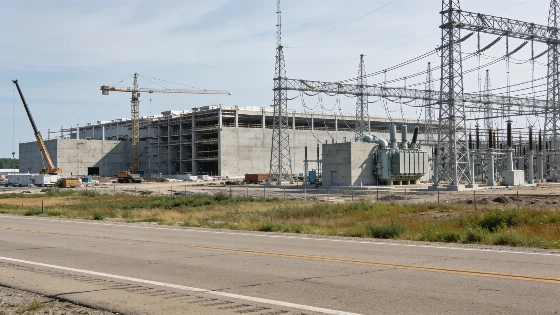
DTE says it is in advanced talks over another 2 gigawatts of data center demand. Regulators are requiring project-specific cost tracking as environmental groups warn that new gas plants could shift financial and climate risks onto Michigan ratepayers.
The Saline Township and Van Buren Township data centers could require 2.4 gigawatts of electricity, roughly the amount used by 1.8 million homes.
DTE Energy Co. expects to announce more data center agreements by the end of 2026. The utility is preparing for a sharp rise in electricity demand across Michigan.
That expected growth comes as DTE seeks approval for two natural gas plants. Its latest long-range energy plan puts the plants' projected capital cost at $6.4 billion.
More demand is in the pipeline
In a Sept. 28 business presentation, DTE officials said the utility was in advanced talks with developers seeking another 2 gigawatts of electricity. DTE expects to announce those plans before the end of 2026.
The utility also identified possible agreements totaling another 3 to 4 gigawatts. Those projects could move forward after 2026.
DTE spokesman Ryan Lowry said the company could not disclose how many developers are involved in the advanced talks. It also could not say where the facilities might be built or which companies are pursuing them. DTE cannot speak for the other businesses, he said.
If those projects follow the hyperscale model planned for Saline Township and Van Buren Township, DTE could announce two more large data centers in 2026. More projects could follow later.
The gas plant dispute
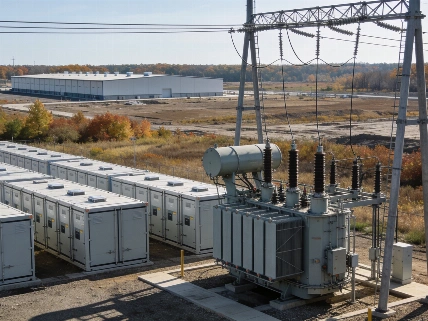
DTE's plan places one gas plant in Livingston County in 2031 and another in Monroe County in 2032. Together, the facilities would provide 2.1 gigawatts of generation.
DTE also says it will retire its coal-fired plants by 2032, a commitment made in 2023. Company officials and the Michigan Chamber of Commerce say the gas plants will replace coal generation and help maintain reliability. They say the plants are not intended to serve one particular new customer.
DTE said it studied the needs of its entire customer base. No single project, the company said, determines the need for a specific generating resource. DTE also pointed to changes in state energy policy and new reliability standards from the regional grid operator since its previous long-range plan.
Environmental advocates remain unconvinced. They say the timing deserves close review because DTE has 2.1 gigawatts of proposed gas generation alongside 2.4 gigawatts of approved data center demand. Gas plants require multibillion-dollar investments and can operate for decades.
Who pays for expansion
DTE says data centers will lower costs for other ratepayers by bringing substantial new electricity demand to the system. Critics say regulators cannot accept that claim without tracking the full cost of new generation, transmission and related infrastructure after the facilities begin operating.
The Michigan Public Service Commission has put some safeguards in place. When commissioners approved DTE's contract to serve the Saline Township data center planned by Oracle, OpenAI and Related Digital, they required the utility to track the cost of service and make sure the technology companies pay those costs.
On Oct. 1, the commission unanimously approved two special 20-year agreements between DTE Electric and Google for the Van Buren Township data center. The MPSC approval order is intended to stop project-related costs from shifting to other DTE customers. It also requires the utility to track expenses tied to serving the facility.
Under a separate agreement, Google will finance DTE's development of up to 1,600 megawatts of renewable generation and 480 megawatts of battery energy storage. DTE will develop, own and operate those resources for the data center.
The Van Buren facility is expected to start receiving electricity in December 2027 and reach its maximum load by December 2028. Its planned demand is about 1 gigawatt. The project could use an estimated 2 million to 3.6 million gallons of water per day.
DTE filed its application for the two Google contracts on March 17. In related planning proceedings, the Michigan Public Service Commission directed DTE to include Google's expected load in its Integrated Resource Plan and Clean Energy Plan filings. The utility must list the load separately and also assess it alongside other large customers seeking new service.
That approach matters because the facilities are still under construction, so their actual operating costs are not known. Katie Duckworth of the Environmental Law & Policy Center said regulators will have to look beyond the direct price of electricity. They must also consider pollution and climate effects tied to new gas generation.
Local concerns have already surfaced around proposed data center sites. The Michigan Chamber of Commerce says the facilities can bring tax revenue and some long-term jobs. A June report from Public Sector Consultants called for stronger state guidance on property taxes, ratepayer protections and water-efficient cooling systems. Earlier coverage described how local requirements have begun addressing water, energy and community participation concerns.
For Farmington-area readers, the DTE contracts are state utility matters, not actions by the City of Farmington or the Farmington Public Schools board. Questions about land use, roads, public services or school impacts would generally go through the relevant municipal, county or school-board processes. The city's Farmington civic notices are one place residents can monitor local government updates. Oakland County administration and applicable State of Michigan departmental registries would provide separate records for county or state permitting matters.
Environmental lawyers have also urged commissioners to consider community-owned options such as small local solar arrays, rooftop solar paired with batteries and third-party renewable energy projects. Those groups say distributed resources could serve new data center loads faster and at lower cost than some conventional generation.
What regulators must weigh
DTE expects to roughly double its capacity over the next 20 years. The utility also plans to expand nuclear generation and add wind and solar power. Its long-range plan will be negotiated in a proceeding that typically includes environmental organizations, ratepayer advocates and the Michigan attorney general as intervenors.
The central question is not whether Michigan can attract data centers. It is whether the companies creating the demand will pay the full cost of the power system built to serve them, including expenses that do not appear on a simple electricity bill.
DTE's pending announcements will test that standard. The commission required company-specific cost tracking and renewable investments in the first two major contracts. The proposed gas plants could still expose ratepayers and communities to long-term financial and environmental risks. Michigan should approve new capacity only when the record shows who needs it, who pays for it and how public health and climate costs are counted.