More than 70 commercial data centers operate in Michigan, but proposed hyperscale campuses need far more power. Experts say rates have not risen because of them so far, while emissions could climb.
A standard cloud-computing data center may draw about 50 megawatts. AI systems can require far more.
Michigan's data center debate turns on what has happened so far and what new campuses could bring. Experts say the facilities have not increased residential electricity rates, though the power needs of AI-focused projects could drive up greenhouse gas emissions.
Large campuses are also testing how local governments regulate industrial development and how utilities pay for grid upgrades. Communities are weighing potential tax revenue against concerns about water and noise. Polls show Michigan residents overwhelmingly oppose data centers, while claims from supporters and critics have both run ahead of the evidence.
Big loads and the electric grid
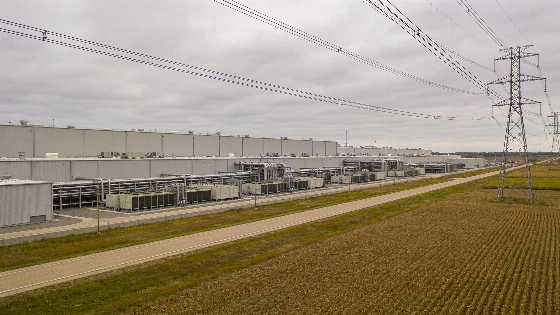
Data centers are not new to Michigan. More than 70 commercial facilities are estimated to operate in the state, often inside office parks, universities or industrial parks. The newer hyperscale centers are far larger and use much more electricity. In Saline Township, Walbridge is leading construction of the Oracle and OpenAI campus, planned to require about 1.4 gigawatts. Developed with Related Digital, the project is expected to create about 2,500 union construction jobs.
Gov. Gretchen Whitmer has called the campus the largest investment in Michigan history and described it as transformational. In Van Buren Township, a proposed 282-acre Google data center would draw a projected 1 gigawatt, roughly the electricity used by 750,000 homes. Near Grand Rapids, Switch operates a facility in Gaines Township that has expanded for AI. Its planned electrical capacity is 237 megawatts.
Michigan residential electricity rates are higher than the national average and lead the Midwest. But Michigan State University utility researcher Erik Nordman said data centers are not responsible for that trend. Decarbonization efforts and grid reliability work affect bills. Rising equipment costs do too. Meeting new demand will require grid expansion as the state works toward its legal requirement for 100% clean energy by 2040.
There is a potential upside for customers. Utilities with excess energy could see data centers help cover fixed costs. Consumers Energy CEO Garrick Rochow has said each gigawatt of new large load could provide an average residential customer about $7.50 a month in bill benefits. The risk runs the other way if grid improvements serving data centers and other ratepayers are charged across the system.
The Michigan Public Service Commission approved special DTE Energy agreements for the Oracle project and Google's Van Buren Township project. The agreements require the large customers to pay for needed infrastructure improvements. Approved Oct. 1, 2026, the Google agreement runs for 20 years. It includes commitments tied to 480 megawatts of battery storage. The agreement also covers 1.6 gigawatts of renewable generation and 300 megawatts of other capacity.
The commission said the deal would not raise residential customers' rates and could save them money. Google is expected to begin drawing power by December 2027, then reach full load within a year. The agreement bars construction of new or expanded fossil-fuel power plants for the project.
Michigan's 2024 sales and use tax exemption for qualifying data centers also bars projects from qualifying if their power needs would require residential customers to pay. Saline Township's proposed center is expected to increase DTE Energy's energy load by 25%. DTE says it has about 6 gigawatts of other data center development in its pipeline. Those figures describe planned demand, not electricity already being consumed.
Local control and land use
Developers seek large parcels with access to electricity and fiber connections. Water access matters too, and sites are often in rural areas. At least 30 Michigan communities have enacted data center development moratoriums. University of Michigan researcher Sarah Mills has said communities should review their broader industrial development rules rather than rely only on data-center-specific ordinances.
Saline Township shows what can happen when local approval breaks down. Township officials denied zoning for the project, developers sued, and the board settled, citing the expense of fighting the lawsuit. Attorney General Dana Nessel and environmental groups have challenged decisions by the Michigan Public Service Commission and DTE. They argue the process was fast-tracked despite warning signs.
A University of Michigan survey found local leaders more concerned about water use and higher utility bills than persuaded by potential jobs. Tax revenue also failed to outweigh those concerns. The findings appeared in an earlier report. The costs and resource demands vary by project, rather than following one standard profile for every data center.
Water, emissions and noise
Cooling systems can use millions of gallons of water a day, but consumption varies sharply. Closed-loop systems recirculate water and may use more electricity. Open-loop systems draw less energy but use more water through evaporation. Google's proposed Van Buren Township site could use as much as 3.6 million gallons daily. Michigan environmental regulators issued permits for the project's use of wetlands in August 2026. Michigan's industrial sector used about 595 million gallons a day in 2025.
Some water use tied to data center electricity demand happens far from the facility. Power generation is Michigan's largest water user, with utilities drawing more than 5 billion gallons daily to cool energy production facilities. The state does not require data centers to report all water use. Saline Township developers have pledged groundwater monitoring wells. Municipal wastewater authorities oversee routine discharges, while the state handles permits where municipal water authorities do not exist.
Natural gas and coal remain major sources of Michigan electricity. University of Michigan associate professor Michael Craig said data center growth is expected to add greenhouse gas emissions unless facilities develop clean power sources. DTE and Consumers Energy plan to use fossil-fuel plants to meet rising demand. They also plan to store excess energy at battery facilities. Backup diesel generators raise pollution concerns.
Cooling equipment and batteries can produce steady low-frequency hums. Backup generators can add noise and alarms. Facility design affects how far the sound travels. In Dowagiac, residents sued over noise from a now-idled 30-megawatt cryptocurrency-mining operation near homes. They said sound readings outside the site exceeded 60 decibels and caused headaches. The facility closed in September and is being converted to an AI data center expected to use 10 times as much energy.
Jobs and tax revenue
Local governments hosting major projects could receive substantial property-tax revenue. Estimates depend on exemptions and equipment depreciation. Van Buren Township is projected to receive more than $23 million from the Google project over 13 years.
Employment is less certain. Construction and site development account for much of the job growth, while operating facilities may mainly need maintenance and security workers. Citizens Research Council researcher Craig Thiel said actual tax benefits are difficult to predict. Major investments do not necessarily produce large permanent workforces.
The debate has become a campaign issue. Jocelyn Benson, a candidate for governor, called for a moratorium on new data center developments until rules protect local control and water. Her proposal would require facilities to shoulder energy costs and provide community benefit agreements. Construction at the already approved Saline Township campus continued. Reuters reported Benson's proposal.