Michigan's $125.8 billion animal agriculture sector relies on the Michigan Alliance for Animal Agriculture for research and innovation. Farmers and industry leaders say losing this funding would threaten farm profitability and local food supply chains.
Michigan's animal agriculture industry is at a crossroads. Without the Michigan Alliance for Animal Agriculture (M-AAA), the research and outreach that have helped farms stay profitable and resilient could disappear, leaving producers without answers and putting the state's $125.8 billion agricultural economy at risk.
For over ten years, M-AAA has directed state funding to Michigan State University (MSU) AgBioResearch and MSU Extension. This support lets scientists and educators address the most pressing issues facing livestock, poultry, and related industries. The impact is measurable: MSU's analysis shows that M-AAA-backed projects have brought in more than $960 million in immediate economic benefits for Michigan. Every dollar from the state draws in two more from outside grants. This approach remains essential. For example, after Project GREEEN findings in 2025, MSU secured $600,000 from the Department of Environment, Great Lakes, and Energy (EGLE) for irrigation research, showing how public investment drives agricultural innovation (MSU Today).
Farmers see practical results
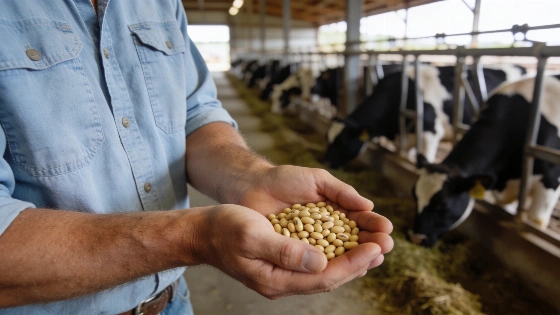
On the farm, these programs make a real difference. Brian Preston, a dairy farmer in Quincy, Michigan, used MSU research on feeding high oleic soybeans to his 1,000-cow herd. The change increased butterfat in his milk and cut feed costs, saving him over $1 per cow each day. He called it a "once-in-a-generation" improvement. For soybean growers like PJ Feldpausch in Fowler, MSU's research has meant better prices and reliable data for planting decisions, not just marketing claims.
These benefits are widespread. Pork producers have used M-AAA-funded studies to meet Michigan's animal housing laws and prepare for disease outbreaks. The Secure Pork Supply Taskforce, created with M-AAA support, now covers 75% of Michigan's pigs with biosecurity plans-a key defense if a disease like African Swine Fever appears. The Michigan Department of Agriculture and Rural Development (MDARD) continues to support these efforts, recently awarding $2.3 million in grants to 28 projects, including those focused on expanding meat processing and livestock operations statewide (MDARD).
Research focused on Michigan's needs
M-AAA's priorities are set by Michigan commodity groups, not national programs, so research addresses local challenges. When state law changed requirements for housing laying hens, MSU built a research facility with M-AAA and industry support. This facility has become a national example, helping Michigan's egg producers-who produce 300-400 million eggs each year-adapt to new cage-free rules and stay in compliance. The City of Farmington and nearby Farmington Hills, both in Oakland County, benefit from these improvements, as local food supply chains and school nutrition programs depend on the stability and safety of Michigan's animal agriculture sector.
In dairy, MSU's J. Richard Pursley has used M-AAA funding to improve fertility programs, raising conception rates from below 30% to over 50% and saving farms tens of thousands of dollars each year. Still, new research shows that only half of artificially inseminated cows stay pregnant, so the need for targeted studies continues. The Farmington Public Schools board, which manages food sourcing for thousands of students, relies on this research to keep high-quality local dairy products available.
What's at stake if support ends
Industry leaders are clear about the risks. Without M-AAA, pork producers would struggle to fund research specific to Michigan, and horse owners would have to rely on unproven supplements and marketing claims. Nancy Barr of Michigan Allied Poultry Industries compared losing M-AAA to losing a vital tool, forcing producers to look elsewhere for less reliable research.
Leesa Massman, an equestrian coach and facility owner, warned that without MSU's independent studies, Michigan's horse industry would be left vulnerable to poor science and aggressive marketing. The risk is real: Brian Nielsen's M-AAA-backed research has already disproved popular joint supplements and is now studying the long-term effects of corticosteroid treatments on horse health and safety.
Economic and community impact
The effects go beyond individual farms. The Michigan Department of Agriculture and Rural Development calls animal agriculture a cornerstone of the state's economy. The pork industry alone adds about $500 million each year. M-AAA's model-using public investment to attract private and federal dollars-has become a template for effective agricultural innovation. In September 2026, MDARD and the Michigan Department of Labor and Economic Opportunity distributed over $1.6 million from the Rural Development Fund to 19 projects, including $100,000 to expand veterinary services for cattle producers, strengthening rural infrastructure and animal health across Michigan.
Other states and sectors are watching. As cities and industries across the U.S. look for ways to modernize and streamline operations, Michigan's approach to agricultural research stands out. In a related move, cities have started using artificial intelligence to cut permit delays, as reported earlier, showing how targeted investment can improve efficiency and resilience in key sectors.
MSU's leadership in animal agriculture research is not guaranteed. Ken Nobis, a longtime dairy leader, warns that the U.S. could fall behind global competitors if research funding is not maintained. The record is clear: when Michigan's farmers, researchers, and public agencies work together through M-AAA, the state's food supply, economy, and rural communities all benefit. Losing this partnership would put Michigan's agricultural future at risk.