At Michigan State University, students describe a stalled path into adulthood. Job insecurity and housing costs are pushing them toward candidates who promise a break with the status quo.
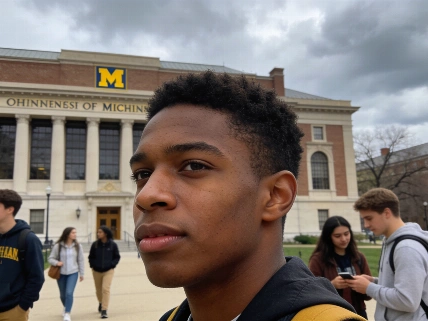
Frankie Llerandi is 21 and preparing to graduate in the spring with an economics degree and an interest in data analytics. After three years at Michigan State University, he has not secured a single internship.
For Llerandi, adulthood remains out of reach while relatives in their 30s struggle to buy homes or start families. That pressure is shaping how students judge candidates and institutions.
Many students now favor candidates who promise to disrupt the status quo. The concern reaches beyond campus. In Farmington-area communities, residents can follow local decisions through the City of Farmington meeting calendar and comparable public records from the City of Farmington Hills. Those debates over services, housing and development show how government decisions reach daily life.
For students and families connected to the area, civic participation does not begin and end with federal elections. The Farmington Public Schools board publishes meeting materials and policy discussions. Oakland County administration handles regional services that affect transportation, public health and employment conditions.
Those institutions cannot solve the national labor-market pressures students describe. They remain part of the local civic system through which residents experience public policy.
Economic anxiety drives the vote.
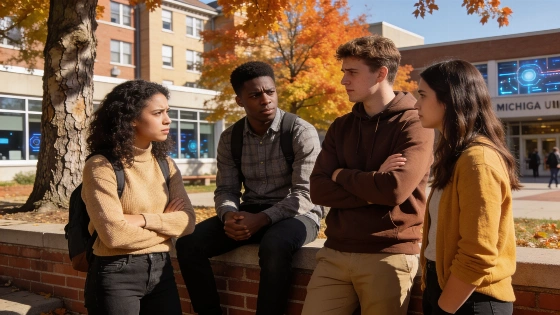
Llerandi supports progressive candidates in Michigan who campaign against political-establishment habits. So do Kira Saiti and Julian Bautista. Their preferred candidates include Abdul El-Sayed, a former public health official who won the Democratic Senate primary, and Will Lawrence, a liberal activist challenging Republican Rep. Tom Barrett in Michigan's closely divided 7th Congressional District.
In the 2026 general election, El-Sayed is facing former Republican congressman Mike Rogers for the Senate seat being vacated by Gary Peters. The contest could affect control of the chamber.
Saiti is 19 and focused less on her own career than on the violence she sees through her phone. Images from the Middle East and from closer to home have made it difficult for her to view the world as safe or improving.
Bautista, 20, has a more direct professional grievance. Cuts by the Trump administration damaged the environmental field he planned to enter. He now intends to seek work in the Netherlands after graduation.
Bautista describes the United States as a democracy weakened by corrupt politicians. He says the country has stagnated or declined throughout his lifetime. His assessment is severe, but it reflects the central complaint running through campus conversations: students see major problems while national leaders appear unable or unwilling to address them.
The pressure reaches students who are less involved in politics.
Praveen Amunugama, a 21-year-old biochemistry major, plans to attend graduate school and hopes the job market improves within two years. He and his friends want ordinary markers of stability, including the ability to afford a home and raise a family.
The numbers behind the unease.
The broader economic picture gives students little reason to dismiss those concerns. The unemployment rate for people ages 22 to 27 is 7.2%, compared with 4.1% for the broader workforce. Unemployment among recent college graduates is 5.6%, a difficult transition from education to work that Associated Press reporting described as unusually severe outside the Great Recession.
A 2024 study found that Generation Z is positioned to become wealthier than millennials and that millennials are wealthier than the generation before them. That finding conflicts with the persistent sense of decline among young adults, but it does not erase the barriers they face now. Housing prices are historically high. Food and health care costs continue to weigh on people entering the workforce.
Economist Kevin Corinth said earlier generations could follow recognizable paths to success and expect to do better than their parents. For younger workers, that path is less certain because artificial intelligence could reshape entire industries. More people are also taking longer to leave home and start families.
Students are hunting for work in an online system crowded with AI-generated postings, scams and fake openings. Marla McGraw, assistant dean of career management in Michigan State's business school, said students frequently ask whether a job listing is real. Her advice is blunt: the market is difficult, but students must keep pressing forward.
Young Americans' optimism about the job market fell sharply after 2024, according to a Gallup survey cited in Associated Press coverage. Gallup also recorded an unusually large gap between young people's economic outlook and that of older Americans.
An Associated Press-NORC Center for Public Affairs Research poll found that young adults are less likely to engage in politics or view voting as important.
Disillusionment crosses party lines.
The anger is not confined to progressive students. Karlee VanAntwerp, 21, leads the Michigan State chapter of Turning Point and works for Barrett's campaign. She said Gen Z political views have become more extreme. People in the middle are often treated as unreasonable by both sides.
VanAntwerp also sees political futility among young conservatives, much as liberal students describe it. One administration makes changes and the next reverses them. That cycle leaves students believing elections change the direction of government without solving the problems that brought them to the polls.
Her concerns intensified after Charlie Kirk, the founder of Turning Point, was assassinated last year. VanAntwerp has been disturbed by repeated online mockery of his killing. She worries that the loss of basic political restraint makes cooperation harder.
The contrast between VanAntwerp and Lawrence's supporters is real but incomplete. At a campus classroom event, Lawrence urged students not to withdraw from society and described organizing as the force that had given his own life direction.
The students listening to him wanted change. Conservative students working for Barrett want change too. Their disagreements concern the remedy more than the diagnosis.
Demand for a larger break.
Bautista remains unconvinced that conventional Democrats offer a sufficient alternative. Online influencers he trusts criticize figures such as Senate Minority Leader Chuck Schumer of New York as diluted versions of Donald Trump.
That criticism helps explain why anti-establishment candidates attract students seeking a different scale of response. Two years ago, economic pessimism helped Donald Trump win 47% of young voters, according to AP VoteCast.
Anxiety over artificial intelligence, global conflict, housing and employment has since joined the concerns already shaping student politics. The result is a restless electorate that can move toward candidates at opposite ends of the political spectrum when established leaders appear ineffective.
The college access debate shows why opportunity alone does not settle the question for young adults. Admission offers and financial aid can open a door, but they do not guarantee an internship, a home or confidence that public institutions will protect the future those opportunities promise.
State-level policy adds another layer of uncertainty. Students tracking employment, education and environmental regulation may encounter rules and data maintained through State of Michigan departmental registries. Local questions are handled through entities such as the City of Farmington, the City of Farmington Hills and the Farmington Public Schools board.
The division of responsibility can be difficult to see when a national policy change affects a local job search or household budget.
Michigan State students are responding to a chain of pressures that includes an uncertain labor market, rising household costs, online misinformation, global conflict and repeated political reversals. Their support for candidates promising disruption is already visible in the 2026 election contests involving Abdul El-Sayed, Mike Rogers, Will Lawrence and Tom Barrett.