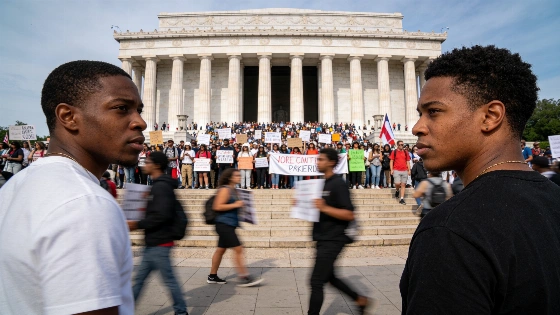
Hundreds gathered at the Lincoln Memorial in Washington, D.C., for the 2026 "Defend the Vote" March, urging action on voting rights and racial justice as new voting laws and redistricting changes raise concerns ahead of the midterm elections.
Hundreds of demonstrators assembled on the National Mall in Washington, D.C., on Friday for the 2026 "Defend the Vote" March, calling for stronger protections of voting rights and racial justice ahead of the upcoming midterm elections. The event, organized by the Rev. Al Sharpton and Martin Luther King III, was held on the steps of the Lincoln Memorial and drew attention to recent changes in voting laws and redistricting that many civil rights advocates say threaten equal representation for Black Americans.
This year's march comes in the wake of the U.S. Supreme Court's April decision in Louisiana v. Callais, which reinterpreted key provisions of the Voting Rights Act of 1965. The ruling allows Southern states to redraw congressional maps in ways that critics argue diminish the voting power of Black communities. Organizers and participants described the current moment as one of the most critical for voting rights since the original 1963 March on Washington led by the Rev. Martin Luther King Jr.
Concerns Over Recent Voting Law Changes
Speakers at the event, including Sen. Bernie Sanders of Vermont, warned that recent efforts to restrict mail-in and early voting, purge voter rolls, and redraw districts could undermine the integrity of the electoral process. Sanders and other leaders pointed to actions by Republican-led states and the Supreme Court's conservative majority as contributing to what they described as the most significant assault on voting rights since the era of segregation.
Martin Luther King III, whose Drum Major Institute co-hosted the march, said the Supreme Court's decision has further eroded the progress made by the Civil Rights Movement. He emphasized the need for continued advocacy and community engagement to protect voting rights, especially in light of recent setbacks.
Impact on Congressional Representation
The Supreme Court's ruling directly affected Louisiana's congressional districts, particularly District 6, which had been created to provide a second majority-Black district in a state where Black residents make up 33% of the population. The court found the district unconstitutional, stating it relied too heavily on race, and allowed the legislature to redraw it to cluster around predominantly white communities. As a result, Rep. Cleo Fields, whose district was at the center of the case, announced he would not seek reelection to Congress and would instead run for the state Senate.
Rep. Troy Carter, also of Louisiana, warned that the effects of the ruling would extend beyond his state, potentially influencing state and local legislative seats across the country in future election cycles. He described Louisiana as the "scene of the crime," but said the impact would be felt nationwide.
Legal Challenges and Next Steps
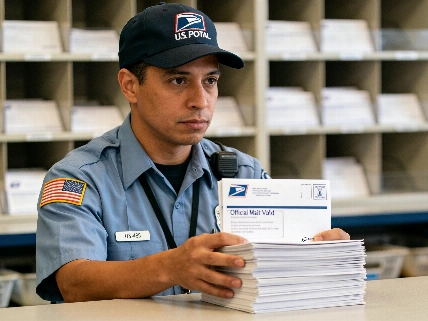
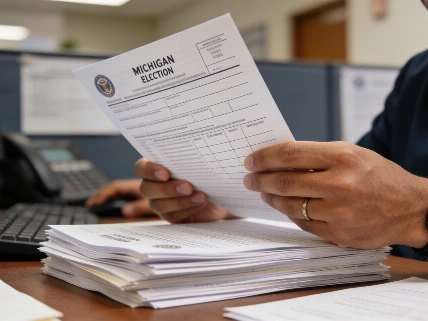
In addition to the march, civil rights organizations have filed new claims in federal court challenging President Donald Trump's executive order restricting mail-in voting. While the Supreme Court recently allowed for possible implementation of the order, a federal judge in Boston temporarily halted its enforcement late Thursday. With the first mail ballots for the midterms scheduled to be sent out next week, time is running short for any significant changes to voting procedures.
Friday's march echoed the legacy of the 1963 March on Washington, drawing attention to the ongoing struggle for voting rights and equal representation. Organizers and participants stressed the importance of continued civic engagement and legal action to protect access to the ballot, especially for communities that have historically faced barriers to voting.
The "Defend the Vote" March was co-hosted by the Drum Major Institute and the National Action Network, with support from major civil rights leaders and Democratic political figures. The event included a march past national monuments, including the Martin Luther King Jr. Memorial, and drew participants from across the country.
Redistricting and voting rights remain central issues in the lead-up to the 2026 midterm elections, with advocates urging lawmakers and the courts to restore and strengthen protections for all voters. The outcome of ongoing legal challenges and legislative efforts will shape the landscape of American elections in the years ahead.
Redistricting is a process that occurs every ten years following the U.S. Census, allowing states to redraw congressional and legislative districts. The Voting Rights Act of 1965 was designed to prevent racial discrimination in voting, but recent court decisions have shifted how its provisions are applied. Civil rights groups continue to monitor changes and pursue legal remedies to ensure fair representation for all communities.