With mail ballots set to go out in North Carolina, the Trump administration is urging the Supreme Court to allow new federal restrictions on mail voting, even as lower courts question the system's readiness and legality ahead of November's elections
Millions of mail ballots are about to be sent to voters across the country, but the Trump administration is pushing the Supreme Court to let it enforce sweeping new federal restrictions-despite the system at the heart of the plan not yet being operational and lower courts raising sharp doubts about its legality and feasibility.
On Thursday, federal officials filed an emergency appeal to the Supreme Court, seeking to overturn a judge's order that blocks the U.S. Postal Service from implementing President Donald Trump's executive order on mail voting. The move came just hours before North Carolina was scheduled to begin mailing ballots, marking the start of a critical period for the November midterm elections.
Federal Rule Faces Legal and Technical Hurdles
The administration's plan would require states to use a uniform envelope design and upload lists of eligible mail voters to a new online portal. If the data in the portal did not match the information on ballot envelopes, the Postal Service could refuse to deliver those ballots. However, during a hearing in Boston, U.S. District Court Judge Indira Talwani pressed government attorneys for evidence that the portal was even functional. The Department of Justice could not confirm the system was ready, prompting the judge to describe the effort as an "experiment" with the upcoming election at stake.
Judge Talwani previously blocked the administration from enforcing the executive order, citing the late timing and the risk of disrupting established election procedures. The Supreme Court later ruled that her order was premature, as the Postal Service had not yet published regulations. Once those rules were issued, voting rights groups and Democratic officials quickly renewed their legal challenges, arguing that the president lacks authority to dictate election rules-a power reserved for states and, in some cases, Congress.
States Unprepared, Ballots Already in Motion
Election officials in multiple states have warned that the new requirements would force a complete overhaul of their mail voting operations. Most states have already printed ballots and envelopes, and some, including municipalities in Wisconsin, have already sent ballots to voters. North Carolina is set to begin its full mail ballot rollout on Friday, with other states following closely behind.
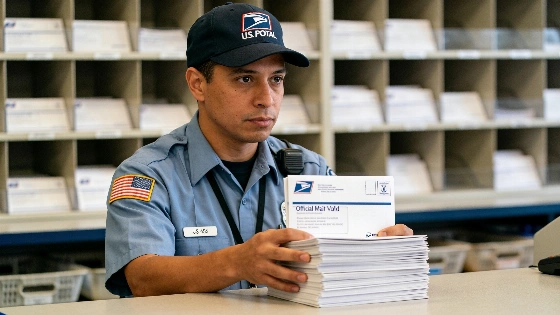
Despite the administration's claim that the changes are minor, the Postal Service has not identified a single state willing to opt into the new system. Even among the 12 states supporting the administration in court, none have announced plans to participate. The rule would also require all ballots to be physically brought to post offices before mailing, and a whistleblower report warns that a single barcode error could result in entire batches-potentially tens of thousands of ballots-being discarded.
Supreme Court Timeline and Political Stakes
The legal fight is now on a tight schedule. Justice Ketanji Brown Jackson has set a September 8 deadline for opponents of the rule to file their arguments, meaning any Supreme Court decision will likely come in the middle of next week at the earliest. The administration has already appealed Judge Talwani's temporary restraining order to the 1st Circuit Court of Appeals in Boston, but is now seeking a faster resolution from the nation's highest court.
President Donald Trump has repeatedly criticized mail voting, blaming it for his 2020 election loss to Joe Biden, despite having used mail ballots himself. The administration's solicitor general, John Sauer, argues that while states control election procedures, they cannot use the federal mail system without complying with Postal Service regulations on envelope design and voter information.
Broader Context and Ongoing Litigation
This legal battle is part of a broader wave of election-related lawsuits across the country. In a related development, a federal judge recently dismissed the Department of Justice's attempt to obtain Minnesota's full voter registration list, as reported earlier. The ongoing disputes highlight the complexity of federal and state roles in election administration, especially as deadlines for ballot distribution approach.
For voters and election officials, the uncertainty is immediate. With ballots already being printed and mailed, any last-minute change could disrupt established processes and risk disenfranchising eligible voters. The lack of a working federal portal, combined with the absence of state buy-in, leaves the administration's plan on shaky ground. As the Supreme Court weighs its next move, the practical reality is that states are moving forward with their own procedures, and the window for federal intervention is rapidly closing. The administration's insistence on pushing through a system that is neither ready nor accepted by states signals a tactical gamble-one that, if allowed, could upend mail voting logistics just as the midterms begin in earnest.