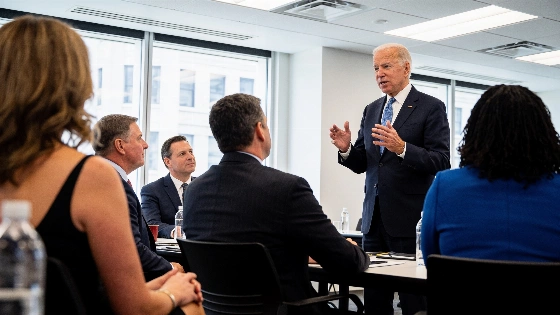
Vice President JD Vance will speak privately to the Republican Jewish Coalition on Monday, as the group navigates internal debate over U.S. policy toward Israel and rising concerns about antisemitism within conservative circles.
Vice President JD Vance is set to deliver a closed-door address to the Republican Jewish Coalition on Monday, as the organization's annual gathering takes place during a period of heightened sensitivity over U.S.-Israel relations and antisemitism in American politics. The event, which is not open to the media, comes as some conservative Jewish activists express uncertainty about Vance's positions and his connections to controversial figures.
Vance's appearance follows recent comments in which he questioned the motives of certain Israeli officials and declined to distance himself from conservative commentator Tucker Carlson, who has faced criticism for hosting antisemite Nick Fuentes. These issues have fueled debate within the coalition about the direction of Republican support for Israel and the party's response to antisemitism.
Internal Debate Over U.S.-Israel Policy
Some members of the Republican Jewish Coalition have voiced discomfort with Vance's scheduled remarks, citing his recent statements about Israeli officials allegedly seeking to influence American public opinion to prolong conflict with Iran. In June, Vance criticized members of Israel's government for opposing former President Donald Trump's efforts to resolve the war with Iran, suggesting that Israeli leaders should not undermine their strongest ally. The following month, he told podcaster Joe Rogan that elements within Israel's government were attempting to sway U.S. sentiment to keep the war ongoing.
These remarks have contributed to a sense of unease among some coalition members, who are seeking clarity on Vance's stance toward Israel. The coalition's annual summit has historically served as a platform for Republican leaders to affirm their support for Israel and address concerns about antisemitism, but this year's event is marked by internal divisions and generational differences within the party.
Antisemitism and Party Divisions
The Republican Party has sought to highlight what it describes as Democratic hostility toward Israel and Jewish Americans, but it is also contending with its own internal challenges. Last year's coalition summit was overshadowed by controversy after Heritage Foundation President Kevin Roberts declined to distance the organization from Tucker Carlson following Carlson's interview with Nick Fuentes. The incident prompted visible protest from some attendees, including college students who displayed signs critical of Carlson's influence within the party.
Prominent pro-Israel conservatives, such as Auburn University men's basketball coach Bruce Pearl, have called on Vance to publicly reject Carlson in order to gain their support. Pearl warned that maintaining ties to Carlson could embolden others with similar views and worsen the problem of antisemitism within conservative ranks.
Shifting Support and Generational Change
Recent polling indicates that support for Israel has declined in the United States, particularly among Democrats, with about half of Democratic respondents in a July AP-NORC poll believing Israel has committed genocide against Palestinians-a charge denied by both Israel and the U.S. government. While Republicans remain more likely to back Israel, younger party members are increasingly skeptical of the level of U.S. support.
The Republican Jewish Coalition continues to use its annual summits to push back against antisemitism and advocate for strong U.S.-Israel ties. As Vance is considered a leading contender for the Republican presidential nomination in 2028, his positions and affiliations are drawing close scrutiny from coalition members and conservative Jewish leaders.
The Republican Jewish Coalition is a national organization that brings together Jewish Republicans and conservative allies to discuss policy, advocacy, and community concerns. Its annual summit is a key event for party leaders and activists to address issues affecting Jewish Americans and U.S.-Israel relations.