President Donald Trump continues to reference a possible third term, but recent remarks suggest he is increasingly focused on life after leaving office in January 2029, raising questions about his legacy and the limits of presidential power
President Donald Trump has long teased the idea of seeking a third term in the White House, despite the constitutional ban on serving more than two. In recent months, however, Trump has shifted his public comments to focus more on what life might look like after his presidency ends in January 2029.
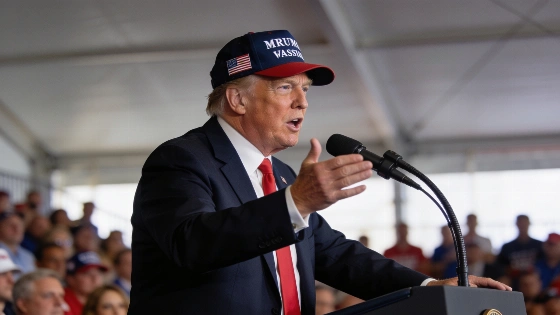
While Trump has appeared at events wearing 2028 campaign hats and referenced potential loopholes for a third run, his speeches now often include reflections on his eventual departure and the legacy he will leave behind. This change in tone comes as the end of his second term approaches and the political landscape begins to shift toward the next presidential race.
Shifting Focus to Life After the White House
During recent appearances in New York, Pennsylvania, Georgia, and Michigan, Trump has described scenarios in which he is no longer president, sometimes joking about watching his successor take credit for his administration's accomplishments. At a Long Island event, he told the audience that the next president would claim credit for his work, while he would be "sitting around, watching television."
Trump's remarks have included both humor and hints of frustration about leaving office. At a rally in Georgia, he predicted he might be "crying" at home if Democrats gain control of the Senate and change filibuster rules. In Michigan, he left open the possibility of a different outcome, emphasizing the word "may" when discussing whether a new president would take office in two and a half years.
Term Limits and the 22nd Amendment
The U.S. Constitution's 22nd Amendment, ratified in 1951, prohibits anyone from being elected president more than twice. Despite this, Trump has publicly speculated about ways to seek a third term, including the idea of running as vice president and then stepping in if the president resigns. He has also referenced "loopholes" in interviews, though he has acknowledged the legal barriers to a third term.
Trump's mixed signals have led to speculation about his intentions. Some constitutional experts note that his shifting statements allow him to keep options open, while also preparing supporters for the reality that he may not seek office again after 2028.
Legacy and Second-Term Challenges
As Trump's second term progresses, the focus on legacy becomes more pronounced. Like previous two-term presidents, he faces the challenge of maintaining influence as the end of his administration nears. Political observers note that presidents often turn their attention to cementing their achievements and shaping how they will be remembered.
Trump has emphasized ongoing efforts to reduce violent crime, address immigration at the U.S.-Mexico border, and lower prescription drug prices. According to the White House, his primary concern remains "making America greater than ever before."
In addition to policy initiatives, Trump has overseen a series of renovations and additions to the White House and surrounding areas, including a new ballroom, a patio area in the Rose Garden, and other architectural projects. Some of these projects are scheduled for completion near the end of his term, with Trump noting that future presidents will benefit from the changes.
Looking Ahead to 2028 and Beyond
Despite the constitutional limits, Trump continues to reference the possibility of a 2028 campaign, sometimes joking about a "third time" in office. He has promoted "Trump 2028" slogans on social media and worn campaign-themed hats at public events. However, he has also acknowledged to reporters that the law is "very strong" and may prevent another run.
As the 2026 midterm elections approach, Trump's evolving public statements reflect both a desire to keep supporters engaged and an awareness of the approaching end of his presidency. The coming years will likely see increased attention to his legacy, the impact of his policies, and the transition to new leadership in the White House.
Presidential transitions are a regular feature of American democracy, with outgoing leaders often focusing on legacy projects and preparing for life outside the Oval Office. Trump's recent comments suggest he is beginning to navigate this phase, even as speculation about his future continues.