Two red swamp crayfish carcasses were found in a private pond near Niles during a September survey. The Michigan DNR is asking residents in Cass and Berrien counties to report possible sightings.
Two crayfish carcasses were found in mid-September in a private pond near Niles during a snorkel survey for invasive aquatic plants. The SW x SW Corner Cooperative Invasive Species Management Area conducted the survey, and the Michigan Department of Natural Resources announced the finding Wednesday, Oct. 7.
The discovery is the first reported red swamp crayfish finding in Cass County. The DNR is asking residents near Niles to report any animal they suspect may be this species.
Available search results do not document a later trapping effort, genetic identification, pond quarantine or other regulatory action. They also do not establish whether more crayfish were found, how much area may be affected or whether the species has appeared in other Cass County waters. The Michigan DNR remains the agency identified in the available information as seeking public reports.
Why the crayfish matter
Red swamp crayfish are native to the southern United States. Michigan has prohibited the species since 2014, according to the DNR. The crayfish can compete aggressively with native crayfish for food and habitat, reproduce quickly and dig along shorelines. Available results do not independently confirm the specific provisions of the prohibition, the banned activities or the penalties that may apply.
The burrows can create large mounds of sand and soil called chimneys. That digging may weaken banks and nearby infrastructure. An infestation in one pond could affect more than the animals themselves.
The DNR says Michigan infestations are believed to result from aquarium pets being released or escaping, live bait being released or escaping, or live crayfish brought into the state for crawfish boils. Michigan first detected the species in 2017 at Sunset Lake in Kalamazoo and at a retention pond in Novi.
Since then, officials have confirmed isolated infestations in Kalamazoo, Livingston, Macomb, Oakland, Van Buren and Wayne counties. The DNR has also previously reported the crayfish in Ottawa County. Those reports do not show that the Cass County finding has spread beyond the private pond near Niles.
No separate statement from the pond owner, the SW x SW Corner Cooperative Invasive Species Management Area, the City of Niles or Cass County appeared in the available search results. That absence does not show that local coordination did not take place.
How to identify one
Red swamp crayfish can live in many permanent freshwater habitats. They dig deep into the bottom and may leave chimneys with a relatively large hole in the center.
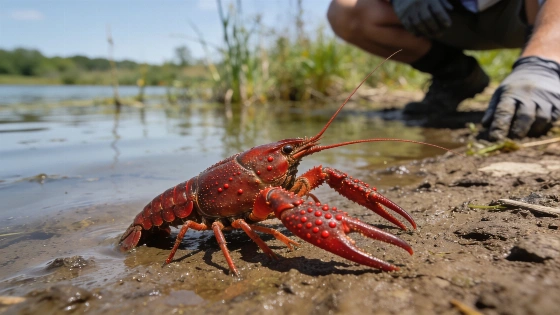
Adults generally measure 2 to 4 inches and can reach 6 inches. Their bodies may be dark red, brown, black or white. Small crayfish are typically brown and mottled. The species often has numerous red bumps on its body and claws, an hourglass-shaped marking on its back that touches in the middle, and a dark triangle on its tail.
The claws are long, thin and saber-shaped. Crayfish from the pet trade may come in unusual colors such as blue, orange, cow print or white, so color alone cannot rule out a sighting. Residents can review the Michigan invasive species information before reporting an animal.
What residents should do
The DNR is asking people in the greater Niles area in Berrien and Cass counties to watch for the crayfish and report possible sightings. Residents should write down the location, date and time. They should not enter private property without permission.
If it is safe and practical, the DNR says residents can collect a suspected specimen, seal it in a bag and put it in a freezer. When collection is not possible, they should take close-up photographs of the top, sides, underside and claws so the animal can be checked. People should not transport or release a suspected red swamp crayfish into another waterway.
Reports should go to Kathleen Quebedeaux of the DNR Fisheries Division at QuebedeauxK@Michigan.gov or 734-780-5571. The State of Michigan's invasive-species program has more identification information.
The Cass County discovery does not establish a widespread infestation. Available information also contains no confirmed follow-up survey results or additional affected waters. Residents can still help officials find more animals before they spread. Under the DNR's stated guidance, the species is prohibited and can damage shorelines while displacing native crayfish. A suspected sighting should be documented and reported to the Michigan Department of Natural Resources, not moved or released.