Ottawa County's population has grown by roughly 4% since 2020. The increase is putting more pressure on housing, roads, public services and groundwater as officials plan for continued growth.
Grand Haven Charter Township grew by 10.3% between 2020 and 2025, the largest increase among Ottawa County communities. Across the county, the population rose from about 296,200 in 2020 to roughly 308,500 in 2025, according to figures reported by Reuters.
The county now has an estimated 308,459 residents. Its population has nearly doubled from 157,174 in 1980.
Growth is still coming.
Reuters described Ottawa County as the fastest-growing county by percentage among Michigan's 10 largest counties from 2020 to 2025. New arrivals account for part of the increase. So does a rare natural increase, with births exceeding deaths. That pattern is not shared evenly across Michigan.
Migration drives increase
Ottawa County recorded a net domestic gain of 1,166 people between 2020 and 2025. It also recorded a natural increase of 674 people. Domestic migration includes people moving from other states and from other Michigan counties.
Only 11 of Michigan's 83 counties recorded natural increase during that period. Most counties had more deaths than births.
Population gains differ sharply by community. Grand Haven Charter Township posted the largest increase from 2020 to 2025 at 10.3%. Jamestown Charter Township had the strongest one-year growth from 2024 to 2025 at 2.4%.
Zeeland moved in the opposite direction. Its population fell 0.3% in that one-year period and 1.8% across the five-year period. Of the county's 24 cities, townships and villages, all but four grew between 2020 and 2025. Their increases ranged from 0.1% to 10.3%.
Housing becomes central test
Grace Maiullo, a spokesperson for Lakeshore Advantage, said Ottawa County is expected to keep growing. She said the pace will likely be slower than it was during the past five to 10 years. A linear projection based on the current pace points to another increase of roughly 4% by 2030.
That would put housing supply and affordability at the center of county planning. Paul Sachs, director of the Ottawa County Department of Strategic Impact, said housing affordability is already a concern. The problem could persist if the number of homes does not keep pace with population growth.
More demand could push housing prices higher. That is the basic pressure.
Ottawa County is addressing the issue through a strategic plan adopted by the Ottawa County administration and Board of Commissioners. The plan uses the phrase "partnered, quality, growth." Its work covers housing choices, land-use planning, transportation and a sustainable countywide water supply.
The plan calls for a Land Use Vision developed with local governments. It also calls for a road infrastructure plan that looks ahead and an evaluation of regional water systems, including their capacity and opportunities for expansion.
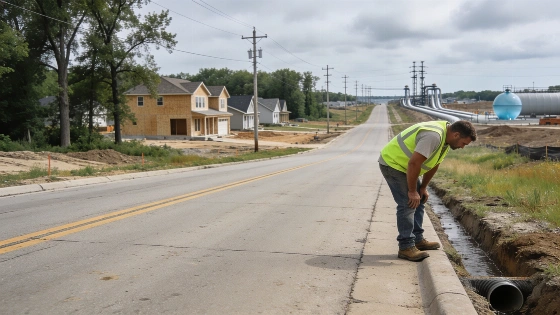
New development needs the physical systems to serve new residents. That includes roads and water infrastructure.
Water has become a major part of the discussion. Reuters reported that development is putting more pressure on groundwater supplies. Water levels are declining, and salt concentrations are rising.
Regional water planning is therefore more than a long-term administrative task. Communities also need to determine how they will maintain reliable supplies as residential and commercial development expands.
Michigan growth is uneven
Michigan's population also increased, according to U.S. Census Bureau estimates. It rose from 10,079,362 in 2020 to 10,127,884. The state remained the 10th most populous in the nation.
The Midwest was the only U.S. region where every state gained population. About 56.6% of Michigan counties grew from July 2024 to July 2025.
The state still saw less international migration.
Net international migration declined in 88% of Michigan counties. That reduced the contribution from newcomers arriving from outside the country.
The national population grew by 1.8 million, or 0.5%, between July 1, 2024, and July 1, 2025. It reached about 341.8 million. Growth has slowed significantly since the early COVID-19 pandemic as net international migration declined.
An earlier state permitting report described the State of Michigan's effort to shift oversight of underground carbon storage wells from the federal government to the state.
That debate is separate from Ottawa County's population trends. It shows how decisions made at the state level can shape the infrastructure and investment environment that local communities must manage.
Planning for the next wave
Stephanie Oesch, a data and research analyst with the Ottawa County Department of Strategic Impact, said population growth should not be treated as simply positive or negative. For Ottawa County residents, growth is already part of daily life. It brings benefits and demands for public planning.
The numbers support that view. Ottawa County is gaining residents through domestic migration and natural increase. Many Michigan counties are losing population through natural change.
The central question is speed.
Housing, roads and water capacity must expand quickly enough to serve the new residents. That challenge extends beyond individual development approvals.
Road maintenance and emergency response need attention as communities add homes and businesses. Public services and utility investments also need to keep pace.
The strategic plan calls for coordination between county and local governments. Those systems do not stop at municipal boundaries.
Ottawa County's growth is a long-term planning obligation, not a temporary spike. The population gains and projected momentum support new investment. The adopted strategy will matter only if housing choices, transportation planning and water capacity advance alongside development.
The practical test is clear. Growth should be measured not only by how many people arrive, but also by whether the systems serving them keep pace.