A new 18-month extension takes the project to 36 months under a Defense Innovation Unit agreement. Public details still omit the equipment and fielding schedule.
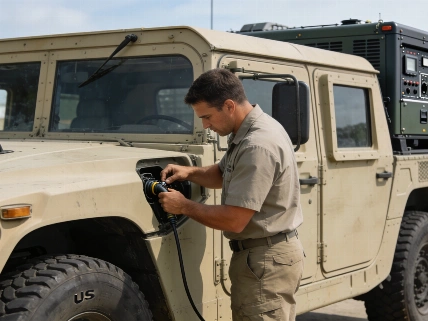
The U.S. Army is developing expeditionary power for operations where fixed infrastructure is limited or unavailable. Michigan Technological University's Advanced Power Systems Research Center, known as APS LABS, and Oshkosh Defense are working on a mobile energy-generation system for that effort.
The partnership has received an 18-month extension, taking the project timeline to 36 months. Michigan Tech said $16.9 million had been exercised on the project when it announced the extension.
The work runs through a Defense Innovation Unit other transaction agreement, or OTA. On Oct. 14, 2026, Oshkosh Defense announced that the collaboration would move the Vehicle Integrated Power Kit, or VIPK, from prototype development toward scalable production.
APS LABS brings research, development and integration expertise to the project. Oshkosh Defense contributes production capabilities. GS Engineering and Soli Consulting are also participants. LSA Solutions is named as well.
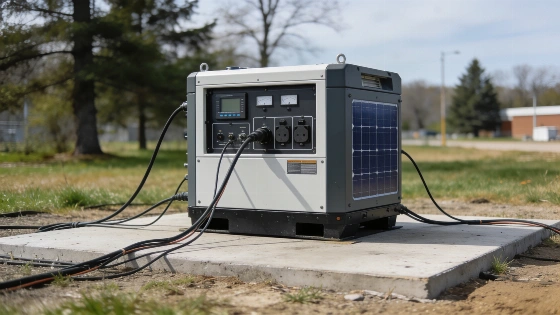
Michigan Tech's project announcement describes the VIPK as an on-vehicle power system designed to generate up to 120 kilowatts at 600 volts of direct current. It is intended to comply with the Tactical Microgrid Standard.
Planned uses include counter-drone systems and directed-energy weapons. The list also includes missile defense systems and command posts. Field hospitals are another planned application.
The next phase calls for completing two prototypes and validating them for government assessment and soldier evaluation. APS LABS plans to build two more prototypes for further testing. Those units will also be used in technology demonstrations.
The team plans to complete a technical data package. It will also optimize the design for manufacturing.
Jeffrey D. Naber, Michigan Tech's Richard and Elizabeth Henes Professor in Energy Systems and the project's leader, said the partnership combines APS LABS' research and development work with Oshkosh's production capabilities to move the technology toward use by service members.
A separate University of Michigan research proposal has faced local scrutiny. A University of Michigan proposal for a research complex in Ypsilanti Township drew questions about its purpose and resource demands. That proposal is distinct from the APS LABS partnership with Oshkosh Defense.
Public announcements do not identify the equipment or provide a fielding schedule.