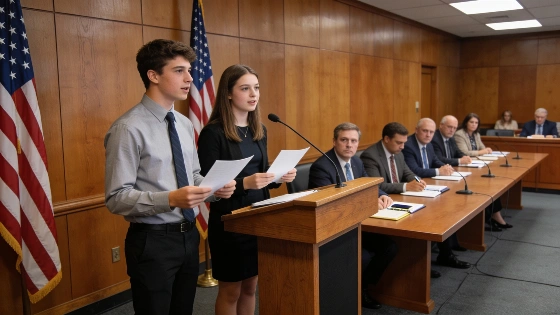
High schoolers from East Grand Rapids and East Kentwood spoke before the State Board in Lansing, sharing their views on the Declaration of Independence. The event is part of Michigan's push to make civic education real and relevant.
Students from East Grand Rapids and East Kentwood High Schools faced the State Board of Education in Lansing. They spoke about the Declaration of Independence. The nation's 250th anniversary is coming up. This wasn't just a classroom project. It was a real test of civic engagement. The Michigan Department of Education wants students to take part in shaping education policy. That's the new direction. Michigan Department of Education officials say student voices matter.
The board set up the meeting like a Congressional hearing. Students answered questions and explained their views. The Michigan Center for Civic Education helped organize the event. Their goal is simple. They want students to experience civic life, not just read about it. The State Board has made student input a priority. They've also asked for public feedback on special education and other big issues. State of Michigan records show this is part of a wider push for public involvement.
Expanding civic learning opportunities
The "We the People: The Citizen and the Constitution" program sits at the heart of this effort. It's been running in Michigan since the 1980s. The Michigan Center for Civic Education says the program builds civic skills and connects students to real constitutional debates. Students prepare answers and present them to panels of civic leaders. The leaders ask questions and challenge their thinking. Bridge Michigan has reported more attention on K-12 civic learning. But there are no published numbers yet for "We the People" participation in 2026. Bridge Michigan covers these trends.
Since 1982, over 3,000 Michigan students have taken part in "We the People" hearings at the regional level. In the 2025-26 season, more than 800 people from across the state came to watch. That's a big reach. The program supports Michigan's Top 10 Strategic Education Plan. It gives students more ways to learn and aims to boost graduation rates. Districts like Farmington Public Schools have added civic education to their classes. They want students to join public forums and hearings. Farmington Public Schools is one example.
Student voice and community engagement
The Michigan Center for Civic Education says student voices should be heard. They want all students, no matter their background, to see civics as something real. The group works to bring civic lessons into every grade, from PreK to high school. They also help teachers find ways to make social studies matter. The League of Women Voters of Michigan runs workshops and presentations for local groups, city meetings, and classrooms. League of Women Voters of Michigan keeps civic engagement alive at the local level.
Dr. Glenn Maleyko, State Superintendent, says this partnership helps schools meet the core goal of Michigan's social studies standards: preparing students to be active citizens. Dr. Delsa Chapman, deputy superintendent, points to the department's focus on fair access to social studies for all. Cities like Farmington and Farmington Hills post public hearing notices and civic calendars. They want residents to get involved. It's all part of building a culture of engagement in Michigan schools and communities.
Resources and broader context
Schools and local groups can find resources and training on the Michigan Department of Education website. The Michigan Center for Civic Education, a nonpartisan nonprofit since 1982, keeps offering professional learning and real civic education. Their work helps teachers, students, and communities connect. Oakland County and local school boards, including Farmington Public Schools, help by sharing civic learning tools and encouraging students to join public events.
These efforts come as Michigan schools face other challenges. Chronic absenteeism is still a problem, even as rates fall. Earlier reports show why programs that link students to real-world learning and community life matter more than ever.
Michigan's approach stands out. Students get a real seat at the table. They talk to state leaders and tackle constitutional questions head-on. The state is betting on a new generation that knows its rights and duties. This hands-on model gives schools a clear path. It's about preparing students for real roles in their communities-and beyond. The message is simple. Civic education works best when students live it.