Every K-12 school in Michigan must establish a behavioral threat assessment team by Oct. 1. The state has training available, but no public school-by-school registry shows which districts have complied.
Kimberly Root, a spokesperson for the Michigan State Police Office of School Safety, said Michigan schools are not required to report whether they have created behavioral threat assessment teams. The state therefore has no mandated public list of schools that meet the Oct. 1 deadline.
The requirement comes from a package of school safety laws signed by Gov. Gretchen Whitmer in early 2025. It applies to every K-12 school in Michigan.
The federal guidance is separate.
A September 2026 recommendation from the U.S. Department of Education and the U.S. Department of Justice encourages schools to create multidisciplinary teams and procedures for evaluating anonymous threats, including swatting incidents. It is not a new federal mandate. The guidance urges schools to coordinate with local, state and federal authorities through established communication channels.
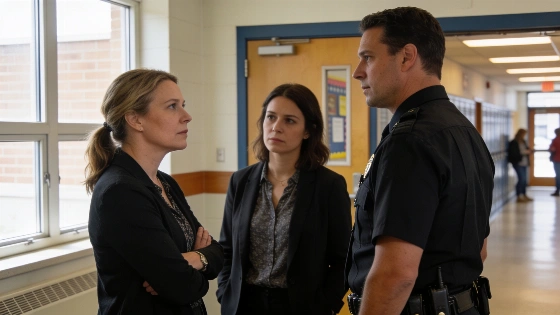
Michigan teams will review reports of alarming behavior. They will decide whether a student presents a credible threat and coordinate steps to reduce the risk of violence. Each team must include a school administrator, a mental health professional and a law enforcement official.
Federal guidance allows schools to use trained internal and external participants. That option may help districts that rely on county or community partners.
For families in Farmington and Farmington Hills, local questions will likely go to the Farmington Public Schools board, district administrators and school safety personnel. District information can show how the required team fits with existing counselors, administrators, behavioral supports and relationships with local police agencies.
What the teams will do
Michigan's behavioral threat assessment and management requirement is meant to address behavior before it reaches a crisis point. Teams will review the circumstances behind a report, decide whether it represents a threat and choose an appropriate intervention.
The work does not stop at identifying danger. A team may need to follow a student over time. School staff, families and outside providers must coordinate that care.
Alyse Ley, a child and adolescent psychiatrist and associate professor in Michigan State University's colleges of Osteopathic Medicine and Human Medicine, directs Prevent 2 Protect. The program provides training and support in this area.
Ley's program defines high risk as posing a threat to oneself or others. Early intervention is meant to change a child's path by redirecting a student from a course toward violence to a more pro-social path.
A school safety example from Willis Independent School District in Texas shows how the process can work. A standing team of administrators, a counselor and a school resource officer gathers information and evaluates the concern. When appropriate, the team connects the student with support.
Threat assessment is not one disciplinary decision.
Training exists but funding does not
Root said the law does not require schools to report team creation. The legislation also did not provide money for training or support materials.
Between 2022 and 2025, the Office of School Safety hosted 51 behavioral threat assessment and management training sessions. About 4,000 school employees, mental health professionals and law enforcement representatives attended. A federal grant paid for the sessions.
Prevent 2 Protect offers free basic training in partnership with the Michigan State Police Office of School Safety. The program serves K-12 educators, administrators, mental health professionals and law enforcement personnel. It also trains community members and other stakeholders to recognize early warning signs and help manage high-risk adolescents.
The U.S. Department of Education and the U.S. Department of Justice also recommend that schools prepare for anonymous threats before they occur. Schools should identify who will communicate with local, state and federal agencies. The agencies' federal guidance calls these steps recommendations. It does not replace Michigan's separate state requirement.
The mandate arrives as Michigan schools continue to manage several student needs. Attendance problems remain one of them, as described in an earlier breakdown of chronic absenteeism. Threat assessment teams add work that requires staff time, judgment and coordination. A one-time disciplinary response is not enough.
A low-concern case
A Monroe Middle School case from last year shows why the process can be difficult. A student brought pepper spray to school. The incident led to discipline and a threat assessment.
The assessment found that the concern was low and that the student had no intent to harm. A full behavioral threat assessment and management process was considered unnecessary.
The student's mother still questioned the process and its effect on her daughter. The case shows the difference between a concerning incident that requires review and a credible threat that calls for extended management.
Schools must make that distinction while weighing safety concerns against the harm of labeling a student as dangerous. A low-level finding does not remove the need for clear communication with families. Schools must also decide what support or follow-up is warranted.
Support varies by district
Some schools can use programs that provide mentors and case managers after a concern is identified. Those supports can help students meet behavioral goals and stay connected to school. Families and outside providers can then coordinate care.
That help is not available in every district.
Prevent 2 Protect's current state funding runs through September 2027. Expanding the program statewide would require more funding. The Michigan Education Association has said educators need appropriate training, dedicated time, clear expectations and resources for the new responsibility.
Residents seeking records about implementation should keep local government boundaries in mind. The City of Farmington and City of Farmington Hills are separate municipal governments from Farmington Public Schools. City council materials and police communications may document coordination or emergency-response issues. They do not provide a statewide record of school compliance.
Oakland County administration and State of Michigan departmental registries may provide related public information. The available materials do not establish a public, school-by-school list showing which districts completed their teams by Oct. 1, 2026.
Michigan's law creates a statewide requirement without requiring schools to disclose compliance. It also provides no dedicated implementation funding.
Training is available, and thousands of professionals have attended sessions. Access to sustained case management remains uneven. The policy will work best where schools have time and support to assess concerns carefully and follow students after the first decision. A team should be more than another name on a safety plan.