Michigan now lists 10 high-hazard dams in poor condition, up from six in 2020. Recent floods, threatened overtopping and new legislation are putting more pressure on owners and communities to pay for repairs, improve emergency plans or remove obsolete structures.
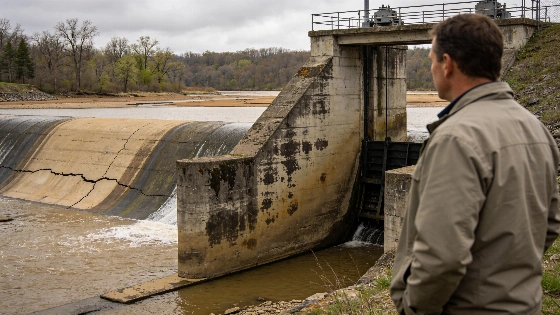
Five small dams failed during Michigan's spring flooding. The state now lists 10 high-hazard dams in poor condition, nearly twice the number identified six years ago. The failures and the near-overtopping of the Cheboygan Dam and Lock Complex exposed risks at aging structures before lawmakers gave the state stronger enforcement tools.
A high-hazard rating carries serious consequences because a failure could kill people and cause severe damage downstream. Michigan dam-safety officials inspect these dams every three years. Until a violation occurs, they generally cannot force owners to plan for repairs or show that they can pay for them.
Ten dams face elevated risk
Inspectors identified six high-hazard dams in poor condition in 2020, including the Edenville Dam near Midland. Its collapse drained Wixom Lake and left homeowners without the waterway six years ago. The Michigan Department of Environment, Great Lakes, and Energy now lists 10 such dams among the 89 high-hazard dams it regulates.
EGLE's Luke Trumble called the increase concerning. He said most, if not all, of the listed dams have plans under way. Poor condition means officials have found a safety deficiency, but they have not classified the problem as an emergency. Heavy rain, snowmelt or another difficult condition can change that assessment by testing a structure's capacity.
Spring flooding offered a direct warning. Five small dams failed, including a privately owned 94-year-old dam in Alcona County that washed away Buck's Pond. Water also threatened to top the Cheboygan Dam and Lock Complex. Federal regulators then required the owner of a neighboring hydroelectric facility to submit a safety plan.
The Hodenpyl Dam on the Manistee River entered a new inspection phase after April flooding revealed changes that Consumers Energy considered potentially related to safety. The Federal Energy Regulatory Commission authorized an underwater examination of the spillway area for Oct. 7. It also required the company to report its findings, any defects and proposed next steps by Oct. 15, according to MLive. River flows were expected to be interrupted during the inspection.
Michigan's inventory contains information on more than 2,600 dams, including their age, purpose and inspection history. The state regulates more than 1,000 of them when they are at least 6 feet tall and hold 5 or more acres of water, or when they maintain a legally mandated lake level.
Owners and communities carry the cost
Private owners control more than half of the 89 dams with high downstream hazards. That structure limits EGLE's ability to act early, especially when an owner cannot secure financing or complete recommended work. Trumble said the state can pursue compliance action after a dam falls out of compliance, but it has no way to make an owner act before a violation occurs.
The Michigan Department of Natural Resources manages about 200 state-regulated dams. Two are classified as high hazard and in poor condition. The DNR's Cornwall Creek dam in Cheboygan County had been on that list before crews rebuilt it this year.
Money is another barrier. DNR engineer Michelle Crook said the department has no dedicated line item for dam maintenance. Those costs compete with rising staff, fuel and other operating expenses. Seven of the 10 dams identified as most at risk have received help through EGLE's dam rehabilitation grant program.
Lawmakers allocated millions in July 2026 to strengthen troubled dams and expand EGLE's dam-safety staff. The wider need is much larger: repairs and modernization across roughly 2,600 Michigan dams have been estimated at about $1 billion. Local governments, private owners and watershed groups must compete for limited state, federal and philanthropic funding.
Michigan's infrastructure challenge reaches beyond dams. Researchers and industry partners are examining smaller nuclear reactors as electricity demand rises, according to an energy infrastructure report. That pressure on aging public systems makes long-term planning and clear responsibility more important.
For Farmington-area residents, dam risk is also a local-government coordination issue, even when a structure sits outside the city. The City of Farmington and City of Farmington Hills handle municipal communications and emergency information within their jurisdictions. Oakland County administration coordinates countywide emergency-management functions.
Farmington Public Schools board planning is a separate public responsibility, but school officials may also need to track transportation, building access and family communications during a regional flood emergency. Residents should follow current notices from the relevant jurisdiction instead of assuming that a warning issued for one municipality applies in the same way to another. The Farmington city information portal is one local starting point for municipal notices.
Removal can take years
Many Michigan dams were built for power generation or industrial uses that have ended. Others remain tied to recreation, swimming, fishing and waterfront property. Communities must weigh those benefits against liability, structural risk and the recurring cost of keeping an obsolete structure safe.
Grand Rapids began work on July 1 to remove four low-head dams on the Grand River. The project followed more than 15 years of planning to restore the river's natural flow. Doug McLaughlin of the Kalamazoo River Watershed Council said liability is becoming a larger concern for communities. He also said many dams no longer provide the value they once did.
Ypsilanti faces a different version of the same decision. The city-owned Peninsular Paper Dam was built in 1867 to supply electricity for paper manufacturing. Its removal has been approved since 2019, but construction is not expected to begin before summer 2028. The city has spent years raising money because it did not have enough reserves for a project expected to cost about $14 million.
A poorly maintained railroad bridge has complicated Ypsilanti's plans because it could fail if water flow changes after the dam is removed. The Huron River Watershed Council has helped with analysis and grant writing. State, federal and private foundation grants have provided funding.
White Cloud is weighing four options for its 154-year-old dam: repair it, remove it, replace it with another structure or modify it. An engineering analysis found cracks in the concrete and other damage. EGLE then ordered the impoundment drawn down.
The city and much of the community opposed the order because Mill Pond supported free swimming lessons, a June Kids Free Fishing event and recreation for children who may not have transportation or money to travel elsewhere.
Repair and removal estimates in White Cloud both range from $7 million to $9 million. Only a repair would restore the pond because the impoundment exists solely because the dam holds back the White River. A repair would also bring continuing maintenance costs. Removal would permanently change the recreation site.
Ownership rules may change
The Portage Plant Dam in Three Rivers shows how ownership can complicate state action. EGLE's database identifies the dam as privately owned by WaterWays Unlimited LLC, a Wyoming-based company whose owners are not disclosed through the state's account of its corporate rules. The state could not award the company a grant for engineering work because it lacked basic information about who controlled the LLC and whether the owner could provide the required $10,000 match.
Two letters sent to the company's Wyoming address were returned. EGLE then planned to use its own resources to assess the dam's deficiencies. The state could seek reimbursement in court for upfront assessment costs and future work. The most recent inspection report, issued in 2024, said public-safety fixes, stabilization repairs and other risk-reduction measures recommended in 2021 were incomplete or had unknown statuses.
Three Rivers resident D. Patrick Meachum said WaterWays Unlimited sold the dam to him last fall, but county property records still list the LLC as owner. Meachum said he is waiting for the state's decision on repair or removal before seeking recognition as the official owner. He disputes the state's engineering analysis. He has also discussed replacing the retired dam's turbines to supply electricity to builders and developing floating log cabin retirement homes upstream and downstream.
State Rep. Bill Schuette, R-Midland, is backing legislation that would require dam owners to register and show that they can fund maintenance and compliance. His bill would also increase inspection frequency for high and significant downstream hazard dams, raise safety standards and give the state more enforcement authority. A similar bill from state Sen. Mallory McMorrow, D-Royal Oak, is heading to the governor's desk.
On Oct. 2, 2026, the Michigan Senate approved a broader dam-safety reform package. Versions of two related bills had already passed both chambers, bringing the measures closer to Gov. Gretchen Whitmer's desk. The proposals would strengthen flood-protection requirements, require more frequent inspections and make owners show that they can maintain their structures, according to Michigan Public's legislative report.
The proposals follow years of failed legislation after the 2020 Edenville collapse, which caused more than $200 million in damage. Flooding in 2026, along with failures and near-emergency conditions elsewhere, gave the effort new momentum. Statewide estimates indicate that potential inundation zones tied to high- or significant-hazard dams reach more than 100,000 residents. Michigan's standard for handling an extreme flood remains below the national benchmark of designing for 100% of the probable maximum flood.
The legislation would not replace repairs, removals or a reliable funding source. Consumers Energy is also seeking approval to sell 13 hydropower dams to Confluence Hydro, a subsidiary of a private equity company. Gov. Gretchen Whitmer opposes the sale, and the Michigan Public Service Commission is scheduled to approve or deny it this year. None of those 13 dams appears on the state's list of high-hazard dams in poor condition, although they average about 100 years old.
Inspections alone cannot manage Michigan's dam system safely. The state has identified more dams with safety deficiencies, but current rules still allow ownership, financing and maintenance problems to continue until they become violations. Registration requirements and stronger enforcement could close that gap. The immediate choices remain costly: spend millions to preserve selected impoundments or remove structures that no longer justify their risk. Delaying either decision leaves downstream residents exposed.