Michigan researchers and industry partners are developing smaller nuclear reactors and new ways to involve communities as the state looks for reliable, low-carbon energy to meet growing electricity needs.
Michigan is taking steps toward a new era of nuclear power as engineers, researchers, and private companies respond to rising electricity demand and the search for dependable, low-carbon energy. The state is seeing new investment in nuclear technology, especially in smaller, more flexible reactors and in efforts to involve communities earlier in the planning process. Local governments, including Farmington and Farmington Hills, are following these developments as part of broader regional energy and infrastructure planning.
For many in Michigan, steady electricity is a given. But Aditi Verma, who grew up in India in the 1990s, remembers frequent blackouts and learned early how much reliable energy matters. Now an assistant professor at the University of Michigan, Verma is part of a team working to change how nuclear power is developed and accepted in the U.S., with a focus on community engagement and transparency.
New reactor designs and projects
Two main types of advanced reactors are in the works: microreactors and small modular reactors (SMRs). Microreactors are designed to be built in factories and shipped by truck. They can generate up to 50 megawatts and are aimed at data centers, military bases, and remote communities. SMRs, which produce up to 300 megawatts, offer grid-scale power with a smaller footprint than traditional plants and use standardized parts for faster construction.
Radiant, a California startup led by University of Michigan alum Rita Baranwal, is developing the Kaleidos microreactor. The design uses TRISO fuel-uranium particles with multiple protective layers-and helium cooling, a technology used in earlier experimental reactors. Radiant plans to test its first fueled reactor by July 4, 2026, at Idaho National Laboratory. The U.S. Department of Energy describes Kaleidos as a portable 1.2 MW high-temperature gas-cooled microreactor. If tests go well, the U.S. Air Force will be the first customer, and Radiant aims to produce up to 50 reactors per year at its Tennessee factory. Industry reports say the first commercial reactor from Radiant's R-50 plant could be running by 2028.
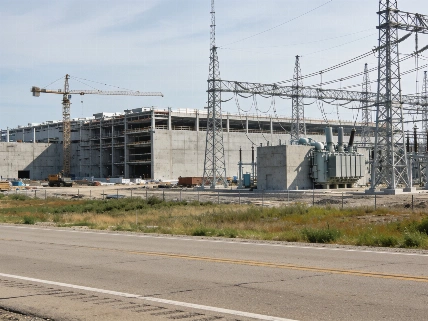
On the SMR side, Holtec International is preparing to install two SMR-300 reactors at the Palisades Nuclear Generating Station in Van Buren County, western Michigan. The plant, originally completed in 1972 and shut down in 2022, is being restarted. The new reactors are expected to add 640 megawatts to the site's capacity. In August 2026, the U.S. Nuclear Regulatory Commission (NRC) authorized Holtec to begin early site work, including ground preparation and installation of permanent support-of-excavation and cutoff walls for the two SMR-300 units. This is not yet a full construction license for the reactors themselves. The NRC has also started an environmental review for the project, with the reactors to be named Pioneer-1 and Pioneer-2. On August 30, 2026, Holtec began loading fuel into the existing reactor vessel, a key step toward bringing the station back online. The Michigan Department of Environment, Great Lakes, and Energy (EGLE) opened a public comment period on September 14, 2026, for water quality and federal consistency certifications related to the new SMRs. This gives local residents and stakeholders a chance to weigh in. Details on public hearings and comment opportunities are available through the Michigan EGLE public notice calendar.
Workforce and education initiatives
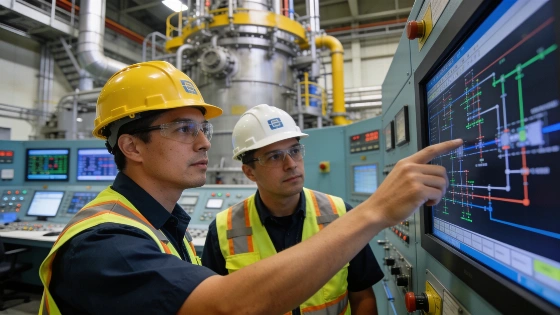
Expanding nuclear energy in Michigan will require more skilled workers. The University of Michigan's nuclear engineering program, the oldest and highest ranked in the country, has seen enrollment rise by 25% over the past five years. Associate professor Brendan Kochunas has built a virtual reality model of the historic Ford Nuclear Reactor, giving students hands-on experience with reactor operations. The department has also started a new minor to introduce more students to nuclear engineering. Farmington Public Schools and other local districts are tracking STEM trends and workforce needs, as seen in recent board meeting minutes and curriculum updates.
Former department chair Todd Allen says rebuilding the workforce is essential as the industry emerges from decades with few new projects. The virtual reactor project and new educational programs are meant to give students practical skills and experience with real technology, preparing them for jobs in Michigan and beyond. Regional workforce development is also a focus for Oakland County, which works with local governments and colleges to align training with the needs of the energy sector.
Community engagement and siting changes
In the past, nuclear projects in the U.S. were often sited with little or no public input, which led to community opposition and project cancellations. Verma and Allen are pushing for a participatory design approach, where communities are involved from the start. This method, used in Sweden, Finland, and Canada, aims to match projects to locations based on community feedback and collaboration with experts from different fields.
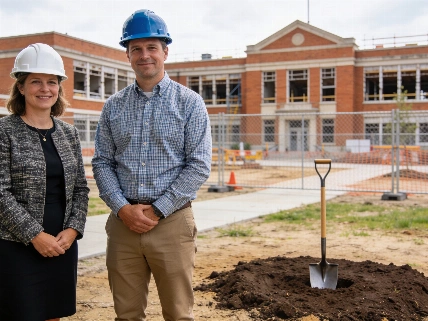
Verma has started a new class at the University of Michigan that brings students and community members together to design hypothetical nuclear projects, focusing on how energy infrastructure can fit into local histories and priorities. The goal is to avoid repeating past mistakes that led to state-level bans on new nuclear development in nine states, including cases where projects were announced without community consent. The State of Michigan has stressed the importance of public engagement in recent energy projects, as seen in the open permitting and review process for the Palisades site.
As Michigan and other states invest in new energy infrastructure, the approach to nuclear power is changing. The mix of advanced reactor designs, workforce development, and early community engagement could shape whether nuclear energy becomes a more accepted and practical part of the state's energy mix. For comparison, Michigan has also supported local food production through targeted grants, as reported earlier, showing a broader trend of investing in resilient infrastructure.
Michigan's nuclear future will depend on whether these new strategies can deliver both technical reliability and public trust. The state's willingness to try smaller reactors, new safety features, and participatory planning marks a clear shift from past practices. If these efforts work, Michigan could become a model for how communities and industry can work together to meet growing energy needs while addressing concerns about safety, cost, and local impact.