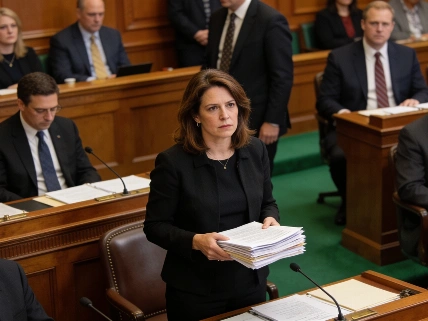
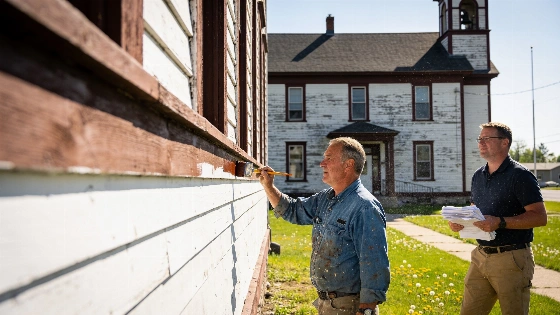
Rural townships across Michigan face mounting challenges filling key government roles and managing increased responsibilities, but proposed state legislation to provide relief remains stalled in Lansing with no hearings scheduled.
Rural townships throughout Michigan are struggling to fill essential government positions and manage growing responsibilities, but efforts to provide state-level assistance have stalled in the Legislature. Despite warnings from local officials about a looming crisis, two bills designed to support township operations have yet to receive a hearing in Lansing.
Many small townships report difficulty attracting candidates for elected and appointed roles, a problem compounded by declining populations and shrinking business activity. According to a recent University of Michigan survey, more than 75% of Michigan townships and villages are finding it increasingly hard to fill mandatory positions, while financial pressures continue to mount, especially in rural areas.
Legislative Proposals Remain Unaddressed
Two bills introduced in August 2025 by Rep. Bill Schuette (R-Midland) and Rep. Amos O'Neal (D-Saginaw) would allocate $3.5 million to help townships with finance, human resources, and information technology tasks. The legislation aims to ease the burden on local officials, many of whom serve part-time or as volunteers, by allowing some administrative work to be contracted out. However, the bills have not advanced, with lawmakers from both parties pointing to a lack of momentum in the House and Senate.
Another measure, House Bill 5717, passed the House in June but has not been taken up by the Senate. This bill would let townships hire certified election administrators from outside the township if the clerk's position is vacant or the current clerk is not certified. The need for such flexibility is growing, as several rural townships-including Hawes Township in Alcona County and Day Township in Ingham County-have no candidates running for clerk, the official responsible for managing elections.
Officials Warn of Growing Strain
Township officials say they are still meeting their legal obligations, such as running elections and collecting property taxes, but warn that the system is under increasing strain. Linda Paradiso, clerk of Houghton Township in the Upper Peninsula, described the situation as "a mess," with officials "holding on by a thread." Changes in election law, such as new early voting requirements, have added to the workload and contributed to resignations among part-time clerks.
Some advocates, like Eric Lupher of the Citizens Research Council of Michigan, have called for more sweeping reforms, including merging small townships or shifting responsibilities to county governments. However, the Michigan Township Association, which represents township interests, supports targeted measures like House Bill 5717 but opposes major structural changes. The association maintains that most townships continue to function effectively, though it acknowledges challenges in some smaller communities.
Local Government Faces Uncertain Future
Michigan's township system dates back to the early 1800s and now includes 1,240 townships, each with mandated responsibilities. While no township has failed outright, officials say the risk is growing if the state does not act. The Legislature's focus on higher-profile issues has left technical but critical local government problems largely unaddressed, according to Rep. O'Neal.
As Michigan continues to rely heavily on local governments for essential services, the lack of legislative action has left many rural communities in a precarious position. Without intervention, township leaders warn that vacancies and financial pressures could soon threaten the delivery of basic services.
For context, Michigan's approach to local government stands in contrast to other states that have consolidated or restructured local units to address similar challenges. Recent reporting on state education funding, such as Michigan's $40 million expansion of dual enrollment for high schoolers, highlights how targeted state support can help address local needs-something township officials say is urgently needed for local government operations as well.
Township officials and advocates continue to press for legislative attention, but with no hearings scheduled, the timeline for any relief remains uncertain. Residents in affected communities are encouraged to stay informed about local government developments and participate in upcoming elections, as the future of township governance may depend on both state action and local engagement.
- Local Government
- Rules & Public Services
- Politics & Elections
- Government Oversight & Ethics
- Property Taxes & Homeownership
- Michigan State Institutions
- Michigan Legislature
- Michigan House of Representatives
- Michigan Senate
- Michigan Elections
- Absentee Voting
- Early Voting
- Property Tax Terms and Processes