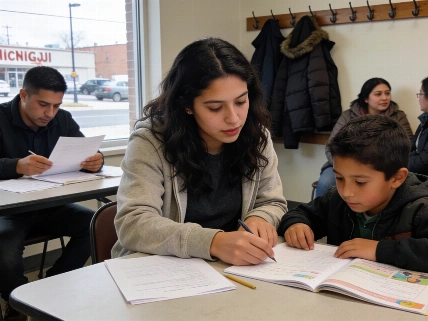
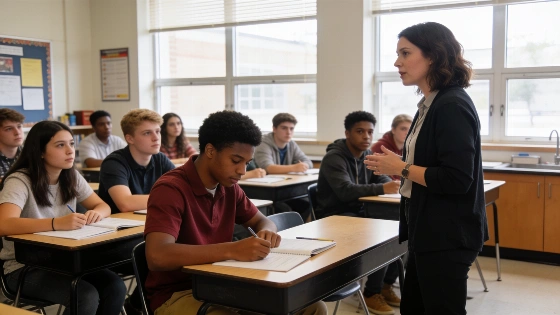
Michigan will provide $40 million in new state funding to help more high school students enroll in college courses, with priority given to districts serving economically disadvantaged students. The program aims to boost college readiness and degree attainment.
Michigan is set to invest $40 million in new state funding to help more high school students enroll in college courses, with a focus on supporting districts where a majority of students are economically disadvantaged. The initiative is designed to address Michigan's historically low participation rates in dual enrollment, especially among students of color and those from low-income families.
Currently, Michigan ranks among the lowest states nationally for high school students taking college classes before graduation. Many K-12 districts have been reluctant to promote dual enrollment widely because they have had to cover the costs from their per-pupil funding, which is also needed for other district expenses. The new funding, approved for the fiscal year beginning October 1, will reimburse districts for dual enrollment costs, prioritizing those with higher percentages of economically disadvantaged students, according to the Michigan Department of Education.
Program Goals and Expected Impact
The state's goal is to significantly increase the number of high school students participating in dual enrollment, particularly those from marginalized backgrounds. Research shows that students who take college courses in high school are more likely to graduate, enroll in college, and complete a degree. State officials and education advocates believe the new funding will help Michigan catch up with other states and provide more equitable access to college-level coursework.
Venessa Keesler, president and CEO of Launch Michigan, described dual enrollment as one of the most effective strategies for helping students succeed in high school and beyond. Stephanie Weiss, director of the Detroit Drives Degrees Community College Collaborative, noted that over 92% of Michigan students who took dual enrollment courses since 2016 have passed, and these students are more likely to continue their education and join the workforce.
Implementation and Local Challenges
The Michigan Department of Education is developing criteria for distributing the funds, with the new program set to begin in the upcoming fiscal year. Some rural districts, such as Northport Public School in Leelanau County, face logistical challenges due to the distance from community colleges, but local leaders expect the funding to relieve financial pressures and encourage more students to participate.
While advocates had hoped for $60 million, the $40 million allocation is seen as a meaningful step toward the state's goal of having 60% of residents hold a college degree or skills certificate by 2030. As of 2024, Michigan's rate was 51.6%, ranking 39th nationally. The funding is part of a broader push to improve college affordability and access, complementing other state initiatives. For example, recent changes to Michigan's education budget and ballot measures, such as those discussed in a recent Farmington Voice report on statewide ballot access, reflect ongoing efforts to address educational and economic disparities.
Aligning Courses With Careers
Experts emphasize that expanding dual enrollment should go beyond simply increasing participation. Davis Jenkins, a senior research scholar at the Community College Research Center, recommends that Michigan align dual enrollment offerings with career pathways, apprenticeships, and degrees that have strong labor market value. He also suggests that students receive guidance from college advisors, not just high school counselors, to ensure their courses are mapped to a clear plan for postsecondary success.
This approach is especially important for students of color, low-income students, first-generation college students, and English language learners. Research consistently shows that dual enrollment can help close achievement gaps and improve long-term educational outcomes for these groups.
Dual enrollment has traditionally been used by students already planning to attend college, but advocates hope the new funding will broaden access and help more Michigan students see themselves as capable of succeeding in higher education. The state's investment is expected to create new opportunities for students to earn college credit, reduce tuition costs, and build a stronger pipeline to middle-class careers.
As the program rolls out, the Michigan Department of Education will provide further details on eligibility and application processes for districts. School leaders and education advocates are watching closely to see how the funding will be distributed and how it will impact student participation in the coming years.