
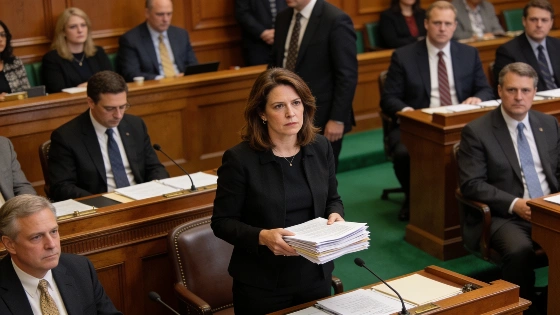
The Michigan House has passed a bill that would force anyone convicted of first-degree criminal sexual conduct with a child to serve at least 15 years in prison. The plan also calls for tougher penalties for other sexual offenses and now heads to the Senate.
The Michigan House has voted to require mandatory prison time for people convicted of sexual crimes against children. Lawmakers approved a bill that would force anyone found guilty of first-degree criminal sexual conduct to serve at least 15 years behind bars. Rep. Alicia St. Germaine sponsored the measure. Right now, Michigan law allows for life or any term of years, but there is no set minimum sentence.
The bill targets first-degree criminal sexual conduct, which includes sexual penetration involving a victim under 13. If passed, the law would set a hard minimum of 15 years in prison for these crimes. This proposal is part of a larger push to toughen Michigan's criminal sexual conduct laws and hold offenders more accountable. Recent cases have put a spotlight on the issue. In Branch County, Alec Heuer was sentenced to 15 to 22.5 years for sexual crimes against minors, plus more time and lifetime electronic monitoring. The Michigan Attorney General's office pointed to these cases as proof of why the changes are needed.
Expanded penalties for sexual offenses
The new rules would not stop at first-degree charges. The package would also set a 10-year minimum for second-degree criminal sexual conduct and a five-year minimum for third-degree offenses. Maximum penalties for both second- and third-degree charges would jump from 15 years to life or any term of years. The plan would also make fourth-degree criminal sexual conduct a felony instead of a misdemeanor, but the maximum sentence would stay at two years in prison. If the bill becomes law, Michigan's criminal sentencing guidelines would be updated to match these changes. According to MLive reporting, these minimums-15, 10, and 5 years-are already being used in some recent cases involving child exploitation. Aggravated cases with computers or child sexually abusive material can bring even tougher penalties.
Rep. St. Germaine, who introduced House Bill 6260, said the justice system needs to treat sexual crimes against children with full seriousness. She argued that mandatory minimums would stop lenient sentences and make sure those convicted face real consequences. The House's vote now sends the bill to the Michigan Senate. The Farmington City Council and other local groups have talked about the need for state-level reforms in public safety and sentencing at their meetings.
What the changes mean for Michigan
If the Senate passes the bill and it becomes law, Michigan would join other states with mandatory minimum sentences for certain sexual crimes against minors. The 15-year minimum for first-degree criminal sexual conduct is meant to stop short sentences for the worst crimes against children. Lawmakers who support the bill say these changes are meant to deter offenders and show families that the justice system will not allow repeat or early release for people convicted of these crimes. Recent prosecutions in Canton Township and Macomb County, where defendants faced multiple counts of first- and second-degree criminal sexual conduct, show Michigan's push for tough enforcement and long sentences for these offenses, as reported by Reuters.
The legislative summary says the package would also update sentencing guidelines to match the new minimums and felony classifications. Lawmakers are trying to close gaps in Michigan's criminal code and answer public concern about whether penalties for sexual crimes are strong enough. For comparison, similar legislative efforts in other areas have been covered in recent reporting. The Farmington Public Schools board has also called for legislative action to protect students and support families in the district.
Next steps and legislative process
The bill now moves to the Senate. Senators will review, possibly amend, and vote on the proposal before it can become law. As of September 23, 2026, independent sources confirm the bill has not yet passed the Michigan Senate, but courts and news outlets across the state are already reporting on tougher penalties being used. Residents and advocacy groups can track the bill's progress through the Michigan Legislature's official site.
In Michigan, changes to criminal law need approval from both the House and Senate, plus the governor's signature. The House's vote shows strong support for tougher penalties, but the final decision will depend on what happens in the Senate and any changes made there. The debate over mandatory minimums often comes down to balancing deterrence, judicial discretion, and the rights of victims and defendants.
Mandatory minimum sentences for sexual crimes against children are a complex and often heated issue. The Michigan House's move shows a clear push to raise the stakes for offenders and fix long-standing concerns about uneven sentencing. As the Senate takes up the bill, the main question will be whether these changes can bring the accountability and protection that lawmakers and families want.