Michigan communities are spending millions on river restoration. Studies point to economic gains from recreation, but several major projects still lack a cost-benefit or impact assessment.
In Detroit, visitors spend $82 million a year along a waterfront rebuilt with public and private investment. Elsewhere in Michigan, projects costing millions are moving ahead without a clear measure of their economic return.
The work ranges from dam removals to plans to uncover concrete channels. Other projects redevelop waterfronts. Officials and advocates weigh ecological gains against costs that can reach millions, but the evidence differs from one river to another.
Detroit offers one of the clearest documented payoffs. The Detroit Riverfront Conservancy says visitors spend $82 million a year along a waterfront transformed with greenways and parks. The project includes more than eight miles of trails. About $2 billion in public and private dollars has gone into it so far.
Studies of the Huron and White rivers provide another kind of evidence. A 2017 Grand Valley State University study estimated that the Huron River and its water trail generate $53.5 million in economic output each year. It valued the river's services at $150 million annually. That estimate includes recreation. It also counts flood reduction and habitat for rare organisms.
A 2023 university assessment estimated nearly 70,000 annual visitors to the White River and put its total economic impact at $20 million. The river runs through the Huron-Manistee National Forests and supports salmon and trout. Its protections and scenic character also limit how far some residents want development to go.
Alan Steinman, a Grand Valley State University professor and co-author of the Michigan Blue Economy report, said studies in Muskegon showed a six-to-one return on investment. He argues that restored waterways can carry cultural and economic value communities had not previously counted.
In Battle Creek, officials are weighing whether to remove an aging concrete channel where the Kalamazoo River runs through downtown. The proposal would restore a more natural river corridor. Kris Martin, an urban planner with Battle Creek Unlimited, said the channel is inaccessible to the public and dangerous. Costs depend on the approach and are expected to reach millions. The next report from the U.S. Army Corps of Engineers is expected to include an economic cost-benefit analysis.
Grand Rapids began construction on the removal of four low-head dams on the Grand River on July 1, 2026, after more than 15 years of preparation. The project aims to restore the river's continuity, but its cost and schedule remain significant constraints. The estimated cost is at least $19 million. Its economic impact has not been publicized.
In Flint, a state park is being built along the riverfront. Project spending totals $30.2 million, with a $41 million endowment set aside for future operations and maintenance. An economic analysis is not currently planned because it would cost money.
On Oct. 6, the state announced an $89 million investment to clean up the Detroit, Kalamazoo and other rivers. The Michigan Department of Environment, Great Lakes, and Energy said the funding includes $25 million for the Kalamazoo River watershed and $50 million for projects along the Detroit River. Another $14 million is for projects elsewhere in the state.
That statewide funding can cover dam removal. It also includes river-channel and wetland restoration, along with habitat work and recreation infrastructure. Kalamazoo watershed projects are planned for Allegan and Otsego. Plainwell is also on the list. Swan Creek and Trowbridge are included as well. Work may involve sediment restoration. Plans also include habitat restoration, dam removal and stream restoration, according to EGLE's program announcement. Michigan has more than 76,000 miles of rivers, creeks and streams, but projects differ in purpose and scale. The information available to judge their results varies, too.
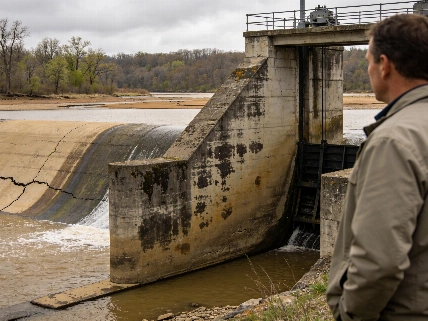
In Ypsilanti, the City Council approved a dam-removal project in 2019 that is now estimated to cost at least $14 million. Adding an adjacent railroad bridge required a revised estimate. A cheaper option, fully opening the dam gates for about $50,000 to $100,000, would not restore Mill Pond.
Clare's initial $6.8 million package for dredging and other mechanical work drew bids above expectations. A full reconstruction is now estimated at roughly $9 million to $10 million.
State fisheries grants show how public funding can target specific outcomes. Michigan Department of Natural Resources figures reported in 2022 show that 10 projects received a combined $892,200. Partners contributed more than $240,000. The grants included $119,300 for a fish-passage structure at a Hesperia dam and $35,000 for habitat improvements at Pentwater Lake. Those awards document spending and planned work, but do not measure the longer-term economic return.
Work on the Boardman River near Traverse City shows why a financial accounting can fall short. Three dams were removed in what has been described as Michigan's largest dam-removal project. The work reconnected coldwater streams and restored fish habitat. It cost more than $27 million, but the Conservation Resource Alliance, which managed the project and its finances, said it has not quantified the economic benefits.
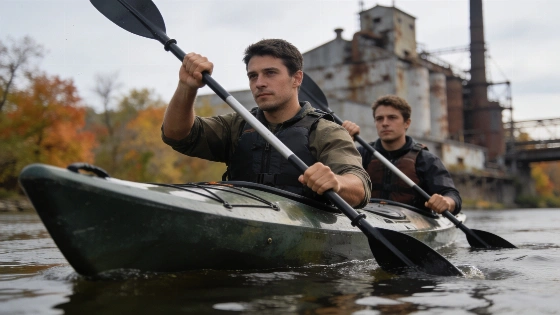
The group's communications manager, Gavin MacDonald, pointed to practical changes. Long stretches of the river are now navigable by paddle. The waterway is also more accessible to residents and visitors. Those gains are real, but they are not a measured return on the project's cost. Michigan's aging dams carry risks and expenses, too. A report on dam risks detailed the growing pressure on owners and communities to repair or remove them.
Economic studies can help officials compare project costs with recreation spending and flood reduction. The White River also shows why a bigger visitor economy is not every community's goal. John Stivers of the White River Watershed Partnership said some residents value keeping the river from becoming a high-volume economic destination. Its scenic designation and protections, including national forest land, shape what development is possible.