The proposal would set statewide septic standards and require recurring inspections. Local rules show how permits and costs vary, while available records do not confirm SB 771's latest status or a funding plan.
Local health officials warn that inspecting more than 1.3 million septic systems could leave counties scrambling to pay for the work, while homeowners face the cost of repairs. That system count and the proposed requirements come from descriptions of the measure. The available search results do not include a current official bill record confirming its latest status or final language.
As described, Senate Bill 771 would direct the Michigan Department of Environment, Great Lakes, and Energy, or EGLE, to set standards. Each system would need an inspection every 10 years after a ramp-up period. The available materials do not verify whether the bill advanced in the Senate or received House consideration, so passage remains unconfirmed.
Michigan's current system relies heavily on local rules. Local health departments handle permits and installation reviews, along with the operation of private systems. There is no single statewide inspection code. In Decatur, local rules address when private septic systems may be permitted and when owners may have to connect to public sewer if it is available. Those rules show local variation, not requirements for Farmington or Farmington Hills.
The Decatur local rules list a 2026 fee of $300 for a new or replacement septic permit through the Van Buren/Cass District Health Department. That is a local permit charge, not an estimate of what a statewide inspection program would cost.
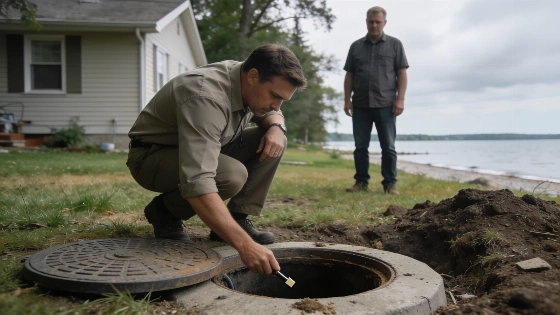
Septic tanks and drain fields treat household waste for people who are not connected to municipal sewer systems. Well-maintained systems can reduce contaminants. Failing or poorly maintained systems can send pollution into groundwater and nearby waterways.
A separate EGLE update reported $89 million for waterway cleanup projects. The announcement does not connect that money to SB 771 or establish funding for statewide septic inspections. EGLE's waterway update is not confirmation that the proposed program has funding.
As described, the bill would initially prioritize systems based on age or proximity to lakes and other environmental features. It could also impose civil fines for failing to meet evaluation requirements or make necessary repairs. The available search results do not independently confirm the final bill language, how many systems would receive priority, or the size of any penalties.
The proposal would create a statewide septic-system database. Local records are fragmented, and some remain on paper.
Existing local inspection programs offer a limited view of what wider checks might find. In Barry and Eaton counties, 27% of 9,443 evaluations through a home-sale or ownership-transfer program reportedly found problems requiring corrective action. Complaints that mandatory inspections infringed on private property rights led to the program's repeal. Washtenaw County's time-of-sale program reportedly found about 18% of inspected systems failing or inadequate during its first year and a half, according to Michigan Public.
A 2018 study of mid-Michigan residents found nearly one-third did not know their home had a septic system. About one-quarter said they did not pump or maintain it. The U.S. Environmental Protection Agency recommends inspecting most household septic systems at least every three years. It says they are typically pumped every three to five years.
Michigan State University scientist Joan Rose found higher human fecal contamination in watersheds with more septic tanks. In a separate finding, Environment Michigan Research & Policy Center reported that 78% of Michigan rivers, lakes and streams had bacteria indicating fecal matter on at least one day in 2024. More than two-thirds of monitored areas had potentially unsafe contamination levels at least a quarter of the time.
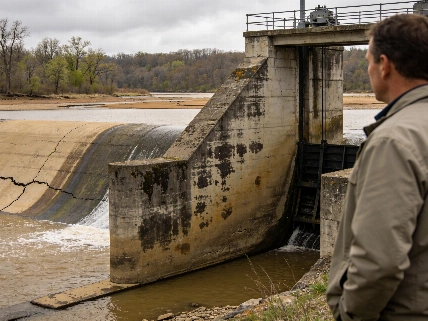
Fecal contamination can cause gastrointestinal or respiratory infections. Excess nutrients can contribute to toxic algae blooms. Septic systems are one source; sewage overflows and stormwater also carry bacteria into waterways. A recent Michigan report examined another pressure on the state's water and infrastructure: aging dams.
For local health departments, staffing is a major concern. Eric Pessell, health officer for the Calhoun County Public Health Department, estimates he would need to double or triple his staff to handle the proposed inspection workload. He also worries that all 45 local health departments could compete for a limited pool of qualified graduates. The bill does not specify startup funding for local hiring, he said.
The measure as described would establish an Onsite Wastewater Treatment System Administration Fund and a Public Education and Training Fund. The Michigan Association of Counties says state money for local implementation would still depend on future appropriations. Counties could charge fees, but Pessell expects those in his county would not cover the full cost. The available records provide no official statewide estimate of county expenses.
Homeowners could face a separate bill for repairs. During a Flow webinar, sponsor Sen. Sam Singh acknowledged that residents who had not inspected a system for decades might suddenly face $10,000 to $15,000 in repair or replacement costs. He said he was working to expand a loan program for low-income residents and add grants. The counties association says homeowners need a dedicated, reliable source of repair assistance.
Local officials also object to routine inspections on a fixed schedule. Pessell favors required checks for high-risk systems or after events such as a home sale or expansion. He says homeowners are more likely to accept an inspection tied to a decision they make, such as building a pool or transferring property. In his county, about 130 homeowners each year already obtain permits to repair failing systems voluntarily.
Supporters say periodic inspections are needed to find failing systems that might otherwise go unchecked. Megan Tinsley, water policy director with the Michigan Environmental Council, says septic upkeep should be treated as a homeowner responsibility, much like maintaining a roof. The proposal also calls for a technical advisory committee to advise the state on standards and technologies. Local officials have supported the committee's role in setting evaluator qualifications and guiding implementation.
Last session, the Senate passed similar bills, SB 299 and SB 300. They received no further action after referral to a House committee.
For Farmington Voice readers, the available material does not establish that Farmington or Farmington Hills has adopted new septic requirements under SB 771. Decatur's rules show how municipal permitting and sewer-connection requirements can work, but they do not establish the rules in Oakland County communities. EGLE's separate waterway funding announcement also does not verify funding for septic inspections.
Confirming the proposal's current status and final text would require the Michigan Legislature's official bill record. That confirmation is not available in the search results reviewed here.