
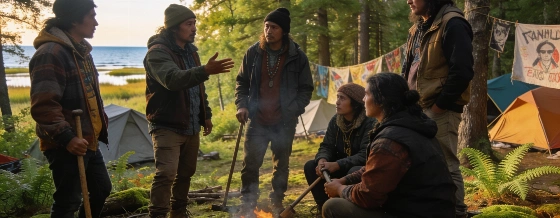
A grassroots camp led by Indigenous organizers near Lake Superior is attracting more Michigan residents who want to protect wetlands and treaty lands from a proposed copper mine in the Upper Peninsula.
Camp Animikiiwadiswan, also called Thunderbird Nest, is seeing more Michigan residents join Indigenous organizers in opposing the proposed Copperwood Mine near Lake Superior. The camp has become a gathering place for people concerned about the Upper Peninsula's wetlands, wildlife, and treaty-protected lands. Residents from Farmington and other cities have raised questions about how projects like this could affect water quality and public resources across the state.
The camp started with about 20 people in August and has since grown into a larger movement. Organizers say their goal is not just to stop one mine, but to protect land and water that are important to tribal nations and to make sure future generations inherit a healthy environment. The Michigan Department of Environment, Great Lakes, and Energy (EGLE) says Copperwood has several state permits, including for air quality and wetlands. However, its mining permit is still "issued, not effective" while regulators review wastewater discharge plans and other requirements.
Concerns Over Mining Waste and State Funding
The Copperwood Mine is planned for Michigan's western Upper Peninsula, near the Porcupine Mountains and Lake Superior's southern shore. Opponents are worried about the estimated 40 million tons of mining waste the project could create, and what that might mean for wetlands and the lake's ecosystem over time. The mine has also sparked debate over $50 million in state grants approved for the project and related infrastructure. The Michigan Strategic Fund Board set a deadline: by March 31, 2028, the project must show at least $150 million in committed financing or investments, or it could lose the grant. State records show about $45 million is for site construction and improvements, though the total is often rounded up to $50 million in public discussions.
For many at Camp Animikiiwadiswan, the issue is also about treaty rights and the responsibility Indigenous communities feel toward the land. This shared purpose has brought in supporters from across Michigan, including people who have visited the camp and others looking for ways to help from home. Oakland County officials have reported more public questions about how local governments can support environmental protection and honor treaty obligations in their own areas.
Statewide Support and Community Response
Word of the resistance camp has spread beyond the Upper Peninsula. Online, Michigan residents have shown support, with some offering encouragement and others asking how to donate or send supplies. Comments like "Good. All power to them" and "I wish them success. ❤" reflect a sense of solidarity. The Farmington Public Schools board has added environmental education and Indigenous history to its curriculum, showing how these issues are becoming more relevant for students and families. More information on local school programs is available on the Farmington Public Schools website.
This wave of support shows how a local environmental issue can bring together communities across Michigan. While the future of the Copperwood Mine is still undecided, the camp's growth and the practical help it has received suggest that opposition is building. The City of Farmington Hills has also scheduled public hearings on environmental priorities, highlighting the role of civic engagement in shaping local policy.
Broader Context and Next Steps
The Copperwood Mine debate is the latest in a series of Michigan resource projects that have raised questions about environmental protection, public funding, and community rights. As reported earlier, state lawmakers have recently moved to take more control over permitting for major energy and resource developments, reflecting ongoing tensions between economic interests and environmental concerns. A recent lawsuit from Protect the Porkies in Ingham County Circuit Court challenges the Michigan Strategic Fund Board's August 2026 decision to allocate $50 million to Copperwood. The case is now moving through the courts.
Camp Animikiiwadiswan's growth shows how grassroots organizing can shape public debate and influence policy. The camp's focus on treaty rights and intertribal cooperation adds complexity, reminding policymakers that environmental decisions often overlap with legal and cultural obligations. Supporters of the mine, including InvestUP CEO Marty Fittante, say the state funding was awarded lawfully and as intended by lawmakers. Opponents argue that some of the funds may have been redirected from the SOAR fund, which was originally set up for microchip development in 2022.
In the Upper Peninsula, the Copperwood Mine proposal has become a test of how communities respond to large-scale development on sensitive lands. The rapid growth of the resistance camp and the support it has received from across Michigan show that local voices can quickly influence the future of the state's natural resources. As the debate continues, those at Camp Animikiiwadiswan have made it clear they are not alone, and their efforts are already changing the conversation about land, water, and community responsibility in Michigan.