Michigan lawmakers are pushing to shift oversight of underground carbon storage wells from the federal government to the state, hoping to speed up approvals, attract private investment, and support jobs in manufacturing and energy.
Michigan lawmakers are working to bring the permitting of underground carbon storage projects under state control, a move that could affect both industry and environmental policy. A set of bills now in the legislature would transfer oversight of Class VI carbon storage wells from the U.S. Environmental Protection Agency (EPA) to the Michigan Department of Environment, Great Lakes, and Energy (EGLE). Supporters say this would speed up project approvals and make Michigan more appealing for carbon capture investment, tying into ongoing debates about the state's energy and industrial future.
Right now, only six states have what's called "primacy" over these permits, meaning they handle the regulation themselves instead of relying on the EPA. According to the EPA, just 18 Class VI wells have been permitted nationwide as of September 2026, showing how slow the federal process can be. Michigan's push for primacy follows similar efforts in Colorado and Ohio, as states across the political spectrum compete for new energy and manufacturing projects linked to carbon capture and storage (CCS).
Economic impact and job prospects
State officials point to research suggesting that expanding CCS could help Michigan's industrial sector cut emissions while keeping high-wage jobs. The Rhodium Group estimates that CCS could support between 1,340 and 1,990 permanent jobs at carbon capture facilities in Michigan, plus about 330 jobs each year for transportation infrastructure during a 15-year buildout. The Great Plains Institute projects up to $10.7 billion in private investment could flow into the state if CCS takes off.
Michigan's existing cement, steel, ethanol, and power generation plants make it a strong candidate for CCS retrofits. The U.S. Department of Energy estimates Michigan has the geologic capacity to store more than 45 billion metric tons of carbon dioxide underground, putting it among the top states for large-scale carbon storage. Core Energy has run a commercial CCS project in Michigan since 2013, and four more have been announced since 2018. Local governments, including Farmington and Farmington Hills, have been tracking these developments as part of their economic and environmental planning.
Why states want permitting authority
States with primacy over Class VI wells have issued nearly three times as many permits as the EPA since 2011, according to the Bipartisan Policy Center. In those states, permit approvals can take less than a year, compared to two years or more under EPA review. This kind of regulatory certainty is a major factor for companies deciding where to invest in new CCS infrastructure. The Michigan House and Senate are both considering the issue, with bipartisan support reflecting the role CCS could play in local economies and job creation.
For Michigan, the stakes are significant. CCS projects support jobs, generate local tax revenue, and help manufacturers stay competitive as clean energy standards get stricter. Governor Gretchen Whitmer has set targets for Michigan utilities to reach 80 percent clean energy by 2035 and 100 percent by 2040, making CCS one way to meet those goals without shrinking the industrial base. Local school boards, including Farmington Public Schools, have also shown interest in workforce development opportunities tied to new CCS projects and related STEM fields.
National context and next steps
Michigan is not alone in seeking state control. Colorado has made CCS a key part of its industrial and environmental plans, investing $32.8 million in emissions-reducing technology and moving toward state primacy for well permitting. Eight other states are in the pre-application phase, and the EPA recently proposed approving Colorado's application. As more states try to streamline permitting, competition for CCS investment is growing. Oakland County officials are watching these trends closely, given the county's concentration of manufacturing and energy infrastructure.
The Michigan bills-House Bills 6247, 6248, and 6249-would set up a state-level regulatory framework for CCS projects. If passed, EGLE would oversee the permitting process, aiming to give companies the predictability and speed they want. The bills follow bipartisan action in the Michigan Senate last year, showing broad political support. Residents can follow updates and public hearing schedules through the EGLE public notice calendar.
State-level control over CCS permitting is becoming a central strategy for attracting industrial investment and balancing climate goals. As Michigan lawmakers move these bills forward, the state is positioning itself to compete for private capital and secure jobs in manufacturing. The outcome will show whether Michigan can keep pace with other states in the race for clean energy jobs and economic growth. For more on Michigan's efforts to attract major projects, see this recent coverage.
How the permitting process works
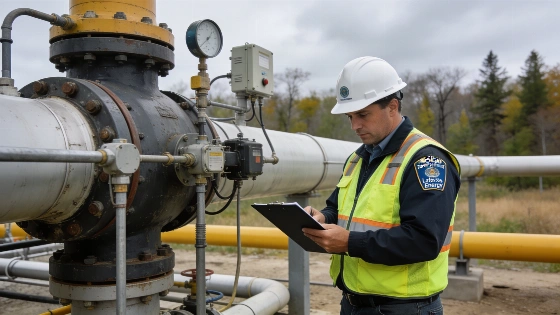
Class VI wells are used to inject carbon dioxide deep underground for long-term storage, regulated under federal law. States seeking primacy must show that their regulatory programs meet or exceed federal standards under the Safe Drinking Water Act's Underground Injection Control program. If Michigan's bills pass and the EPA approves, EGLE would become the main permitting authority, which could reduce wait times for project developers. This change would not affect other types of wells or environmental rules outside CCS. Residents and stakeholders can review upcoming city council meetings and public comment opportunities on the City of Farmington agendas and minutes page.
- Government Oversight & Ethics
- Automotive & Manufacturing
- Business & Economy
- Jobs & Employment
- Environment & Great Lakes
- Michigan Energy Policy & Grid
- Climate & Environmental Policy
- Michigan Legislature
- Michigan House of Representatives
- Michigan Senate
- Office of the Governor of Michigan
- U.S. Environmental Protection Agency
- U.S. Department of Energy