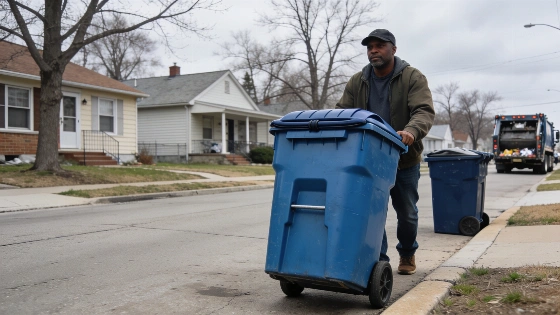
Flint's recycling rate has reached an all-time high after the city gave out more than 68,000 free waste and recycling carts to residents in 2024, changing how people recycle and making it easier for everyone to take part.
Flint's recycling numbers have jumped sharply since the city began handing out free carts to residents in 2024. The annual recycling rate is now up 253 percent, with Flint collecting 2,200 tons of recyclables each year-up from just 624 tons before the new carts arrived. The Michigan Department of Environment, Great Lakes, and Energy (EGLE) and city officials announced the results at a press conference on September 14, 2026.
This increase comes as Michigan marks five years of steady growth in recycling statewide. The state's overall recycling rate hit 26 percent in 2025, but Flint's progress stands out. City leaders point to the new cart system as the main reason more households are now able to recycle. The Department of Public Works managed the rollout, making sure every eligible home got a set of matching carts, which are now a common sight on Flint's streets.
How Flint changed its approach
Before 2024, Flint residents had to buy their own bins for curbside recycling. That kept participation low. The city changed course with help from a $1 million EGLE grant and $3.3 million from The Recycling Partnership, distributing more than 68,000 rolling, lidded carts-one for trash, one for recycling-to over 34,000 households. The new "Flint Strong" carts replaced a mix of old containers and made it easier for people to sort and set out their recyclables. According to state records, the program aimed to make recycling more accessible and to simplify waste collection across the city.
City officials say the results were immediate. The amount of material collected more than tripled, and neighborhoods that had struggled to take part before were now included. The carts have become part of the city's daily routine, and the Genesee County Board of Commissioners has noted the program's positive effect on local waste management.
Economic and environmental stakes
EGLE reports that recycling supports 72,500 jobs and adds over $17 billion to Michigan's economy each year. By increasing its recycling, Flint is helping conserve resources and boost economic activity across the state. The city's gains also support Michigan's goal of reaching a 30 percent recycling rate by 2029, a target shared by other cities like Farmington and Farmington Hills, which have started their own sustainability programs.
Flint's waste services coordinator called the new record a milestone, saying higher recycling rates help keep Michigan clean and put Flint at the forefront of the state's environmental work. The city's experience matches other reports showing that investments in infrastructure can change local sustainability outcomes.
Next steps and future plans
Flint and Genesee County officials are now backing a proposed $12.7 million Genesee County Recycling & Education Center. If approved, the center would expand recycling services and offer education to residents throughout the region. The project is still in the planning stage, but officials see it as a natural next step. Updates on public meetings and progress will be posted on the City of Flint website as plans move forward.
Michigan's recycling rate has grown from 14.25 percent before 2019 to over 25 percent in 2024. Flint's experience shows that targeted investment and practical infrastructure can deliver real results. When barriers are removed and residents have the right tools, communities can quickly improve their environmental efforts. Flint's record year is more than just a number-it's an example for other cities looking to update their own recycling systems.
Flint's overhaul shows that local government, with support from the state and nonprofits, can make a real difference for residents and the wider economy. Other Michigan communities may want to look at their own recycling challenges and consider whether similar changes could work for them. As the state aims for its 2029 goal, Flint's results show that progress is possible when practical solutions reach people where they live.