Michigan's Office of Rural Prosperity is accepting letters of intent for its 2027 Rural Development Fund. Eligible applicants can seek grants of up to $100,000 or $200,000, with submissions due by 5 p.m. Eastern time on Nov. 2, 2026.
Letters of intent for Michigan's 2027 Rural Development Fund are due by 5 p.m. Eastern time on Nov. 2, 2026. The state announced the deadline on Oct. 2.
The fund has up to $4 million available for rural projects. Proposed work may improve access to care, strengthen the health care workforce or support healthier communities.
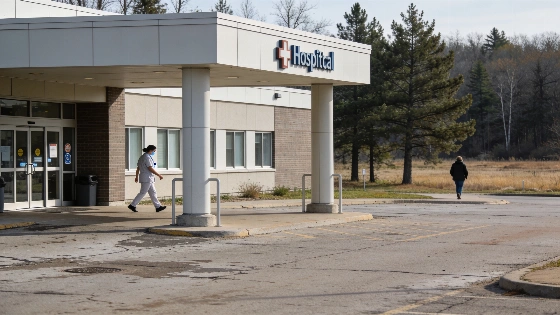
This is not a direct hospital grant program. Eligible hospitals and community partners may propose projects that address local needs in one or more qualifying rural areas of Michigan. The state has not promised funding to every rural hospital.
Applicants can review the full requirements through the Rural Development Fund notice.
The Rural Development Fund Board oversees the program within the Office of Rural Prosperity. Potential applicants include nonprofit organizations, businesses, local governments, federally recognized Tribes, educational institutions, regional planning agencies, economic development organizations and workforce development organizations. Hospitals may apply as well.
Two grant paths
The program has two categories. Community and business development grants can provide up to $100,000. Eligible work may cover infrastructure, community facilities, workforce and economic development, business development planning or organizational capacity building.
Regional collaboration grants can provide up to $200,000. They are for formal partnerships and shared-service models that address needs across multiple counties. Projects may use shared staff, expertise and systems instead of having separate organizations build the same capacity on their own.
The difference matters. Rural hospitals often do more than provide medical care. The announcement describes them as employers and local development partners as well as care institutions.
A proposal could connect hospital needs with broader work on community infrastructure, workforce development or planning.
That is the opening.
Potential community projects
Hospitals and community organizations may consider regional workforce recruitment and training, community health worker programs, shared grant-writing or planning staff, and improvements to community facilities that support local services.
These are options for applicants to assess. The state has not approved these projects.
Regional partnerships can help communities combine resources and build the capacity needed to maintain important services. The funding announcement does not name individual hospitals selected for awards. It also does not say that any proposed project has been approved.
For communities in Oakland County and elsewhere in Michigan, the applicant list matters. The program is not limited to hospital corporations. Local governments and educational institutions may participate when a proposal serves an eligible rural area and meets the program rules.
The City of Farmington, City of Farmington Hills and Farmington Public Schools should not be presumed eligible because they are public entities. The state's rural-area and project requirements still apply. The City of Farmington's municipal information portal remains the right place to track city-specific programs. This statewide opportunity should not be treated as a local award.
Applicants must also separate this state fund from federal health initiatives. Michigan received about $173 million through the federal Rural Health Transformation Program.
By the end of September 2026, approximately $124.6 million had been distributed or approved for 236 recipients. Another $48.4 million remained available for later competitions, according to reporting by the Associated Press.
The federal package included about $71.5 million for programs in the northern Lower Peninsula and $38.5 million for the Upper Peninsula. Scheurer Health received $83,333 for community health workers. The Michigan Health and Hospital Association received $8.6 million.
The 2025 federal budget law created that program. It is intended to support new care models, workforce preparation, technology and partnerships. It is not meant to cover hospitals' routine operating losses.
Rural hospital administrators have said the federal initiative does not provide enough help with day-to-day operations. They also say it directs money toward programs that do not solve the system's most immediate financial and operational problems.
The state grant cycle has a narrower purpose. Project funding may help build capacity. It is not operating support.
That limit matters.
Hospitals must build the partnerships
Rural hospitals are encouraged to work with community partners before submitting a proposal. They need to identify shared priorities and define the problem they want to address.
Applicants must also decide whether a joint project or shared-service model fits one of the grant categories. The practical work stays local.
The Rural Development Fund Board, not the Oakland County administration or a local school board, will oversee the state funding process. Farmington Public Schools and other educational institutions could become potential partners only if their proposed work meets the state's eligibility rules and serves an eligible rural area.
The program uses a formal state process for projects with local effects. Its subject differs from the permitting shift described in earlier Michigan coverage. Here, the mechanism is competitive community funding tied to rural development priorities.
For rural hospitals, the program's value will depend on whether partners can turn broad needs into eligible projects with clear responsibilities. The $4 million opportunity brings care access, workforce capacity and community infrastructure into the same funding conversation.
The announcement does not guarantee new services or staffing.
For eligible rural Michigan organizations, the 2027 cycle offers funding routes of up to $100,000 and $200,000. Letters of intent are due Nov. 2. The next step belongs to applicants.