
A statewide cloud program backed by AWS now supports more than 568,000 Michigan K12 students. Districts are using it to replace aging servers, improve disaster recovery and cut infrastructure costs.
In November 2024, Kalamazoo Regional Educational Service Agency received a $31 million grant for MiCloud through Michigan's Top 10 Strategic Education Plan. The program now supports learning systems used by more than 568,000 Michigan K12 students. That is 42 percent of the state's roughly 1.4 million K12 students.
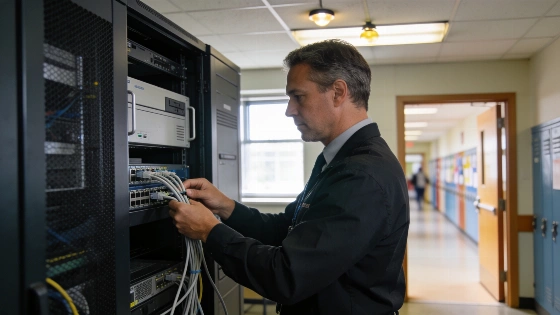
MiCloud is helping districts move away from aging servers and costly virtualization licenses. Its cloud infrastructure is also meant to keep classes running when cyberattacks, hardware failures or disasters disrupt local data centers.
The pressure is real.
Many districts have limited technology budgets and small IT staffs. For years, they dealt with old equipment, weak backup options and on-premises systems exposed to ransomware, natural disasters and equipment failures. A tenfold increase in VMware licensing costs added another burden. Licensing decisions and infrastructure needs still vary by district.
This is more than a technology upgrade. It changes how districts protect daily instruction, student information and the systems used by families, educators and school administrators.
Statewide service reaches 311 districts
MiCloud provides centralized cloud hosting and platform management for schools that may not be able to pay for or staff a full migration on their own. The program covers disaster recovery and business continuity. It also helps move systems from local infrastructure into cloud environments and trains district technology staff in AWS skills.
During the grant period, the model combines technical support with grant-funded cloud utility spending. That removes much of the upfront capital cost for participating districts.
As of August 2026, MiCloud had completed projects for 52 Intermediate School District regions and 311 local districts statewide. Backup and migration work was underway in districts of different sizes. The number of students served had risen from approximately 53,000 to more than 568,000 in a little over a year.
For Farmington-area residents, those statewide figures do not establish that Farmington Public Schools is a MiCloud participant. Local technology and policy decisions remain matters for the Farmington Public Schools board and district administration. The Farmington Public Schools website is the place to follow district notices, board materials and technology updates.
Allendale avoids a $300,000 replacement
Allendale Public Schools shows how the numbers can work. Technology Director Paul Mulder said the district's servers and storage-area network had reached the end of their useful life. Warranty and repair options were also narrowing.
Earlier replacements depended on a bond measure. Several attempts had failed. The district lacked enough capital to rebuild its data center.
Grant support changed the calculation.
Allendale migrated to AWS and avoided approximately $300,000 in hardware and virtual-server licensing costs. The district also cut backup expenses while keeping an offline backup. MiCloud configured the AWS environment and helped complete the migration while school was in session. Mulder reported no user complaints.
The example shows what the grant-funded model offers. A school system can replace vulnerable infrastructure without waiting for a successful bond measure. It does not have to take the same capital from classroom needs.
Security and connectivity join the cloud effort
AWS became MiCloud's preferred cloud provider because of its existing work with KRESA and the Michigan DataHub, the state's Ed-Fi Alliance-based solution. AWS has trained MiCloud staff, offered architectural guidance, shared best-practice recommendations and provided program management for multi-district migrations.
The goal is to leave Michigan with more than a temporary hosting arrangement. MiCloud and district technology teams are building cloud skills that can support services after the initial grant period. Those skills can also add to the state's education-sector cloud workforce.
MiCloud is working with the Michigan Statewide Educational Network and MiSecure on a unified view of statewide infrastructure initiatives. MiSEN focuses on connectivity. MiSecure handles security operations. MiCloud handles cloud infrastructure.
MiSecure was initially described as providing managed detection and response coverage for K12 servers statewide. The service later expanded into higher education and government agencies.
The three functions can give districts a layered defense. Each school system does not have to solve every vulnerability alone. For local public-records and civic context, the City of Farmington, the City of Farmington Hills and Oakland County administration remain separate governmental bodies from the school district. They have different responsibilities for municipal services, county services and education operations.
Michigan schools face other resource pressures. Persistent attendance problems were documented in an earlier school report. MiCloud addresses a different operational risk: keeping the systems behind instruction available when local hardware or facilities fail.
State of Michigan departmental registries and public education agencies can provide statewide program and accountability records. Local boards and district notices matter more for decisions affecting a particular school system.
The funding debate continues.
Bridge Michigan reporting published by the Macomb Daily said Michigan had provided schools with $224 million for infrastructure while statewide needs remained in the billions. That gap helps explain why centralized services may appeal to districts that need resilient technology but cannot quickly pay for a full data-center replacement.
MiCloud's strongest result is not simply the number of districts enrolled. The program removes a capital barrier that has left many school technology departments choosing between aging infrastructure and classroom spending.
More than 568,000 students are now connected to the effort. Projects continue across Michigan. For districts with small IT budgets, centralized cloud support is becoming a practical public investment rather than a luxury reserved for systems with large technology departments.