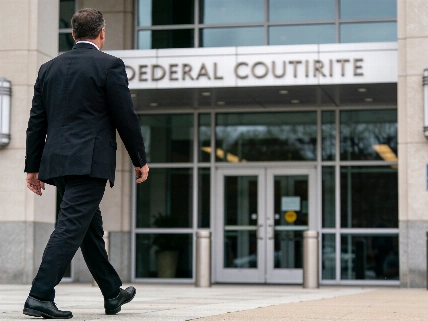
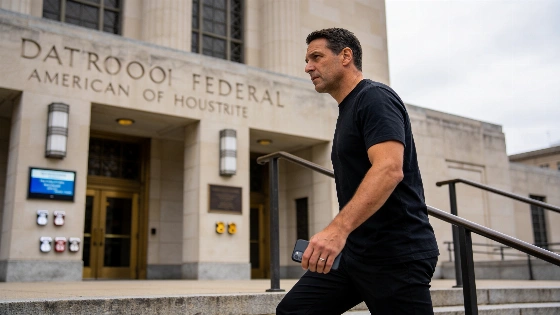
Jabari Long was sentenced in Detroit after admitting he used a nearly nonexistent construction company to secure more than $2.3 million in pandemic-era loans and spent part of the money on a Beverly Hills home.
On Sept. 28, 2026, a federal judge in Detroit sentenced Jabari Long to 24 months in prison. Long admitted using a Michigan contracting business with few or no employees to obtain more than $2.3 million in COVID-era small-business loans.
The 46-year-old Beverly Hills man pleaded guilty in January to one federal count under a plea agreement. The Justice Department announcement said the case involved a $2,187,000 Paycheck Protection Program loan and a $150,000 Economic Injury Disaster Loan. Both loans were obtained through Priceless Preservations Construction.
Before the plea agreement, prosecutors charged Long with conspiracy to commit wire fraud, wire fraud affecting a financial institution and money laundering, Reuters reported. He pleaded guilty to one count. The agreement dismissed the other two charges.
That distinction matters in Oakland County. The case involves a Beverly Hills resident and a federal prosecution. It is not an allegation against the City of Farmington, the City of Farmington Hills or Farmington Public Schools. Those local institutions keep separate municipal and school-district records. The U.S. Attorney's Office for the Eastern District of Michigan handled the federal case.
Prosecutors said Long used Priceless Preservations Construction to apply for the loans. In the applications, he claimed the company had 50 employees. He also reported an average monthly payroll of $875,000.
Investigators found few, if any, employees at the business. They found little to no payroll expense. Long also admitted submitting false tax documents with the loan applications. The reported figures mattered because PPP eligibility and loan amounts were tied to payroll information.
The numbers mattered.
The loan records show how the alleged scheme relied on specific claims about the workforce and payroll. They did not show documented business activity. The federal programs were created to support small businesses during the COVID-19 era. Prosecutors said Long used information that did not match the company's actual operations.
Within weeks of receiving the money, Long used some of the proceeds to buy a four-bedroom home in Beverly Hills. Prosecutors cited the purchase as an example of funds moving beyond the business purposes stated in the loan applications.
Homeland Security Investigations and IRS Criminal Investigation conducted the investigation. Federal agencies reviewed the pandemic-relief applications and traced the use of public funds after disbursement. The case does not establish a connection to Oakland County administration or to local governments in Farmington-area communities.
Residents can separate the federal prosecution from ordinary municipal oversight by checking the City of Farmington's public information and meeting records. The City of Farmington Hills and the Farmington Public Schools board handle their own local government and education matters. None of those entities appears in the federal allegations against Long.
The case adds to a wider record of federal scrutiny involving public funds and financial claims. That scrutiny has also been discussed alongside other pressures on government spending in an earlier breakdown. Long's prosecution centers on alleged misuse of pandemic business loans, not infrastructure or health funding.
In addition to the two-year prison sentence, the court ordered Long to pay $2,187,500 in restitution. He must serve three years of supervised release after leaving prison.
The restitution amount does not equal the full value of the two loans identified in the case. Prosecutors described the loans as totaling $2,337,000. The court ordered Long to repay $2,187,500.
Long now faces prison time, a large repayment obligation and supervision after his release. The allegations and plea record identify the alleged fraud mechanism as false employment and payroll information backed by fabricated tax documents. This was not simply a failure to repay borrowed money.
The record shows why accurate business and payroll information mattered to pandemic-relief programs. Long admitted using false claims to obtain millions of dollars. He then directed some of the proceeds toward a home purchase. The court imposed a prison sentence and restitution order.