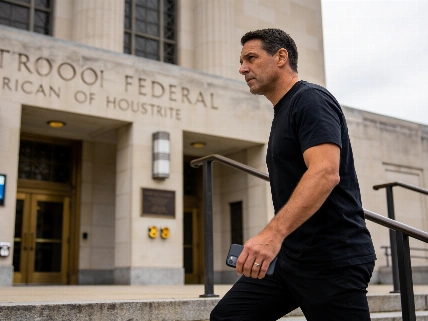
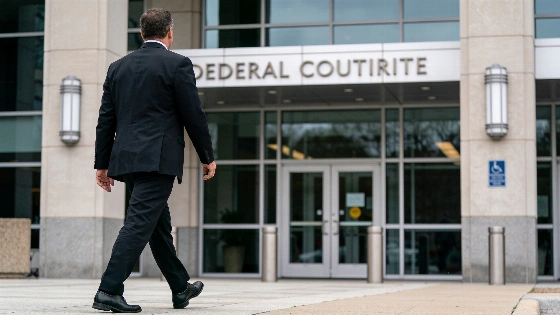
Jawan Simpson pleaded guilty to wire fraud after federal officials said he used false tax documents to secure more than $2 million in Paycheck Protection Program loans for clients and associates.
Federal investigators tied 111 loan applications to Jawan Simpson, a Farmington Hills tax preparer accused of using false records to obtain pandemic relief money.
Simpson, 37, pleaded guilty Tuesday to one count of wire fraud. The charge carries a maximum sentence of 20 years in federal prison. A sentencing date had not been set in U.S. District Court in Detroit at the time of the report.
The plea formally resolves Simpson's admission in a case built around fabricated financial records and 111 applications. Federal officials have put the resulting loss, or the government funds obtained, at approximately $2.2 million to $2.3 million.
How the scheme worked
Simpson used his work as a tax preparer and certified public accountant to recruit family members, friends and tax-preparation clients, according to federal officials. The clients included Amtrak employees. His plea agreement says he told them he could help them qualify for Paycheck Protection Program loans and charged each applicant between $2,000 and $3,000.
The federal program began in March 2020. It provided emergency support to businesses affected by the COVID-19 pandemic. The Small Business Administration could forgive loans when recipients met the program's eligibility and spending rules.
Simpson's admitted conduct went beyond filing forms. Authorities said he created false documents, including tax returns, and attached them to applications that contained inaccurate information. The numbers are stark.
Investigators said the applications were filed between January and July 2021. Officials said Simpson obtained about $2.3 million in government funds through the operation. Other federal summaries put the loss at about $2.2 million.
The case involves a federal relief program, not a municipal loan program. Residents seeking city-government information should use the City of Farmington Hills municipal portal. The city did not administer the PPP or decide who qualified for the loans described in the federal case.
Federal response
The FBI Detroit Field Office said the conduct abused professional trust during a national emergency. Jennifer Runyan, the office's special agent in charge, said the guilty plea showed accountability after Simpson used a relief program for personal financial gain.
The FBI credited its Oakland County personnel and the Amtrak Office of Inspector General with helping uncover the scheme. U.S. Attorney Jerome Gorgon said Simpson abused the confidence placed in him as a tax preparer while defrauding the American public.
Simpson's attorney, Samuel Bennett, was not immediately available for comment on Wednesday. The distinction matters.
Simpson was arraigned on federal charges in November 2025. His guilty plea resolves the criminal charge admitted in court, but sentencing remains ahead in Detroit federal court. No sentencing date has been scheduled.
For Oakland County residents, the case separates local community impact from federal jurisdiction. Simpson's professional activities were based in Farmington Hills, but the alleged offenses involved federal funds. Federal agencies investigated and prosecuted the case, not the Oakland County administration or the City of Farmington Hills.
Part of a wider enforcement wave
Simpson is one of several Michigan defendants recently linked to the alleged or proven misuse of public programs. A Beverly Hills man was sentenced to two years in prison after his conviction for conspiring to commit wire fraud in a separate case involving more than $2 million in federal COVID-19 relief funds.
The Eastern District of Michigan case also included a restitution order. A Dearborn woman was charged last week with conducting a criminal enterprise and 14 counts of Medicaid fraud after authorities accused her of billing for dental services that were never provided.
Earlier this month, a Muskegon County woman convicted of taking disaster relief intended for victims of Hurricane Ian in 2022 received a six-month prison sentence. The cases involve different programs and allegations, but public money was diverted from emergency assistance in each case.
The State of Michigan administers or oversees a range of separate state programs. The PPP was a federal program with its own eligibility and enforcement rules.
That enforcement context matters in Farmington Hills. Simpson relied on local professional relationships rather than an anonymous online operation. The people he approached were family members, friends and clients who were told he could guide them through a federal aid process.
The government's case therefore centers on false applications and the use of a tax professional's credibility to obtain them. A separate federal sentencing case involving a former Oakland County doctor shows how local defendants can face serious consequences in federal court when conduct becomes a federally prosecuted offense.
Simpson's case is different. It concerns pandemic loan applications and a guilty plea to wire fraud.
What comes next
Sentencing is the immediate next step. Simpson faces up to 20 years in federal prison under the wire fraud charge, but available reporting does not establish what sentence prosecutors will seek or what sentence the court will impose.
Until the hearing is scheduled, the confirmed outcome is Simpson's guilty plea, not a final punishment. That is the next step.
The case also leaves a clear public record of how the fraud operated: 111 applications, false tax documents, client recruitment and fees of up to $3,000. Those details set the case apart from a generic pandemic-aid fraud case.
They show how a program designed to move money quickly during an emergency could be exploited through professional access and manufactured records. Simpson's plea establishes accountability, but it does not erase the funds lost through the scheme.
The case was built on the misuse of a trusted tax-preparation role and a federal relief program. The pending sentencing will determine the court's final response.