As Michigan Democrats prepare for the November election, lingering disputes from a contentious Senate primary are complicating efforts to focus on economic issues and challenge Republican candidates statewide.
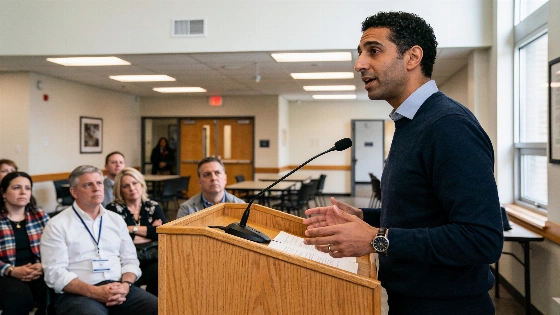
Michigan Democrats are working to shift their attention to the November general election, but internal disagreements following a heated Senate primary continue to challenge party unity. The divisions were evident this week as party members gathered in Saugatuck, a West Michigan district where Democrats hope to gain ground, but found themselves debating issues beyond the economy and President Donald Trump.
During the meeting, some attendees criticized U.S. Rep. Hillary Scholten for not endorsing Democratic Senate nominee Abdul El-Sayed. The discussion quickly turned to El-Sayed's positions on Israel and his association with progressive commentator Hasan Piker, highlighting ongoing tensions within the party.
Senate Primary Fallout
The recent Senate primary saw Abdul El-Sayed defeat U.S. Rep. Haley Stevens, making him the first Muslim nominee for the U.S. Senate from Michigan. However, his outspoken criticism of Israel's military actions in Gaza and his connections to Hasan Piker, who has made controversial statements about Israel and American Jews, have drawn criticism from some Democrats both in Michigan and nationally.
Several prominent Democrats, including Michigan Attorney General Dana Nessel and state Rep. Jeremy Moss, have withheld their support for El-Sayed. Nessel, who is Jewish, expressed concern about El-Sayed's response to an attack on a Detroit-area synagogue, while New Jersey Rep. Josh Gottheimer stated on CNN that he could not support El-Sayed due to his views on Jewish Americans.
El-Sayed's campaign appearances with Hasan Piker have become a particular point of contention. Piker, a popular online commentator, has faced backlash for remarks suggesting that linking American Jews to Israel's actions could increase antisemitism. While El-Sayed has distanced himself from some of Piker's comments, he has not fully severed ties, stating that only he and his campaign spokesperson speak for his campaign.
Party Leaders Seek Unity
Despite the ongoing disputes, many Michigan Democrats are eager to move forward and focus on the general election. U.S. Rep. Debbie Dingell, who has endorsed El-Sayed, emphasized the need to concentrate on November's issues rather than internal disagreements. El-Sayed has appeared at campaign events with other Democratic nominees, including Eli Savit for attorney general and Lt. Gov. Garlin Gilchrist II for secretary of state, in an effort to present a unified front.
Party leaders have called for respectful behavior ahead of the upcoming state convention in Lansing, where the Democratic ticket will be finalized. In a letter to members, party officials stressed that disruptive conduct would not be tolerated and encouraged Democrats to celebrate their candidates.
El-Sayed has acknowledged that some party members are still recovering from the primary's outcome, but he remains focused on the general election. He expressed frustration with the continued attention on Hasan Piker, stating that the campaign should be about Michigan's future, not outside controversies.
Republican Response and Next Steps
Republicans see an opportunity in the Democrats' internal divisions. GOP strategist Jason Roe compared the situation to Republican challenges with Donald Trump, suggesting that Democrats' handling of the Piker controversy could impact their efforts to win over voters.
With the November election approaching, Michigan Democrats are working to shift the conversation back to economic issues and their campaign against Republican Senate candidate Mike Rogers. The party's ability to move past primary disputes and present a united message may prove critical in a closely watched race. For a deeper look at the key issues shaping the Senate contest between Rogers and El-Sayed, see this analysis of the major topics defining Michigan's Senate race.
The Michigan Democratic convention in Lansing is expected to draw party members from across the state as they finalize their ticket and attempt to rally support ahead of November. The outcome of these efforts will help determine whether Democrats can overcome internal rifts and focus on their broader electoral goals.
Michigan's Senate race is drawing national attention due to its potential impact on control of Congress. The state's political landscape remains dynamic, with both parties seeking to mobilize supporters and address the concerns of voters on issues ranging from the economy to foreign policy.