Flock Safety is reducing its recommended data retention period and adding new oversight tools after more than 50 U.S. communities canceled or suspended use of its automated license plate reader cameras in 2026
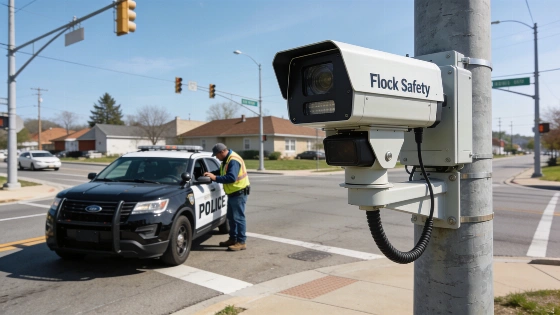
Flock Safety, a leading provider of automated license plate reader cameras, is rolling out new privacy and oversight measures as a growing number of cities and police agencies across the United States reconsider their use of the technology. The company announced it will now recommend that police departments retain license plate data for just seven days, down from the previous 30-day standard, and will introduce new tools to limit data sharing and detect potential misuse.
The changes come as more than 50 communities have canceled contracts, suspended use, or deactivated Flock cameras since the start of 2026, according to DeFlock, a grassroots group tracking license plate reader deployments. The company says its network includes over 120,000 cameras in 49 states, serving thousands of law enforcement agencies and local governments.
New Safeguards and Oversight Tools
Under the updated guidelines, Flock Safety will recommend that police agencies keep license plate data for only seven days, though communities can still set their own retention periods. For investigations requiring older data, a new "Evidence Mode" will allow officers to preserve specific records as evidence in active cases. The company is also adding features to restrict which outside agencies can access a community's camera data, letting local officials block searches for certain offenses, such as immigration enforcement.
To address concerns about unauthorized searches, Flock will require law enforcement users to enter case codes for each search by the end of the year, with exceptions for emergencies that will still be flagged for review. The company's audit assistance tool, which monitors for unusual search activity, will become mandatory for all law enforcement customers. Users whose activity is flagged as abnormal will be automatically suspended pending review.
Concerns Over Misuse and Accuracy
Recent incidents have heightened scrutiny of Flock's system. In Savannah, Georgia, four police officers and two civilian employees were fired after an internal investigation found they used the cameras to search for friends, relatives, and romantic partners. The misuse was detected using Flock's audit tool, and the cases were referred to the Georgia Bureau of Investigation. Nationwide, nearly 50 officers have been accused or charged with unauthorized use of Flock cameras, according to reporting by The Washington Post.
There have also been cases where inaccurate or outdated license plate alerts led to wrongful police stops. In Wisconsin, a woman was pulled over at gunpoint after a Flock camera incorrectly flagged her vehicle as connected to a homicide. Police later determined the alert was based on outdated information that had not been removed from the system.
Debate Over Privacy and Regulation
Civil liberties groups, including the American Civil Liberties Union, have called the shorter data retention period a step forward but argue that the changes may not fully address broader privacy concerns. The ACLU recommends a 48-hour retention limit and warns that the new "Evidence Mode" could allow large amounts of location data to be preserved for longer periods if not carefully managed.
States have taken varied approaches to regulating surveillance technologies like automated license plate readers, facial recognition, and drones. More than a dozen states have enacted laws governing their use, but there is no consistent national standard. In Pennsylvania, a bipartisan group of lawmakers plans to introduce legislation setting statewide privacy and accountability rules for license plate readers, including requirements for documented search reasons, audit trails, and civil penalties for misuse.
Some local governments are moving to end their use of Flock cameras entirely. DeFlock's tracker lists dozens of communities that have canceled contracts, deactivated cameras, or rejected proposals since 2021, with more than 50 taking such steps in 2026 alone. In Texas, the Burnet County Sheriff's Office recently removed all fixed Flock cameras after repeated vandalism, and several cities in Rhode Island and Nebraska have voted to cancel contracts or uninstall the devices.
Ongoing Community and Legislative Response
The debate over automated license plate readers is expected to continue as more state legislatures return to session in 2027. Lawmakers in Michigan and West Virginia have also raised concerns about the technology's impact on privacy and civil rights. Last month, 15 Democratic lawmakers in Michigan sent a letter to the state Department of Transportation urging an end to agreements allowing federal agencies to install surveillance technology on state property.
As communities weigh the benefits of crime-solving tools against the risks of surveillance and data misuse, the future of automated license plate readers remains uncertain. The issue has drawn bipartisan attention, with proposals in Congress to restrict federal funding for such technology and to limit its use by federal agencies.
Efforts to strengthen privacy and oversight for government data sharing have become a recurring topic in local and national policy debates, as highlighted in a recent Farmington Voice report on expert recommendations for safeguarding public data.
Flock Safety's latest changes reflect mounting pressure from both residents and lawmakers to balance public safety with privacy protections. The company says it will continue to work with communities to refine its policies as the legal and regulatory landscape evolves.
Automated license plate readers are used by police departments to capture images of passing vehicles, recording license plates, vehicle characteristics, location, and time. The data can be searched during investigations, sometimes across jurisdictional boundaries. As more communities reconsider their use, the conversation around surveillance technology and public accountability is likely to remain active in the months ahead.