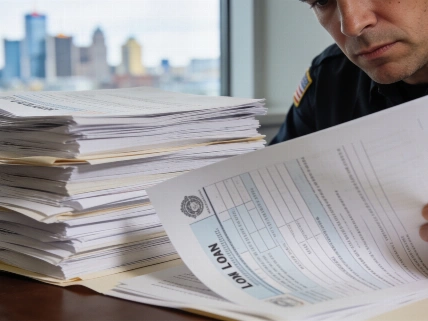
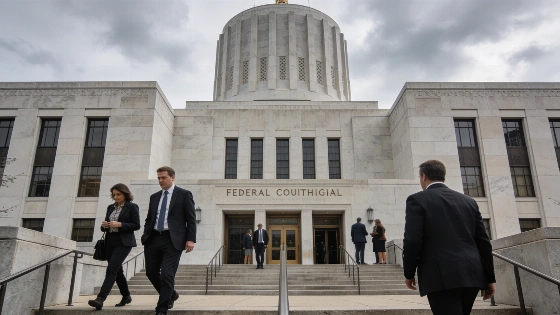
A federal judge has dismissed Michigan's closely watched antitrust case against major oil companies, ruling the state has no legal ground to seek damages or block alleged fossil fuel collusion.
Michigan's push to take on some of the world's biggest oil and gas companies in court has ended. A federal judge dismissed the state's antitrust lawsuit, saying Michigan does not have the legal right to bring these claims. Local officials and residents in Farmington and Farmington Hills had followed the case, which many saw as a test of whether states could use the courts to tackle climate and energy market issues.
U.S. District Judge Jane M. Beckering issued the decision on September 23, 2026. The ruling stops Attorney General Dana Nessel's effort to hold BP PLC, Chevron Corp., Exxon Mobil Corp., Shell PLC, and the American Petroleum Institute responsible for what Michigan called a coordinated plan to block renewable energy and keep fossil fuel prices high. The lawsuit, filed in January 2026, accused these companies of working together to slow down renewable energy and electric vehicle (EV) infrastructure. These concerns have come up in recent Farmington city sustainability initiatives and public meetings.
Judge says state's harm claims are too indirect
Judge Beckering found that Michigan's case did not show the direct harm needed for antitrust standing. The court said the injuries Michigan listed-higher prices, delayed EV infrastructure, higher insurance costs, and lower home values-were too far removed from the alleged conspiracy in energy and transportation. The judge wrote that Michigan's argument depended on a "chain of causation" with "vaguely defined links." She pointed out that other factors, like new technology and public demand for renewables, also shape energy prices and competition, as reported by Reuters.
Beckering's decision stressed that antitrust laws only cover losses that come directly from anti-competitive actions. The court said the link between the alleged conspiracy and the harms Michigan described-including effects on property values and insurance rates in Oakland County-was too weak to meet federal standards. This matches earlier federal court rulings in similar climate and antitrust cases, according to the Michigan Department of Attorney General and reporting from Inside Climate News.
How the case shifted and why it failed
The lawsuit was first announced in 2024 and focused on climate damages. In January 2026, Michigan changed course and tried an antitrust approach. The state hired three out-of-state law firms and targeted the oil companies under the Sherman Antitrust Act, the Clayton Antitrust Act, and the Michigan Antitrust Reform Act. Michigan argued that the companies acted as a cartel to block renewable energy and keep fossil fuel prices up. But the court said Michigan could not show a direct link between the alleged conspiracy and the specific harms to Michigan residents, including those in the Farmington Public Schools district, where energy costs and infrastructure upgrades are often discussed at board meetings.
The ruling also noted that other players, like investors and technology developers, have a big impact on the energy market. The decision closes both federal and state antitrust claims. The judge pointed to similar dismissals in other states, including New York and Maryland.
Industry and federal reactions
Chevron Corp. welcomed the ruling. Company lawyer Theodore J. Boutrous Jr. said this adds to a growing list of climate lawsuits dismissed in federal and state courts. The U.S. Department of Justice, which had earlier filed a complaint to block Michigan's lawsuit, also supported the outcome. Principal Deputy Assistant Attorney General Adam Gustafson said the department wants to protect American energy from what it sees as state overreach through lawsuits.
The Michigan Attorney General's office disagreed with the decision and is reviewing its next steps, according to press secretary Danny Wimmer. The dismissal puts Michigan in the same group as Delaware, Maryland, New Jersey, New York, Pennsylvania, and South Carolina, where similar lawsuits have failed. Residents who want to see more about the legal process can check recent Oakland County court calendars and public hearing notices on the Oakland County Courts portal.
Michigan's energy market and what comes next
BP runs about 600 gas stations and 120 Amoco stations in Michigan. Exxon has around 600, and Shell about 400. Chevron does not have gas stations in the state. With the case dismissed, Michigan residents-including those in Farmington and Farmington Hills-will not see any immediate changes in fuel prices or renewable energy infrastructure because of this lawsuit. For more on how federal and state policy debates affect Michigan's energy and infrastructure, see this recent report.
Federal courts have now turned down several attempts by states to use antitrust or climate lawsuits to force changes in the fossil fuel industry. This shows that, for now, courts are not willing to let states use broad legal theories to reshape national energy markets. Michigan's loss highlights how hard it is for state officials to tackle climate and energy issues in court instead of through laws or regulations. The court's message is simple: only direct, proven harm will get a hearing in these high-stakes fights over the future of energy.