A federal judge in Michigan has tossed out the state's antitrust case against BP, Chevron, Exxon, Shell, and the American Petroleum Institute, ruling the alleged impact on energy prices is too distant to support damages or an injunction.
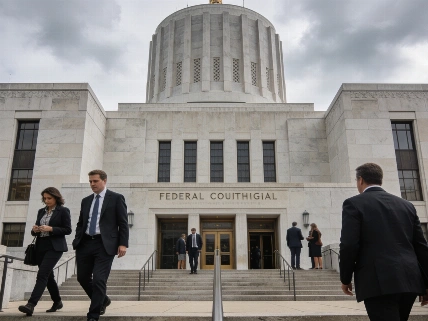
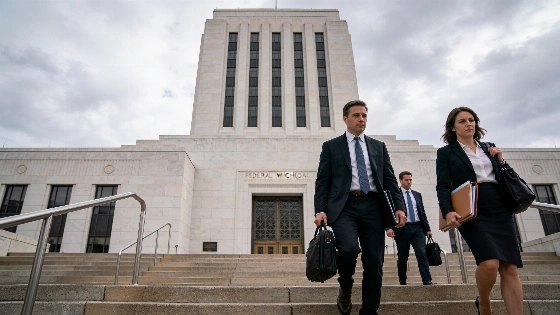
Michigan's push to hold some of the world's biggest oil companies and their main trade group responsible for blocking renewable energy has ended in federal court. Judge Jane Beckering of the U.S. District Court for the Western District of Michigan dismissed the case on September 23, 2026. She said the state could not seek federal antitrust damages or an injunction because the supposed harm to consumers was too indirect. This echoes how other climate and antitrust lawsuits have been dismissed in the past, as reported by Reuters.
Michigan Attorney General Dana Nessel filed the lawsuit in January 2026. The state accused BP, Chevron, Exxon, Shell, and the American Petroleum Institute of working together since 1979 to slow down renewable electricity, electric vehicles, and related infrastructure. Michigan said these actions made residents pay more for energy and added to climate costs. Local officials in Farmington and Farmington Hills watched the case closely. Energy costs and sustainability are big issues for city planning and for public schools in the Farmington Public Schools district.
Key arguments and court findings
Judge Beckering agreed that Michigan described a possible antitrust injury-higher energy bills from less competition. But she found the state's claims fell short because the link between the alleged actions and today's energy prices was too weak. The court said "the gap is too great" between the supposed conspiracy and the overcharges paid by Michigan residents. That made it impossible to show the direct cause needed for federal antitrust damages. The judge also noted that most Michigan consumers do not buy fuel or electricity straight from these companies. Instead, they use independent stations or regional grids. This made the state's case even weaker under federal law, according to Inside Climate News.
The U.S. Department of Justice also weighed in. Its Antitrust Division and Energy and Natural Resources Division had filed a statement of interest, telling the court about legal rules that limit what the state can claim. The Department's involvement shows the federal government's view on how far antitrust law can go in climate cases. This has ripple effects for local governments and agencies across Oakland County and Michigan.
Scope of the dismissal
The court dismissed Michigan's Sherman Act claim with prejudice. That means the state cannot bring it back in its current form. The judge did not decide if BP, Chevron, Exxon, Shell, or the American Petroleum Institute actually acted as a cartel. She also did not rule on whether the claims were too old, not detailed enough, or blocked by federal environmental law. Michigan's separate claim under the Michigan Antitrust Reform Act was dismissed without prejudice. The state can still try that claim in Michigan state court, which could mean more hearings in places like the Oakland County Circuit Court.
The Department of Justice supported the dismissal. Officials said the outcome should make states rethink using antitrust law for climate policy. The court did not decide if federal environmental law blocks these kinds of state claims, so some legal questions are still open for future cases.
Legal teams and broader context
Michigan's legal team included lawyers from the state Attorney General's Environment, Natural Resources and Agriculture Division, plus outside counsel from Sher Edling, DiCello Levitt, and Hausfeld. The oil companies and the American Petroleum Institute hired major national law firms. The case shows how complicated it is to use antitrust law to address long-term market shifts and climate costs. Local meetings and hearings in Farmington and Farmington Hills have touched on these issues as leaders look at energy transition plans.
Michigan did not accuse the companies of classic price-fixing. Instead, the state claimed the defendants delayed new renewable products. The court's decision shows how hard it is to prove direct harm to consumers when the alleged conduct goes back decades and involves many layers of the energy market. The City of Farmington has talked about energy costs and renewable adoption at city council meetings, showing how these legal fights matter locally.
For Michigan residents and policymakers, the ruling means any next steps will likely move to state courts. The outcome fits a broader legal pattern: states face big hurdles when using federal antitrust law to tackle complex issues like energy transition and climate change. As shown in recent reporting, Michigan is still looking for new energy solutions. But legal strategies that target past industry actions face tough procedural roadblocks. Residents can keep up with local energy projects and public hearings through the City of Farmington's official portal and the Oakland County government calendar.