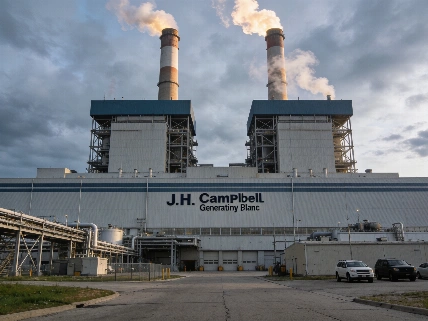
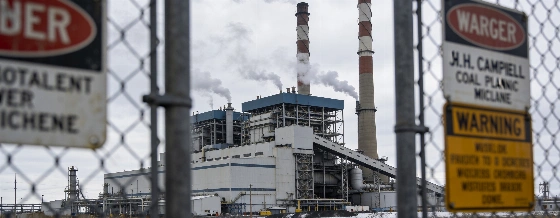
A federal appeals court has struck down the Department of Energy's emergency order that forced Consumers Energy's J.H. Campbell coal plant in West Olive to stay open past its planned 2025 closure, citing federal overreach and major cost concerns for Michigan ratepayers.
A federal appeals court has blocked the Department of Energy's attempt to keep Michigan's J.H. Campbell coal plant running past its scheduled retirement, ending a costly intervention that left Consumers Energy and its customers facing a $295 million bill. The J.H. Campbell Generating Plant, in Port Sheldon Township, western Michigan, was set to close in 2025 as part of Consumers Energy's long-term transition plan. That plan had already been reviewed by the Michigan Public Service Commission and discussed in public hearings at the state level.
The U.S. Court of Appeals for the District of Columbia Circuit issued its decision on September 11, 2026, finding that the DOE overstepped its authority under Section 202(c) of the Federal Power Act. This is the first time a federal court has vacated an emergency order of this kind, and the ruling immediately puts the future of the West Olive facility in question. The court stressed that states, including Michigan, are primarily responsible for ensuring reliable electricity supply-a point echoed by the Michigan Attorney General's office and reflected in recent state legal actions.
Emergency order and financial fallout
Consumers Energy had planned to close the J.H. Campbell plant in 2025, but the DOE intervened in May 2025, citing grid reliability concerns and invoking rarely used emergency powers. The forced extension came with a $295 million price tag for additional operating costs from May 2025 through June 2026, according to the Michigan Attorney General's office. The utility has said it will seek to recover these costs from customers, raising the prospect of higher rates for Michigan households and businesses. Local officials in Ottawa County, where Port Sheldon Township is located, have also raised concerns about the impact on municipal budgets and emergency services, since the plant's continued operation affects local tax revenues and environmental oversight.
While Consumers Energy reviews the court's decision, it remains under a current 90-day DOE order. The Michigan Attorney General's office, led by Dana Nessel, has sharply criticized the federal intervention, calling it a "political stunt" and pledging continued efforts to shield ratepayers from the fallout. Environmental groups, including those represented by Earthjustice, have noted that this is the first legal win against a DOE emergency order of this type, with the court rejecting arguments that a coal plant can be kept open without proven immediate necessity.
Legal and policy implications
This ruling is the first successful challenge to a DOE emergency order like this, setting a precedent for how far federal agencies can go in directing privately owned energy infrastructure. The decision also highlights the ongoing tension between federal emergency authority and state-level energy planning, especially as utilities across the Midwest move to retire aging coal plants in favor of cleaner sources. The Michigan Department of Environment, Great Lakes, and Energy (EGLE) has previously outlined the state's goals for reducing coal dependence, and the Farmington City Council has referenced these targets in its own sustainability discussions, as seen in recent council meeting minutes.
Michigan's energy transition has already drawn national attention, with state lawmakers and regulators debating the pace and cost of moving away from coal. As reported earlier, federal involvement in Michigan's infrastructure has become a flashpoint for local and state officials seeking more control over energy and economic policy. The Farmington Public Schools board has also monitored these developments, given the potential impact on school district utility costs and long-term budget planning.
What happens next for Consumers Energy and ratepayers
Consumers Energy is now in a holding pattern, complying with the DOE's short-term order while weighing its legal and operational options. The company has not announced a new retirement date for the J.H. Campbell plant, and the fate of the $295 million in extra costs is still unresolved. The Michigan Attorney General's office has signaled it will continue to fight any attempt to pass those costs onto customers, a position supported by several local governments and community advocacy groups.
For Michigan residents and businesses, the outcome of this legal fight will determine not only the future of a major coal plant but also who pays for federal interventions in the state's energy system. The court's decision makes clear that federal agencies cannot override state energy plans without clear statutory authority, and utilities should not expect to shift the financial burden of such interventions onto ratepayers without a challenge. Residents can follow updates on local energy policy and public hearings through the Farmington City Council agenda portal.
The Federal Power Act's emergency provisions were never meant to give Washington a blank check to dictate local energy decisions. This ruling restores some balance between federal oversight and state autonomy, but Michigan's energy future-and the bills facing its residents-remains unsettled until policymakers and regulators decide on a long-term path.