A federal judge has invalidated the Department of Labor's updated wage formula for H-2A migrant farm workers, leaving Michigan growers facing renewed uncertainty over pay rates and possible retroactive costs as the 2026 season begins
Michigan's agricultural sector is once again facing a wave of financial uncertainty after a federal judge struck down the Department of Labor's revised wage-setting formula for H-2A migrant farm workers. The decision halts the new pay structure just as many West Michigan growers had begun to adjust to years of rising labor costs, reopening questions about what they must pay-and whether retroactive back-pay will be required.
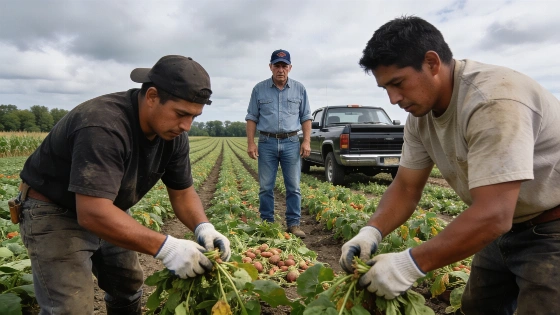
For farm owners who rely on H-2A visa workers to harvest crops, the ruling means the wage rates they had budgeted for this season are now in limbo. The Department of Labor must return to the drawing board to develop a new formula, but no timeline has been set for when a replacement will be finalized or how it will affect current payrolls.
Uncertainty for Growers and Workers
The court's decision leaves both employers and workers without clear guidance. Michigan farmers had only recently begun to see some stability after years of escalating labor expenses. Now, they face the possibility of having to pay additional wages retroactively if a new formula sets higher rates for work already performed. For H-2A workers, the lack of clarity means paychecks could change mid-season, depending on how the Department of Labor responds.
According to the Department of Labor, the H-2A program is designed to fill seasonal agricultural jobs that cannot be filled by local workers. In 2025, Michigan farms employed thousands of H-2A workers, with wage rates set annually based on federal calculations. The now-invalidated formula was intended to balance fair compensation for workers with the economic realities of farm operations, but the court found it did not meet legal requirements for wage determination.
Potential for Retroactive Pay
One of the most immediate concerns for Michigan growers is the risk of being required to issue back-pay if the new wage formula, once established, sets rates above what has already been paid this season. This could create significant unplanned expenses for farms operating on tight margins. The Department of Labor has not yet indicated whether retroactive adjustments will be enforced, leaving many in the industry waiting for further guidance.
Legal challenges to federal wage rules are not new. As reported earlier, federal courts have recently intervened in other regulatory disputes, underscoring the complexity of balancing federal oversight with local economic realities.
What Happens Next
Until the Department of Labor issues a new wage formula, Michigan farmers must navigate the uncertainty with little official direction. Some may choose to pay higher wages as a precaution, while others may hold off on hiring or expansion plans until the rules are clarified. The lack of a clear timeline for a new formula means the uncertainty could persist well into the growing season.
The H-2A program remains a critical labor source for Michigan's fruit and vegetable growers, especially in regions where local labor is scarce. The court's intervention highlights the ongoing tension between federal labor standards and the operational needs of American farms. As the Department of Labor works to craft a legally compliant wage formula, Michigan's agricultural community is left to manage the fallout-once again reminded that regulatory uncertainty can be as disruptive as any weather event.