Gov. Gretchen Whitmer supports suspending the federal gas tax, but she has not backed a pause in Michigan's 52-cent state fuel tax. Lawmakers are still divided over road funding and a possible $600 million revenue loss.
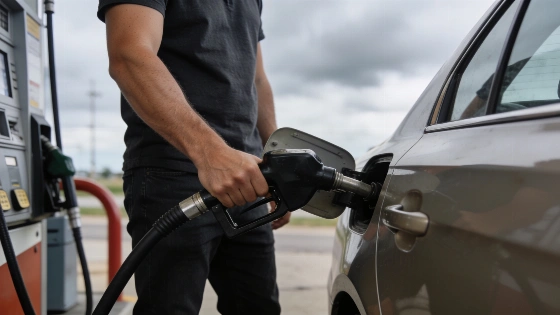
AAA put Michigan's average price for a gallon of unleaded at about $4.50 on Thursday. For a driver with a 16-gallon tank, removing the federal gasoline tax would save roughly $2.88 on a full fill-up, if consumers received the full reduction.
Michigan drivers could get that limited relief while the state's larger fuel tax remains under review. Gov. Gretchen Whitmer supports suspending the federal gasoline tax, but she has not endorsed a pause in Michigan's roughly 52-cent-per-gallon charge.
That is the limit.
For residents of Farmington and Farmington Hills, the matter is mainly a state and federal policy question. Local governments, including the City of Farmington and the City of Farmington Hills, do not control the federal or Michigan gasoline excise taxes under debate.
Federal relief gets Whitmer's support
Whitmer said Oct. 2 that Washington should act to give drivers immediate relief as fuel prices strain household budgets. She tied the increase to an international crisis. She said the federal government should provide short-term help instead of placing the burden on Michigan alone.
The federal government collects 18.4 cents per gallon on gasoline and 24.4 cents per gallon on diesel. Those rates were established in 1993. If Congress approved a temporary suspension, drivers across Michigan would receive the same per-gallon reduction.
The savings would still be much smaller than the relief available through a state tax suspension. Fuel prices have climbed since February amid an international shipping and security crisis.
The length of the increase remains unclear. Available reporting also does not establish whether Congress will approve a federal suspension, so the possible savings remain uncertain.
State proposal faces revenue dispute
Michigan lawmakers and candidates have called for a temporary suspension of the state fuel tax. Democrats in the Michigan House of Representatives recently tried to force a vote on proposals to pause the tax. The effort failed.
The vote failed.
As of Oct. 1 and 2, Michigan had not enacted a state gas tax holiday. The Senate did not vote on Oct. 1. Senate Bill 1187 went to the Committee on Finance, Insurance, and Consumer Protection, and no further action was reported.
The Senate scheduled additional sessions for Oct. 6 and Oct. 14. The issue could return for consideration at those sessions.
Senate Democratic Leader Winnie Brinks indicated that she was willing to consider a temporary suspension. House Speaker Matt Hall opposed moving forward without a clear plan to replace the lost revenue. An earlier legislative account also described the dispute between the House and Senate.
Whitmer declined to take a position on the state proposal. She said she would not weigh in on a measure that might never reach her desk. She also pointed to Michigan's elimination of the 6% sales tax on gasoline as one form of relief her administration has already supported.
The distinction matters locally. Residents may hear about the proposal through city, county, school and community networks, even though the decision rests with the Legislature and governor.
The Oakland County administration and the Farmington Public Schools board are separate from the state tax debate. Neither sets gasoline excise rates.
Road funding is the central tradeoff
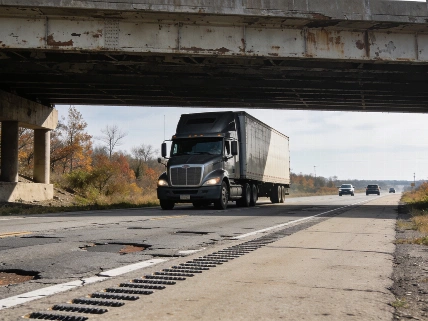
Michigan's fuel tax pays for road repairs. Any suspension would therefore raise a direct question about how the state would maintain transportation revenue.
The State of Michigan's transportation and revenue agencies would have to account for the effect of a holiday on programs that support road construction and maintenance.
According to estimates cited in reporting, a three-month suspension could cut state revenue by about $600 million. The Michigan Infrastructure and Transportation Association warned that the gap could affect road-related work and employment.
The group identified equipment operators, flaggers, truck drivers and laborers among the workers who could be affected.
That warning lays out the practical cost without settling the political choice. Drivers would receive a larger immediate reduction from suspending Michigan's 52-cent tax than from removing the federal 18.4-cent charge.
Road programs would face a revenue gap unless lawmakers approve replacement funding. The federal option is limited.
Whitmer's position offers consumers a possible federal break while leaving the larger Michigan decision unsettled. A federal holiday could save a mid-sized car owner about $2.88 per 16-gallon fill-up.
Lansing would still have to address the much larger revenue loss created by pausing the state tax. Until lawmakers identify replacement funding, support for relief without an answer on road financing remains incomplete for Michigan drivers and the communities that rely on the state's transportation system.