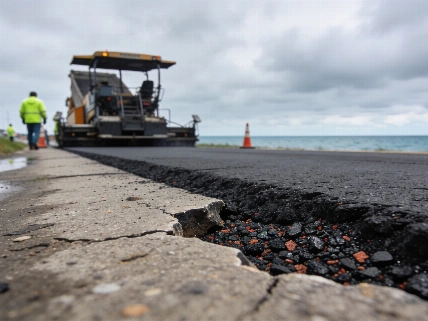
Michigan's highways and bridges are carrying more traffic as major repair funding begins to shrink. Local projects and a renewed debate over a possible gas-tax pause show how maintenance needs are colliding with an uncertain revenue outlook.
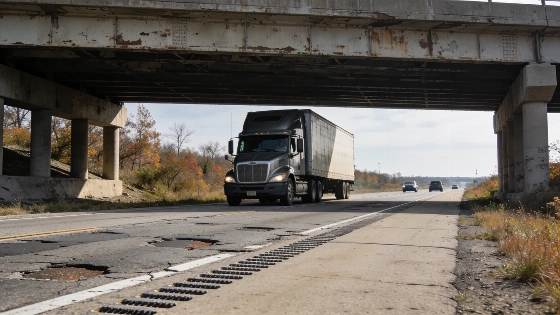
By 2035, more than 100 Michigan trunkline bridges could close to traffic if the state cannot find more money for repairs. The closures would affect approximately 1.8 million daily drivers. Farmington, Farmington Hills and nearby Oakland County communities could see traffic pushed onto local streets used by commuters, school buses, emergency responders and delivery vehicles.
Michigan estimates that roads and bridges need an additional $2.2 billion each year. Federal and state programs that temporarily raised construction spending are now winding down. The repair bill is growing.
Lawmakers debated a possible suspension of the state gasoline tax in late September and early October 2026. Public reports put the potential loss to road programs at roughly $600 million. The proposal remained a political and legislative question, not an enacted replacement for transportation revenue.
The Michigan Infrastructure and Transportation Association has argued that roads support communities, freight and regional growth. It says reductions should not move ahead without a dependable substitute.
A network under strain
The Interstate Highway System turns 70 in 2026. The Federal-Aid Highway Act of 1956 created it under President Dwight D. Eisenhower. The law set a national standard for controlled-access freeways with at least four lanes and no at-grade crossings.
The system was first authorized at $25 billion for 41,000 miles over 10 years. It took 35 years to complete and cost about $114 billion. In 2026 dollars, that total is approximately $937 billion.
Today, the network covers about 48,890 miles. It remains a central route for freight and commuters. TRIP estimates that it produces about $65 billion in annual economic benefits through fuel savings, improved safety and reduced congestion.
Rob Coppersmith, executive vice president of the Michigan Infrastructure and Transportation Association, has called the system an economic engine. It connects communities and supports freight movement and regional growth.
The U.S. Department of Transportation estimates a nationwide improvement backlog of $196 billion. Pavement accounts for $58 billion. Bridges account for $65 billion. Expansion and other system improvements account for $73 billion.
Age alone does not determine whether a bridge or freeway is unsafe. It does explain why inspections, preventive maintenance and timely rehabilitation remain public responsibilities.
That responsibility is costly.
Michigan's repair bill
Heavy use and severe weather have put Michigan's roads under particular stress. Forty percent of major locally and state-maintained roads are rated in poor or mediocre condition.
Rough pavement adds an average of $772 a year to the operating cost of each Michigan driver's vehicle. The extra expense comes through repairs, tire wear, fuel use and depreciation. Across the state, those costs total about $6 billion annually.
Bridge conditions are also uneven. Eleven percent of Michigan bridges at least 20 feet long are rated poor or structurally deficient. That is the ninth-highest share in the nation. Another 56 percent are rated fair, while 33 percent are in good condition.
Forty-one percent of the state's bridges were built in 1969 or earlier. MDOT says two-thirds of the bridges under its authority have passed their original design lives.
The work is not limited to a statewide inventory. MDOT scheduled repairs to the 27 Mile Road bridge over I-94 in Albion from October 5 through October 30, 2026. The project budget is $70,000, according to the MDOT project notice.
In Detroit, utility relocation work and continuing restrictions on M-3 are part of the preparation to replace the M-3 bridge over the Dequindre Cut. The two projects show the range of work ahead. One involves a small bridge repair. The other needs a complex replacement and advance coordination.
Michigan's infrastructure problem reaches beyond roads. The state's bridge exposure follows the same public-safety pattern examined in an earlier dam-safety report. Old structures need regular inspections, repairs and funding before a failure forces an emergency response.
In the Farmington area, the City of Farmington and City of Farmington Hills manage separate parts of the local street network. MDOT manages state trunklines. That division determines which agency residents should contact about a pavement, signal or bridge concern.
The distinction matters to the Farmington Public Schools board and local emergency services. A state-route closure can affect school-bus routes and response times even when the damaged structure sits outside the city. A neighborhood street project may instead go through municipal budgeting rather than MDOT's capital program.
The City of Farmington portal provides a local point of reference for municipal services and public notices. It does not replace MDOT project information for state highways.
Traffic and safety costs
Michigan drivers lost $5.9 billion to wasted fuel and time during 2024. Vehicle miles traveled plunged 54 percent in April 2020 during the pandemic. Traffic had recovered by early 2025 and was running 1 percent above the same period in 2024.
More traffic also increases exposure to roadway hazards. Michigan recorded 6,474 traffic deaths from 2019 through 2024. That equals an average of 1,294 deaths per year.
The state's 2024 fatality rate was 1.07 deaths per 100 million miles, compared with 1.2 nationally. Rural non-interstate roads recorded a much higher rate of 1.53. Traffic fatalities rose 16 percent over the previous decade. Crashes in 2024 created an estimated $16.1 billion in economic costs.
Roadway features contributed to about one-third of fatal crashes. Pavement, bridge design, interchanges and lane capacity therefore belong in the safety calculation. They are not separate from maintenance.
For Oakland County officials and municipal public-works departments, routine resurfacing, drainage and signal work can affect safety even when a site is not classified as structurally deficient.
Small work counts too.
Funding drops as demand rises
The federal Infrastructure Investment and Jobs Act supplied Michigan with $7.3 billion over five years. That was a 29 percent annual increase. Michigan's 2019 Rebuilding Michigan Program authorized $3.5 billion in bond sales.
Both sources are nearing their ends. The Growing Michigan Together Council reported in 2023 that Michigan still faced an annual transportation funding gap of $3.9 billion.
As Rebuilding Michigan bond money expires, MDOT's annual funding for road reconstruction is projected to fall from $495 million to $222 million. The decline is expected to support roughly 2,800 fewer construction jobs in 2026 than in 2025.
The state's 31-cent-per-gallon fuel tax has also lost purchasing power. The national highway construction cost index rose 54 percent from early 2022 through the third quarter of 2024.
The national Transportation Research Board says highway investment must more than double to $57 billion each year for the next 20 years. Michigan's infrastructure commission has separately estimated the state's annual shortfall at $2.2 billion for roads and bridges.
Those figures describe a continuing funding need. One grant cycle cannot solve it.
For municipal governments, predictability matters as much as the total amount. City councils, the Farmington Public Schools board, Oakland County administrators and State of Michigan departmental agencies plan around different revenue streams and maintenance responsibilities.
A temporary tax holiday may lower the price at the pump. Without a replacement source, it can make the timing of resurfacing, bridge rehabilitation and other public works less certain.
Freight pressure ahead
Michigan's transportation system already carries a large commercial load. Freight moving through the state totaled 756 million tons in 2022. Its value was $1.1 trillion, the sixth-highest freight value in the country.
Combination trucks made up 12 percent of interstate travel. Truck freight is projected to rise 56 percent by weight and 80 percent by value by 2050.
That growth will test corridors built for an earlier economy. The state will need to weigh lane capacity, interchange upgrades and the right size of the highway system. It will also need to preserve pavement and bridge conditions.
The data already shows that Michigan needs transportation work. The harder question is timing. Stable funding must arrive before deteriorating infrastructure turns routine construction into forced closures and higher costs for drivers, businesses and contractors.
Michigan's interstate system delivered decades of economic access. Temporary programs cannot finance its next phase alone.
Bridge closures are projected. Freight demand is rising. Construction costs are outpacing the fuel tax. The transportation pipeline offers work for heavy civil contractors, but it also shows the price of delay.
Michigan needs a durable investment strategy. Maintenance, safety and capacity are tied together.