The University of Michigan will spend $26 million to modernize the Walter E. Lay Automotive Engineering Laboratory, expanding its electric vehicle and battery research by winter 2028.
The University of Michigan is set to pour $26 million into a major renovation of the Walter E. Lay Automotive Engineering Laboratory. The 1957 building will get a full upgrade, turning it into a modern center for electric vehicle and battery research. The Board of Regents has signed off on the project. Plans call for new infrastructure and fresh spaces for advanced testing and teaching. This move fits with Michigan's push for mobility and EV technology. The state's Mobility Prototyping Grant Program just finished its third round, handing out $2 million to 26 groups working on mobility and manufacturing innovation according to the Michigan Department of Labor and Economic Opportunity.
When the work is done, the Lay Auto Lab will give faculty, students, and industry partners new tools for testing electric vehicles, batteries, and related systems. The renovation will keep the lab's long-standing focus on internal combustion engines and hybrid powertrains, so it stays useful as the auto industry shifts toward electrification and software-driven vehicles. The university's partnerships with local governments and the State of Michigan have helped secure funding and regulatory backing. Oversight comes from both state and local agencies, including the City of Ann Arbor and the Michigan Department of Environment, Great Lakes, and Energy.
Project details and funding
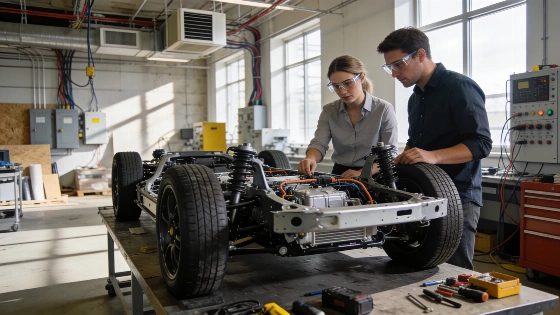
The renovation will cover about 7,000 gross square feet across five of the lab's 19 test cells. Upgrades will bring in a modular electric vehicle and component testbed lab, a battery management system instructional lab, and better high-bay areas for vehicle and shop work. The project will also tackle big infrastructure needs: building code updates, new substations and power distribution, new air handlers, overhead doors, and process cooling water systems. Broader architectural, electrical, and mechanical improvements are also planned.
Money for the project will come from the College of Engineering, the state's investment in the Electric Vehicle Center, the Office of the Provost, and university reserves. The Electric Vehicle Center was set up with $130 million in state funding, with $60 million set aside for campus infrastructure like the Lay Auto Lab. SmithGroup will handle the architecture. Construction is set to finish in winter 2028. The Michigan Economic Development Corporation and the Office of the Governor have both pointed to the need for workforce development and advanced mobility research in recent public statements, showing the project's fit with state priorities.
Expanding research and workforce development
The upgraded lab will strengthen the university's Electric Vehicle Center, which came out of a partnership between the state and U-M. The new space will support joint research, workforce training, and next-generation mobility tech. Students and researchers will get access to advanced equipment and hands-on learning spaces, while research into traditional automotive tech will continue. The university still offers specialized courses in electrification, like ENTR 475.300 "Perot Jain TechLab Electrification," listed in the September 2026 U-M Careers schedule. This shows U-M's ongoing investment in EV education.
The Lay Auto Lab has been part of the university since 1913, growing alongside the auto industry. Over the years, it has supported research on engine cooling, streamlining, reliability, fuel efficiency, and emissions, and has trained many engineers. Its focus has shifted more toward batteries and electric vehicles as the industry changes again. In September 2026, U-M announced a new international partnership with IIT (BHU) Varanasi, further cementing its place as a leader in electric vehicle and sustainable mobility research.
Context and local impact
The Lay Auto Lab renovation is part of a bigger effort to update Michigan's auto research infrastructure and get the state's workforce ready for the future of mobility. The project follows other local and statewide pushes for sustainability and tech, like the city of Flint's recent recycling expansion reported earlier. By investing in research and workforce training, the University of Michigan aims to keep its lead in automotive engineering and help the state's economic shift. Local school districts, including Farmington Public Schools, have shown interest in STEM partnerships and career paths tied to mobility and advanced manufacturing, as seen in recent board meeting minutes on the Farmington Public Schools Board portal.
As the auto sector keeps changing, the university's push to upgrade its labs shows it understands the need for advanced research and education in electric vehicles and battery systems. The Lay Auto Lab's overhaul is set to keep Michigan at the front of auto innovation, giving students and industry partners the tools and space to shape the next chapter of transportation. Residents and stakeholders can track updates on the project through the City of Ann Arbor's civic calendar and the University of Michigan's public channels.