The University of Michigan recently hosted a 10-day seminar for nine international scholars, offering hands-on training in the conservation of rare papyrus texts dating back thousands of years. The program is unique in the Americas.
Nine scholars from around the world gathered at the University of Michigan in Ann Arbor this August for a specialized seminar focused on conserving ancient papyrus manuscripts. The Papyrus Conservation Summer Seminar, held over 10 days, is the only program of its kind in the Americas and one of just a few worldwide dedicated to teaching best practices for preserving these fragile historical documents.
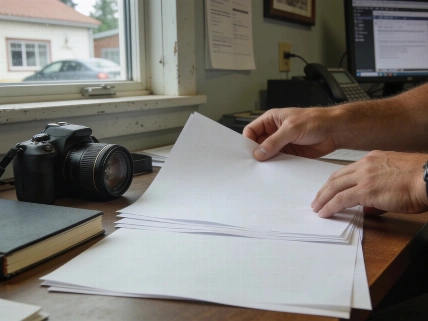
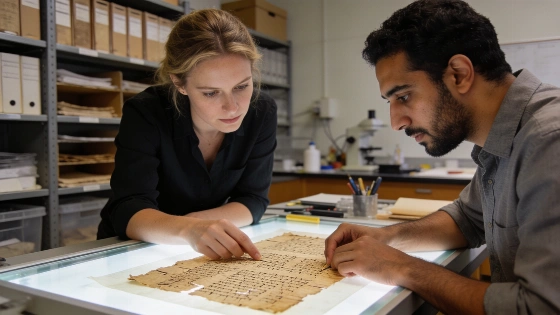
Participants, including researchers from China, Ireland, Italy, and the United States, received hands-on instruction in the careful handling, cleaning, and restoration of papyrus texts-some of which have not been read for centuries or even millennia. The seminar emphasized practical skills such as removing dirt and debris, using controlled moisture to relax fibers, and drying techniques to prevent further deterioration.
Preserving a Vast Collection
The University of Michigan's Papyrology Collection is the largest in the Western Hemisphere, containing texts and documents spanning from 1000 B.C.E. to 1000 C.E. The collection includes portions of Homer's "The Odyssey" and "The Iliad," writings by Epicurus, and the oldest-known copy of the Epistles of Paul. Many of these items were acquired or excavated during university-led expeditions to Karanis, Egypt, between 1924 and 1935, under the leadership of Latin professor Francis Willey Kelsey. Today, the Kelsey Museum of Archaeology on campus houses one of the world's most significant collections of Greco-Roman Egyptian artifacts outside Cairo.
Marieka Kaye, who manages library preservation services for the University of Michigan Library, led the seminar. She aimed to create a supportive environment for participants, many of whom were initially apprehensive about working with such delicate materials. Kaye introduced techniques for documentation, storage, and treatment, stressing the importance of patience and precision to avoid damaging the ancient texts.
Training the Next Generation
Since its inception in 2012, the Papyrus Conservation Summer Seminar has been held every two years, except in 2020 due to the pandemic. Approximately 50 students have completed the program to date. Giuliano Sidro, curator of Michigan's Papyrology Collection, highlighted the importance of passing on these specialized skills to ensure the craft is not lost as older conservators retire.
Some seminar participants brought language expertise that allowed them to read and interpret the papyri directly. For example, Arzak Mohamed, a postdoctoral fellow at Macquarie University in Sydney and a native of Fayoum, Egypt, can read Arabic, while Mauro Castiello, a doctoral student from Milan, is able to translate ancient Greek and Latin. Kaye makes a point to include at least one student from Egypt in each session, recognizing the importance of connecting the work back to the region where many of the texts originated.
Ongoing Discoveries and Community Impact
Michigan's collection is so extensive that researchers have yet to examine all of its contents. Sidro noted that new discoveries are possible every day, simply by opening a box in the archive. The skills taught in the seminar not only help preserve these artifacts but also enable participants to share their knowledge internationally. Mohamed, for instance, plans to apply what she learned in both Egypt and Australia, helping to build a global network of papyrus conservators.
The University of Michigan's efforts to preserve ancient texts reflect a broader trend among libraries and cultural institutions to expand their roles in community engagement and education. For example, libraries across southeast Michigan have introduced outdoor StoryWalks and new programs to encourage literacy and public participation, as reported in a recent article on local library initiatives.
By training new conservators and sharing expertise, the University of Michigan is helping to ensure that rare historical documents remain accessible for future generations of scholars and the public.